Best New Micro Four Thirds Lenses for Modern Micro 4/3 Cameras
Micro Four Thirds (MFT) lenses continue to expand, bringing faster apertures, lighter designs, and better image quality to Panasonic, Olympus/OM System, and others. This article highlights five standout options that optimize sharpness, bokeh, and versatility for contemporary shooters. Each lens is evaluated for performance, size, and value, helping you pick the best upgrades or new additions to your MFT kit.
Summary of Selected Lenses
| Lens | Brand | Focal Range / Prime | Max Aperture | Notable Benefit |
|---|---|---|---|---|
| Sigma 16mm f/1.4 DC DN Contemporary | Sigma | 16mm (Prime) | f/1.4 | Wide, fast prime with excellent low-light performance |
| Panasonic LUMIX G 25mm f/1.7 ASPH | Panasonic | 25mm (50mm equivalent) | f/1.7 | Natural field of view with beautiful background blur |
| Meike 35mm f/1.4 | Meike | 35mm (Prime) | f/1.4 | Low-light performance and smooth bokeh at a budget |
| OM SYSTEM M.Zuiko Digital 40-150mm f/4.0-5.6 R | OM SYSTEM | 40-150mm | f/4.0-5.6 | Lightweight zoom with MSC for smooth auto focus |
| Panasonic LUMIX G VARIO 45-150mm f/4.0-5.6 ASPH | Panasonic | 45-150mm | f/4.0-5.6 | Long-range versatility with stabilized performance |
The following sections provide deeper dives into each lens, with objective notes on build, optics, and typical use cases for contemporary MFT shooters.
Sigma 16mm f/1.4 DC DN Contemporary

The Sigma 16mm f/1.4 DC DN Contemporary is a wide-angle prime designed for Micro Four Thirds. It features 16 elements in 13 groups, minimizing aberrations while delivering sharp detail across the frame. The fast f/1.4 aperture enables strong low-light performance and creative depth of field on APS-C‑format bodies and MFT cameras alike. Build quality emphasizes solid feel for everyday carry, with a compact design suited to travel-oriented kits.
Panasonic LUMIX G 25mm f/1.7 ASPH

A natural 50mm equivalent, the Panasonic 25mm f/1.7 ASPH is among the most popular compact primes for MFT systems. Its bright maximum aperture yields pleasing subject isolation, while the lightweight build makes it ideal for street and documentary work. The optical construction focuses on delivering clean, sharp results with an attractive background bokeh, suitable for portraits and everyday storytelling.
Meike 35mm f/1.4 Large Aperture
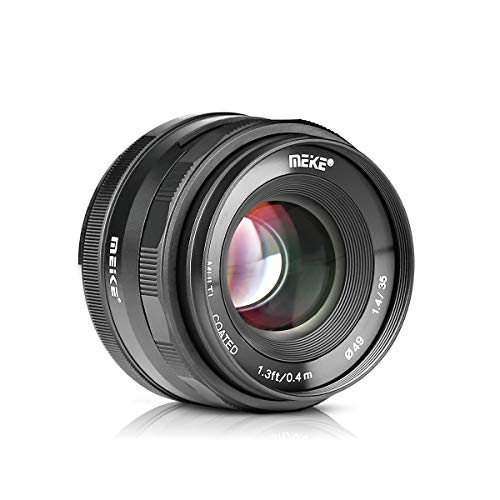
The Meike 35mm f/1.4 is a fixed focal length prime that delivers a wide maximum aperture for smooth bokeh and shallow depth of field. It is compatible with Olympus and Panasonic MFT bodies and is recognized for its compact design and value. With a 35mm equivalent field of view, it’s well-suited for portraiture, street photography, and close-ups where subject separation matters.
OM SYSTEM M.Zuiko Digital 40-150mm F4.0-5.6 R

The M.Zuiko 40-150mm complements the MFT telephoto range with compact, portable design and a versatile zoom span. It employs a high-speed imaging AF system (MSC) and is well-suited for travel, sports, and nature photography. While the maximum aperture is modest, the lens remains a practical choice for those who want reach without adding significant weight to the kit.
Panasonic LUMIX G VARIO 45-150mm f/4.0-5.6 ASPH

The 45-150mm zoom is designed for extended reach with optical stabilization to help maintain sharpness in lower light. Its 28-84mm equivalent zoom range covers everyday telephoto needs, from portrait detail to distant subjects. This lens is a practical option for photographers expanding their MFT telephoto capabilities without sacrificing portability.
Buying Guide
Key purchase considerations help buyers select the right new Micro Four Thirds lenses for their needs:
- Focal length and field of view: Choose primes like 16mm or 25mm for wide to normal perspectives, or telephotos like 40-150mm for reach.
- Aperture and low-light performance: Faster apertures (f/1.4–f/1.7) enable better bokeh and low-light shooting; zooms with variable apertures (f/4–f/5.6) suit daylight and travel use.
- Autofocus performance: MSC and linear motors enhance focusing speed and smoothness, beneficial for video and action.
- Build and weight: Lighter, compact designs improve portability for street and travel photography, while sturdier builds suit rugged use.
- Optical stabilization: Lenses with built-in IS help reduce camera shake in low light, especially on non-stabilized bodies.
- Image quality and color rendering: Look for coatings and lens elements that minimize flare, ghosting, and chromatic aberrations for crisper images.
- Compatibility: Confirm mount compatibility (Micro Four Thirds) across Panasonic and OM System bodies to ensure full functionality.
When comparing options, consider your typical shooting scenarios—street photography, portraits, travel, or landscape—and balance prime advantages with flexibility offered by zooms. Price, portability, and maintenance should align with your budgets and intended use to maximize value in your Micro Four Thirds setup.