Best Neutral Density Lens Filters for Precise Light Control and Creative Motion
If you want to control light entering your camera and create intentional motion blur, a neutral density (ND) lens filter is essential. This guide highlights five top ND options across common lens sizes, explaining who benefits most from each and why they were selected. Whether you’re an outdoor landscape shooter, a videographer chasing silky water effects, or a travel photographer needing faster shutter speeds, these picks help you achieve consistent results in bright conditions.
| Product | Size | Best For |
|---|---|---|
| K&F CONCEPT 82mm Variable ND2-ND400 | 82mm | Teeing up versatile outdoor scenes |
| K&F CONCEPT 49mm Variable ND2-ND400 | 49mm | Compact kit lenses, street and travel |
| K&F Concept 67mm Variable ND ND2-ND400 | 67mm | Mid-size lenses with smooth dimming |
| K&F Concept 58mm Variable ND2-ND400 (B-Series) | 58mm | Entry-level kits and compact lenses |
| K&F CONCEPT 58mm Variable ND with Cap & Cloth | 58mm | All-in-one 58mm setup for quick use |
K&F CONCEPT 82mm Variable ND2-ND400 (1-9 Stops)

Best for: Outdoor landscape shooters using larger filters. This 82mm variant offers 1–9 stops of light reduction with full 360-degree rotation for precise dimming. It uses import optical AGC glass with eight coatings to minimize reflections and glare, preserving color accuracy. A note: at high stops, you may see an X-shaped cross in certain extreme lens/focal-length combos; this is a known, temporary artifact when dialing in strong ND settings.
Selection rationale: The wide diameter is ideal for pro-grade or full-frame lenses that demand high-quality optics and robust light control. The X-cross caveat is common with stronger ND ranges, so this option suits shooters who prioritize image quality and flexibility in bright environments.
K&F CONCEPT 49mm Variable ND2-ND400 (1-9 Stops)
Best for: Compact camera kits and walkaround photography where portability matters. The 49mm size makes it a good fit for smaller lenses and mirrorless bodies. It uses eight-layer coatings on AGC glass to reduce reflections while providing 1–9 stops of light reduction with 360-degree rotation. The cross pattern effect is possible at higher stops and specific focal lengths.
Selection rationale: A good balance of size, performance, and price, this filter suits travelers or new shooters who want a high-quality ND without bulk.
K&F Concept 67mm Variable ND ND2-ND400

Best for: Mid-size lenses and photographers seeking the sweet spot between portability and performance. This 67mm filter features 18 multi-layer coatings on AGC glass for strong glare reduction and color accuracy. It also includes a 360-degree rotatable design; however, high-stop usage can still introduce the X-cross artifact with some lenses.
Selection rationale: The higher coating count offers enhanced anti-reflective performance, making it a solid mid-range option for professionals or enthusiasts who shoot in bright conditions yet want sharp, contrast-rich results.
K&F Concept 58mm Variable ND (B-Series)

Best for: Everyday 58mm lens users who want a strong ND option in a common size. This filter delivers 1–9 stops of light reduction with a 360-degree dial and eight coatings. It notes a potential X pattern at extreme stops, which is a predictable outcome when pushing ND strength against certain lens designs.
Selection rationale: The 58mm size is a popular standard for many kit lenses, making this ND a practical pick for hobbyists and content creators needing reliable light control without extra gear.
K&F CONCEPT 58mm Variable ND with Cap & Cloth (18 Coatings)
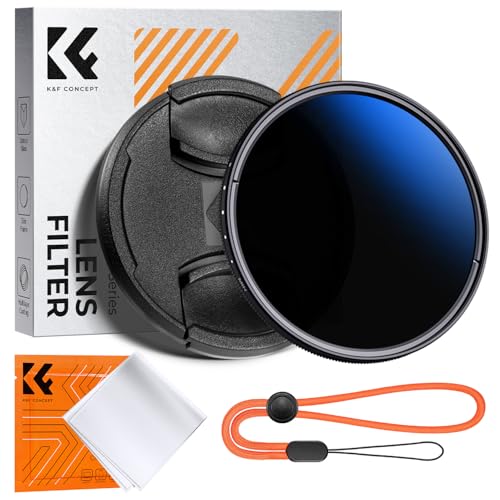
Best for: Quick, all-in-one 58mm setups where you want an ND plus accessories. It includes a filter cap and cleaning cloth, with 18-layer coatings on imported AGC glass for strong glare reduction and color fidelity. The cap ensures a snug fit, and the cleaning cloth helps maintain a dust-free surface.
Selection rationale: This kit-friendly option appeals to shooters who value convenience and organization alongside ND performance, especially when traveling or photographing on the move.
K&F Concept 67mm True Color Variable Fader ND2-32 + CPL

Best for: Photographers needing both ND and CPL capabilities in one filter. It combines variable ND with an integrated CPL to manage reflections and sky contrasts. Self-locking rotation reduces the risk of cross patterns, and imported AGC glass with multiple coatings supports high image quality. Avoid this if you require separate ND and CPL control in distinct filters.
NEEWER 67mm Variable ND ND2-ND400

Best for: Waterfalls, rivers, and motion-blur enthusiasts who use 67mm lenses and want robust light control. The filter uses four-element optical glass with a Japanese NITTO polarizing film to maintain neutral color and balanced contrast. Multiple nanocoatings reduce flare and ghosting while protecting the surface from water, oil, and scratches. The ND range is 1–9 stops.
Buying Guide: Key Considerations for Neutral Density Filters
- Filter size compatibility: Match the ND filter diameter to your lens’ front element size. Use step-up rings if you need to adapt to other diameters.
- Stops and brightness control: Higher stop ranges offer stronger light reduction but may introduce cross-pattern (X) artifacts on some lenses. Consider starting at 1–6 stops for scenic or portrait work and test compatibility.
- Coatings and glass quality: Multi-layer coatings reduce reflections, flare, and ghosting. Look for AGC or similarly described high-quality optical glass for color accuracy.
- Maintenance and accessories: Cleaning cloths and protective caps help preserve image quality. Kits with pouches are convenient for travel.
- Integrated CPL options: If you frequently shoot landscapes with bright skies, a combined ND/CPL (like the Fader or 1-in-1 filters) can save time, but ensure the CPL performance meets your needs.
- Rotation and locking: A smooth 360-degree rotation is essential for precise dimming. Some designs include self-locking mechanisms to minimize drift during use.
Frequently Asked Questions
- What is an ND filter used for? An ND filter reduces the amount of light entering the camera, enabling slower shutter speeds or wider apertures in bright conditions for motion blur or shallow depth of field.
- Do ND filters cause color shifts? High-quality ND filters with multiple coatings minimize color casts, but some slight shifts can occur. Check color consistency with your lens and shoot in RAW when possible.
- How do I avoid cross pattern (X) on ND filters? Avoid extreme stops with focal lengths or lenses prone to such artifacts. Test combos before critical shoots, or choose filters with higher optical quality and self-locking designs.
- Is a CPL beneficial with ND filters? A CPL helps control reflections and sky contrast in landscapes. Some combined ND/CPL filters provide both functions, saving space and setup time.
- Which ND size should I buy first? Start with the filter size that matches your most-used lens. If you plan to cover multiple lenses, consider a set with stepping rings or single high-quality ND that fits common diameters.
- Can I stack ND filters? Stacking can increase the risk of vignetting and color shifts. Use a single high-quality ND when possible or stack only if you understand the lens’s behavior with stacked elements.