Best Negative Scanners for Old Negatives: Preserve Memories With Modern Digitizing
Are you trying to convert decades of film negatives and slides into easily shareable digital files? This guide highlights five top negative scanners designed for old negatives, including 35mm, 126, 110 formats, and slides. Each option offers built-in displays, simple one-touch scanning, and direct-to-SD card storage. Read on to compare features, usability, and long-term value to help you choose the right device for your archival needs.
| Product | Brand | Key Features |
|---|---|---|
| KODAK Slide N SCAN | KODAK | 5″ LCD, 22MP JPEG, supports 135/110/126, easy-load tray, USB/HDMI |
| HP FilmScan | HP | 5″ LCD, gallery display, SD or PC transfer, continuous loading |
| Magnasonic All-in-One 24MP | Magnasonic | 5″ LCD, HDMI output, 24MP, built-in memory, SD slot |
| Kodak Slide N Scan Max | KODAK | 7″ LCD, 13/22MP, direct SD, easy-load trays |
| Kodak SCANZA Digital Film & Slide | KODAK | 14/22MP, 3.5″ LCD, multiple adapters |
Note: This article focuses on user-friendly, standalone scanners that minimize computer dependence, support a variety of negative formats, and deliver clear digital files suitable for archiving and sharing.
KODAK Slide N SCAN Film & Slide Scanner

The KODAK Slide N SCAN is designed to convert old color and black-and-white negatives (135, 110, 126) and 50mm slides to digital JPEG files. It includes a 5″ LCD display for instant previews and editing, and supports saving directly to an SD card (not included). The device employs quick-load film inserts and comes with a 50mm slide holder plus adapters for common film formats. Connectivity includes USB and HDMI for easy transfer and viewing on a larger screen.
HP FilmScan Touch Screen Film & Slide Scanner
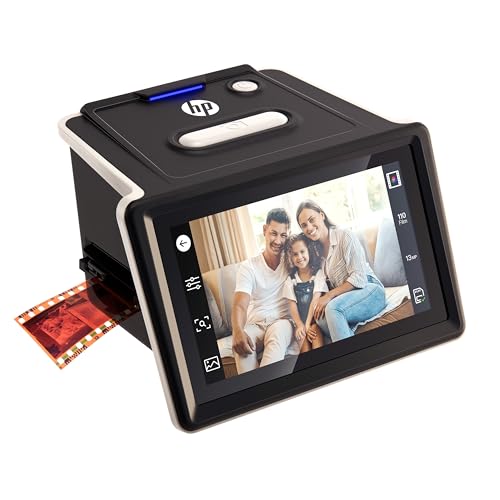
The HP FilmScan offers a 5″ touch screen with a gallery display to quickly view, edit, and save slides and negatives. It supports direct saving to SD cards or a connected computer. The device accommodates 135 (35mm), 110, and 126 formats, both color and black-and-white, with a continuous feed design to streamline scanning sessions. The large display aids in precise previews and edits, and the device is oriented toward home or small office archiving.
Magnasonic All-in-One 24MP Film Scanner
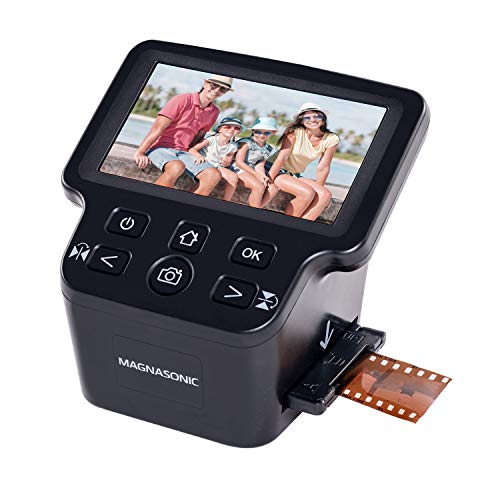
The Magnasonic FS71 All-in-One scanner supports 35mm, 126, 110, and Super 8 negatives, plus 135/126/110 slides. It delivers high-resolution 24MP digital JPEGs and includes a 5″ LCD for direct viewing. Built-in memory plus an SD card slot enables flexible storage options. An HDMI output provides an option to view scanned images on a TV or monitor, making it convenient for group viewing and archiving on a larger screen.
Kodak Slide N Scan Max Digital Film Slide Scanner

The Kodak Slide N Scan Max builds on the original, featuring a larger 7″ LCD display and an updated 13/22MP sensor. It supports 135, 110, and 126 film formats and 50mm slides through an easy-load tray system. This model includes adapters, a slide holder, cleaning brush, and USB cables, making it suitable for more extensive archival tasks and frequent scanning sessions with a broader preview screen for detailed edits.
Kodak SCANZA Digital Film & Slide Scanner
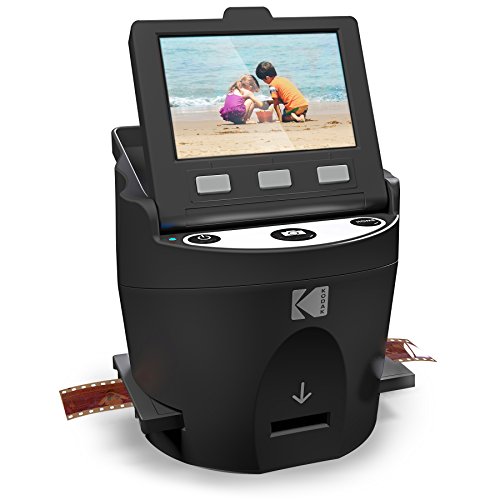
The Kodak SCANZA is a versatile film-to-JPEG scanner supporting 35mm, 126, 110, Super 8, and 8mm formats. It features a 3.5″ LCD, dedicated adapters, and big one-touch buttons for quick scanning and saving. While compact, it provides reliable scanning performance for a range of negative formats and is designed for straightforward operation without requiring a computer.
Buying Guide
- Format compatibility: Ensure the scanner supports your negative formats (35mm, 126, 110, Super 8) and slides. Some models are optimized for specific formats, while others handle a wider range.
- Display size and usability: A larger built-in LCD helps with previews and edits before saving. Consider a model with gallery mode for easy slideshow-style viewing.
- Storage option: Look for direct SD card saving, USB transfer, or computer compatibility. If you plan many scans, SD card capacity and built-in memory matter.
- One-touch vs. manual scanning: One-touch scanning speeds up workflows, but some users prefer manual controls for precise color and exposure adjustments.
- Power and portability: Battery-powered or USB-powered devices are ideal for travel, while plug-in models may suit a stationary archive setup.
- Image quality: Pixel counts (MP) and interpolation can affect final quality. Higher native MP generally yields crisper results, especially for large prints.
- Ease of use: Simple feed trays, reliable adapters, and clear instructions reduce setup time and increase throughput for archival projects.
When evaluating options, balance format support, display usability, and storage flexibility with the volume of negatives you need to digitize. For long-term archives, a scanner with robust adapters and reliable transfer options reduces bottlenecks and helps preserve memories for future generations.