Best ND Filter Comparisons: Which 82mm Variable ND Filter Meets Your Needs
When deciding between using an ND filter or going without one, shooters weigh control over exposure, motion, and depth of field against image sharpness and convenience. This guide highlights five 82mm variable ND filters, outlining who each product is best for, and why it stands out. It’s ideal for enthusiasts, hobbyists, and professionals seeking reliable on-lens light control in bright conditions.
| Product | Best For | Why It Stands Out |
|---|---|---|
| K&F CONCEPT 82mm Variable ND2-ND400 (1-9 Stops) – B-Series | Versatile outdoor shooters | 8 multi-layer coatings; 1–9 stops; glare-free surface |
| K&F CONCEPT 82mm True Color Variable Fader ND2-32 + CPL – Nano-X Series | Snowy skies and water scenes | ND & CPL combo; 1–5 stops; no X cross; AGC glass |
| K&F CONCEPT 82mm Putter Variable ND Filter ND2-ND400 – Nano-X Series | Precision dial users | Putter design for precise stop adjustment; 1–9 stops; 28 coatings |
| K&F CONCEPT 82mm Variable ND Filter ND2-ND32 – Nano-X Series | Budget-conscious shooters | 1–5 stops; no X cross; 18 coatings; robust framing |
| NEEWER 2-in-1 82mm Variable ND Filter ND2–ND32 & CPL | Wide-angle shooters needing cross-filtering | ND + CPL in one; no dark cross on wide lenses; nano coatings |
K&F CONCEPT 82mm Variable ND2-ND400 (1-9 Stops) – B-Series

- Import Optical Glass with 8-layer coatings to reduce reflections and glare.
- Adjustable 1–9 stops with 360-degree rotation for precise dimming.
- Glare-free surface achieved via oxidized sandblasting on the metal frame.
Who it’s best for: Outdoor photographers needing broad exposure control across varied lighting, from sunny day landscapes to moving water scenes. This filter is better for users who require wide adjustment range and durable coating protection.
Why selected: The combination of eight coatings, broad stop range, and a glare-free finish provides reliable, flexible light management without introducing color shifts.
Caution / Limitation: Maximum stops may occasionally create a temporary X black cross with certain lenses and focal lengths, a common trade-off with strong variable ND use.
K&F CONCEPT 82mm True Color Variable Fader ND2-32 + CPL – Nano-X Series

- Combines ND and CPL in one unit for light control plus polarization.
- 1–5 stops of ND; avoids unwanted reflections from non-metallic surfaces.
- Imported AGC optical glass with 28 coatings for high-definition results.
Who it’s best for: Shooters who want to darken skies and boost color with a built-in polarizer—ideal for bright landscapes and water scenes where glare is a concern.
Why selected: The ND+CPL combination reduces glare and enhances contrast, helping skies and water look more natural without color shifts.
Caution / Limitation: Packaging notes may vary; older/newer packaging won’t change the product content.
K&F Concept 82mm Putter Variable ND Filter ND2-ND400 – Nano-X Series
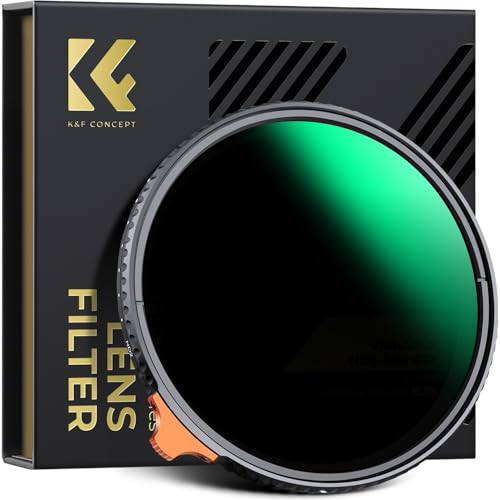
- Putter design assists precise stop adjustment; marks on the frame from ND2 to ND400.
- 28-layer coatings on premium AGC glass for reduced reflections.
- Waterproof and scratch-resistant coatings for rugged use.
Who it’s best for: Videographers and photographers who value quick, tactile control and clear stop indicators during dynamic shoots.
Why selected: The putter-style frame makes stop setting more intuitive in the field, which can speed up exposure corrections on the go.
Caution / Limitation: Some users may experience heavier lens elements due to the compact putter design.
K&F CONCEPT 82mm Variable ND Filter ND2-ND32 – Nano-X Series
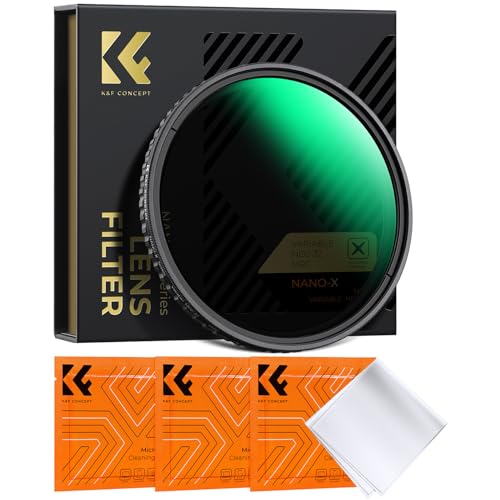
- 1–5 stops of light reduction with 18-layer coatings.
- No X cross due to self-lock design and hard stops at ends of the range.
- Premium AGC optical glass preserves color balance.
Who it’s best for: Budget-conscious users who still want reliable ND performance with minimized cross shadows.
Why selected: The 1–5 stop range covers common exposure needs while maintaining image integrity through robust coatings.
Caution / Limitation: Limited to 5 stops in this model, which may require stacking or alternative solutions for more dramatic exposure control.
NEEWER 2-in-1 82mm Variable ND Filter ND2–ND32 & CPL

- Variable ND and CPL in one kit; reduces light and removes reflections simultaneously.
- ND range 1–5 stops; designed to minimize vignetting on wide-angle lenses.
- 30-layer nano coatings; HD optical glass offers high clarity and low flare.
Who it’s best for: Wide-angle shooters who need a single filter to handle bright scenes while controlling glare on reflective surfaces.
Why selected: The two-in-one design provides practical versatility for travel and documentary work, especially when changing lighting conditions quickly.
Buying Guide: How to Choose an ND Filter Without Compromising Image Quality
- Stops and range: Determine whether you need 1–5 stops for standard daylight shots or 1–9 stops for extended motion blur and shallow depth of field in bright sun.
- Glass quality and coatings: Look for imported optical glass (AGC) and multiple coatings to minimize reflections, flare, and color shift.
- Cross patterns and frame design: Some ND filters can produce a black cross at higher stops, especially with certain lenses. Self-locking frames and hard stops help reduce this issue.
- Waterproof and scratch resistance: If you shoot outdoors or in challenging environments, coatings that resist water, oils, and scratches extend filter life.
- Integrated CPL options: If you shoot landscapes around water or glass, a combined ND+CPL can simplify gear but may introduce more complexity in purchasing and maintenance.
- Weight and size: A 82mm diameter is common, but some designs add weight or bulk. Consider how it affects balance on your lens and tripod.
Frequently Asked Questions
- What is an ND filter used for?
It reduces the amount of light entering the lens, enabling longer exposures or wider apertures in bright conditions.
- What does “no X cross” mean?
It means the frame design minimizes the cross-pattern or “X” artifact that can appear at higher stops with some variable ND filters.
- Is a CPL necessary with ND filters?
A CPL can help reduce reflections and darken skies, but it’s not always required if you’re using a dedicated ND only filter. A combined ND+CPL offers versatility in one unit.
- Can I stack two ND filters?
Stacking can increase total stops but may introduce color shifts or vignetting, especially on wide-angle lenses. Check the filter’s design and your lens.
- How do I avoid vignetting with wide-angle lenses?
Use a self-lock frame with proper size, avoid stacking, and consider using a filter designed for wide-angle work that minimizes edge darkening.