Best Popular Mirrorless Cameras for 2026 and Beyond
The mirrorless camera market offers a wide range of options for beginners, enthusiasts, and professionals. This guide highlights five popular models that balance image quality, autofocus performance, and portability. Each entry includes a direct Amazon product link, a quick image reference, and core features to help you compare at a glance. Use the Buying Guide to understand key purchase considerations and how these models stack up against different needs, from travel vlogs to wildlife photography.
| Product | Brand | Notable Strength |
|---|---|---|
| Canon EOS R50 Black | Canon | Strong 4K video, Dual Pixel AF II |
| Sony a7 III | Sony | Full-frame, dynamic range, robust AF |
| Nikon Z50 II | Nikon | DX sensor variety, color presets |
| Canon EOS RP | Canon | Compact full-frame, versatile zoom |
| Canon EOS R100 with Two Lenses | Canon | Two-lens versatility, beginner-friendly |
Canon EOS R50 Black Mirrorless Kit

The Canon EOS R50 combines a 24.2 MP APS-C sensor with the DIGIC X processor for sharp images and strong color rendition. It supports up to 12 fps with electronic first curtain, up to 15 fps with electronic shutter, and features Dual Pixel CMOS AF II with a wide coverage area and deep learning subject detection for people, animals, and vehicles. This kit emphasizes hybrid use, delivering solid 4K video alongside reliable stills performance, making it appealing to content creators and vloggers.
Sony a7 III Full-Frame Mirrorless With 28-70mm

Sony’s a7 III is a renowned full-frame option with a 24.2 MP BSI sensor and 15-stop dynamic range. It supports up to 10 fps with either silent or mechanical shutter and AE/AF tracking, delivering robust performance for portraits, landscapes, and events. The camera emphasizes speed, reliability, and a broad lens ecosystem, making it a longtime favorite for professionals and serious enthusiasts seeking a full-frame solution with strong low-light capabilities.
Nikon Z50 II With Two Lenses

The Nikon Z50 II uses a 20.9 MP DX-format sensor with enhanced color presets and several Picture Control options, enabling quick creative adjustments. It features subject detection for people, pets, and vehicles and offers a compact, travel-friendly design. The system invites users to explore preset styles, customize their own looks, and share images via Nikon’s cloud-enabled workflow, balancing ease of use with creative potential.
Canon EOS RP Full-Frame Kit

Canon’s EOS RP kit packs a compact full-frame body with a versatile RF 24-105mm lens and stabilization. The camera emphasizes portability and image quality, offering up to 5 stops of shake correction and a bright focal range. It’s suitable for travel, portraits, and everyday shooting where a lighter full-frame option is advantageous, with strong autofocus performance and a broad lens lineup to grow with user skills.
Canon EOS R100 With Two Lenses
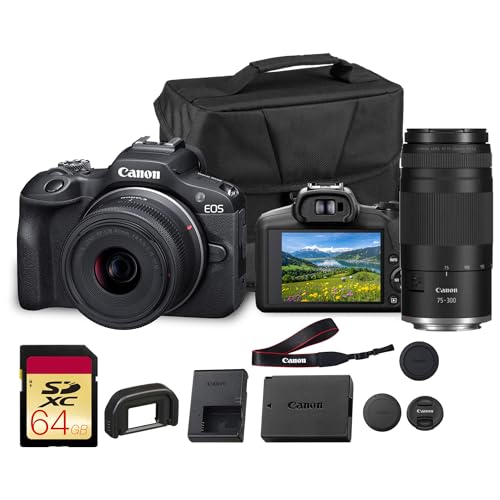
The Canon EOS R100 kit provides a beginner-friendly path into mirrorless photography with a 24.2 MP APS-C sensor and the DIGIC 8 processor. Included two lenses—the RF-S 18-45mm and a 75-300mm—offer wide-to-telephoto versatility, aiding landscapes, portraits, travel, and wildlife. The kit emphasizes affordability, compact form, and a smooth learning curve for new shooters entering the Canon R system.
Buying Guide: Key Purchase Considerations And Comparisons
Purpose and use case: Define primary needs—travel, portraits, video blogging, or wildlife. Full-frame bodies generally offer better dynamic range and low-light performance, while APS-C sensors can be lighter, more affordable, and excellent for beginners.
Sensor size and image quality: Full-frame sensors (Sony a7 III, Canon EOS RP) deliver broader tonal range and shallow depth of field. APS-C options (Canon R50, Nikon Z50 II, Canon R100) remain compelling for sharper pixel density and lighter kits.
Autofocus performance: Modern mirrorless cameras use advanced AF systems with subject detection. Look for models with reliable eye/face detection for humans and animals, plus tracking reliability during movement or video recording.
Video features: If you plan to vlog or produce 4K content, check frame rates, crop factors, autofocus behavior in video, and color science to match your editing workflow.
Lens ecosystem and expandability: Consider the availability and cost of lenses, adapters, and future upgrades. A robust lineup and compatible accessories can influence long-term satisfaction and ROI.
Portability and handling: Weight, grip, and control layout affect daily use. Travel and street shooters often prefer compact bodies, while professionals may prioritize grip, weather sealing, and durability.
Storage and workflow: Evaluate built-in features (like RAW support, buffer depth, and wireless sharing) and ecosystem tools (cloud syncing, Lightroom/Nikons’ software compatibility) to ensure a smooth editing workflow.
Future-proofing: New sensor generations and firmware updates can extend a camera’s relevance. Look for models with strong update momentum and good resale value.