Finding the right monopod for a DSLR camera can improve stability, reduce shake, and expand shooting options in tight spaces or dynamic environments. The following selections focus on solid build quality, versatile height ranges, and dependable heads that cater to a range of photography styles—from travel to wildlife. The table below highlights key specs to help you compare at a glance.
| Product | Brand | Max Load | Height Range | Folded Length |
|---|---|---|---|---|
| NEEWER 77 Inch Tripod Monopod for DSLR | NEEWER | 34 lb | 19″ to 77″ | 19″ |
| Altura Photo 62-Inch Monopod | Altura Photo | 5 lb | 16.75″ to 62″ | 16.75″ |
| CAMBOFOTO 73″ Tripod and Monopod | CAMBOFOTO | 11 lb | 21″ to 73.3″ | 19.7″ |
| NEEWER Extendable Monopod With Base | NEEWER | 11 lb | 52″ to 66″ | 20.5″ |
| Manfrotto Element MII Monopod | Manfrotto | 15 kg | up to 159 cm | 43 cm |
Below are detailed product sections to help you compare features, assess compatibility with your DSLR setup, and decide which monopod suits your shooting style. Each entry includes a concise breakdown of design, stability, and practical use cases.
NEEWER 77 Inch Tripod Monopod for DSLR

The NEEWER 77 Inch Tripod Monopod combines a robust aluminum frame with a dual-purpose center column that can extend the unit into a tall monopod or a full tripod. The 4-section legs feature quick pull flip locks for rapid height adjustments, enabling a working height range from 19″ to 77″. A 360° panoramic ball head with two independent adjustment knobs provides precise angle control for creative panoramas and dynamic compositions. The center column supports macro-style shooting with its inverted design, which can help with close-up and low-angle work. The unit folds to a compact 19″ for travel and weighs around 3.53 pounds, and it includes a bag for portability. This model suits photographers who want a versatile, tall support that can adapt to both handheld and tripod shooting styles.
Key considerations include the head’s smooth rotation and independent controls, which help you balance weight distribution when using heavier DSLR bodies. The included Arca-type quick-release plate supports fast switching between cameras and lenses. While the maximum load is generous for most DSLR setups, users with large telephotos or heavy pro lenses may want to verify compatibility with their specific rig. The product is designed for travel and field use, offering reliable stability on varied surfaces thanks to its sturdy construction and locking mechanisms. Overall, it is a strong all-around option for travel photographers and enthusiasts who frequently switch between monopod and tripod configurations.
Altura Photo 62-Inch Monopod

The Altura Photo 62-Inch Monopod emphasizes portability and light weight, packing a retractable design into a compact form. When collapsed, the monopod measures about 16.75 inches, making it easy to stash in a carry-on or tote bag. It offers a universal 1/4″ camera thread with a 3/8″ screw adapter for broader compatibility, and a 5-pound payload capacity suitable for most entry-level DSLR bodies with standard zoom lenses. The foam grip and safety wrist strap contribute to comfortable handling during long shoots. The combination of a lightweight aluminum build and simple setup makes this monopod an excellent choice for travel, street photography, and casual shooting where mobility matters more than extreme payload or advanced head controls.
Considerations include the payload limit and the absence of a built-in monopod base, which means you’ll rely on the monopod alone for stability. If your photography involves heavier rigs or long exposure handheld panning, you may want to pair this monopod with a small, stable head or a compact action-style head. Setup is quick, and the lightweight design translates into less fatigue during day-long shoots. For photographers prioritizing portability without sacrificing basic stability, this Altura option offers strong value and dependable performance in everyday DSLR work.
CAMBOFOTO 73-Inch Camera Tripod And Monopod

This CAMBOFOTO model is designed for versatility, offering a compact entry-level DSLR tripod that can also convert into a monopod. The center column quickly detaches, enabling swift transitions between shooting positions. The maximum height of 73.3 inches, a minimum height around 21 inches, and a maximum load of 11 pounds make it suitable for a wide range of cameras, including DSLRs and mirrorless bodies with standard lenses. The tripod weighs about 3.3 pounds and folds to 19.7 inches, which enhances travel convenience. It features a 360° rotation head and a 160° tilt range, enabling broad framing options for events, travel vlogs, and outdoor scenes.
Upgrade benefits include CNC-processed joints for improved precision and durability, a resin-coated surface to resist scratches, and a stable support system that helps prevent wobble on uneven terrain. While not intended for heavy telephoto gear, this model provides dependable stability for daily shooting tasks and educational use. It is especially appealing for photographers who value quick pose changes and straightforward, reliable setup in a single, multi-purpose unit.
NEEWER Extendable Monopod With Detachable Base
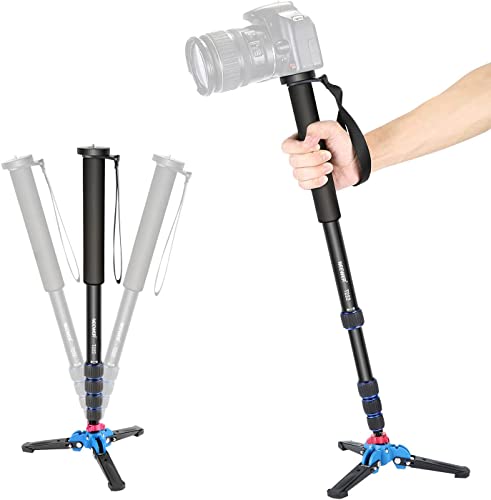
The NEEWER extendable monopod includes a detachable and foldable stand base with a three-legged support, broadening its stability for overhead shots or ground-level perspective. The monopod extends up to 66 inches (168 cm) and folds to about 20.5 inches, balancing tall reach with portability. The system supports a maximum load of 11 pounds, making it adequate for many DSLR configurations, including some mid-range zoom lenses. The 15-degree tilt at the base and 360° panoramic rotation of the top head enable flexible framing and creative angles. The 5-section leg design provides adaptable height settings for uneven surfaces or step-down spots during outdoor shoots.
Practical usage considerations include ensuring proper handling when mounting cameras, as improper balance could stress the locking joints. The included tripod-style base expands shooting options, especially for low-angle shoots or macro work, where a stable foundation is beneficial. This model is well-suited for content creators who need a modular setup capable of shifting from a standard monopod to a stabilized base with minimal gear swaps.
Manfrotto Element MII Monopod

The Manfrotto Element MII Monopod emphasizes compactness and stability, delivering a 159 cm maximum height with a foldable length of 43 cm and a lightweight frame that weighs around 0.5 kg. It supports a payload of up to 15 kg, which accommodates most DSLR bodies with standard lenses, making it a versatile choice for travel and daily shoots. The five-section design features ergonomic twist-locks that ensure quick, reliable height adjustments. The wrist strap and a comfortable rubber grip enhance handling during long shooting sessions. The monopod is sized for easy transport while still offering substantial reach and solid stability for a variety of genres, from street photography to portrait work.
Key considerations include the balance between compact footprint and payload capacity. The fast setup provided by twist-lock mechanisms helps photographers lock in a reliable stance quickly, which is essential for events or documentary work. While very portable, ensure your camera and lens combination does not exceed the listed payload, and consider whether you need additional stabilization accessories for heavier telephoto setups. This option is well-suited for photographers who travel frequently and need a dependable, high-quality monopod from a renowned brand.
Buying Guide
When choosing a monopod for a DSLR, consider the following factors to align your gear with your shooting style:
- Weight and Payload: Check the maximum load the monopod can support. DSLRs with long zoom lenses or pro-body configurations demand higher payload ratings to avoid wobble or tip risk.
- Height Range and Stability: A wide height range is useful for ground-level shooting, standing portraits, or overhead angles. A stable head, ideally with independent pan and tilt controls, improves maneuverability during framing.
- Base Type: Monopods with detachable bases offer extra stability for certain angles and can function as lightweight tripods in a pinch. If you shoot a lot on rugged terrain or in windy conditions, a base may be beneficial.
- Head and Quick-Release System: A smooth, precise ball head with dual locking controls enhances shot framing, panoramas, and micro-adjustments. An Arca-type quick-release plate speeds camera switching and ensures secure attachment.
- Material and Build: Aluminum is common and cost-effective, while carbon fiber offers lighter weight and stiffness at a higher price. Consider travel frequency and weight tolerance when choosing materials.
- Portability: Folded length and overall weight affect travel ease. Look for travel-friendly lengths if you commute or hike frequently with gear.
- Versatility and Compatibility: Ensure your camera body, lens combination, and accessories (microphones, monitors, etc.) are compatible with the mounting thread pattern and quick-release system.
- Accessories: Carry bags, straps, bubble levels, and quick-release plates add reliability and convenience for fieldwork.
In summary, the best monopod for you depends on your typical shooting scenarios. Do you travel light and shoot casually, or do you carry heavier DSLRs with long lenses and require high stability? For travelers and hobbyists, a lightweight monopod with a solid head and a compact folded length is ideal. For professionals who shoot in varied environments, a taller monopod with a detachable base and a robust head will provide more options. Always verify compatibility with your camera body and lens setup, and consider a model that allows easy upgrades or accessory additions as your kit evolves.