Best Mirrorless Cameras for Astrophotography in 2026
Astrophotography demands sensitive sensors, low-noise performance, and flexible optics. This guide highlights versatile mirrorless cameras and compatible gear that help you capture moonlit craters, distant nebulae, and starry skies with clarity. Each pick blends image quality, autofocus reliability, and ease of use for amateur and enthusiast astronomers alike.
The following table summarizes the featured products, focusing on astrophotography potential, sensor size, and lens or accessory fit. Use it as a quick reference when comparing options.
| Product | Brand | Key Benefit | Sensor Type | Notable Accessory |
|---|---|---|---|---|
| Sony a7 III (ILCEM3K/B) | Sony | Full-frame versatility with high ISO performance | 24.2 MP BSI Full-Frame | Included 28-70mm kit lens |
| Canon EOS R100 Kit (RF-S 18-45mm, RF 75-300mm) | Canon | Compact APS-C option with Dual Pixel AF | 24.2 MP APS-C | Two versatile lenses included |
| SVBONY SV305C Astrophotography Camera | SVBONY | Color 1.25″ telescope camera for planetary imaging | 1/2.8” IMX662 sensor | Removable UV/IR cut glass |
| Celestron NexImage 20 Solar System Camera | Celestron | High-resolution lunar/planetary imaging | 20 MP AR2020 CMOS | USB-C with ROI and autoguiding |
| Starboosa Nikon Z Adapter for Telescope | starboosa | Helps full-frame mirrorless cameras mount to telescopes | Nikon Z series compatibility | 1.25″ T adapter included |
Sony A7 III Full-Frame Mirrorless Camera with 28-70mm Kit

The Sony a7 III delivers a robust full-frame sensor and excellent high-ISO performance, making it a staple for astrophotography. Its 24.2 MP Back-Illuminated sensor benefits low-light subjects, offering high dynamic range and rich color fidelity. With up to 10 fps continuous shooting and reliable AF tracking, this body helps capture faint deep-sky targets and dynamic lunar features. While the included 28-70mm lens is a versatile start, users often pair the body with fast primes or longer telephotos for star clusters and nebulae. Noise management and long exposure flexibility are core strengths.
Canon EOS R100 Kit with RF-S 18-45mm and RF 75-300mm
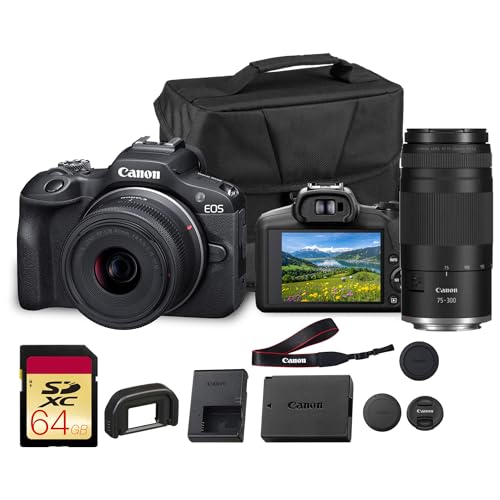
The Canon EOS R100 kit combines a compact AP-C sensor with Dual Pixel CMOS AF and a straightforward user interface, making it accessible for beginners venturing into astrophotography. The 24.2 MP sensor yields sharp star fields, while the included RF-S 18-45mm lens provides a broad framing option for wide-field Milky Way shots, landscapes with star trails, and nebula glimpses. The RF 75-300mm lens extends reach for planets and celestial targets. The kit’s balance between size, weight, and image processing makes it a practical starting point for those who want an entry into mirrorless astronomy without a heavy rig.
SVBONY SV305C Astrophotography Camera

The SV305C is a color telescope camera designed for planetary imaging and EAA (Electronically Assisted Astronomy). Its IMX662 sensor and 1/2.8” back-illuminated design provide improved low-light sensitivity, while the removable UV/IR cut glass helps reduce spectral interference and protect the sensor. This camera is optimized for rapid frame rates and real-time viewing, making it well-suited for lunar and planetary captures. While not a rugged deep-sky solution, it offers an approachable entry point for color planetary work and live-view sessions through telescope eyepieces.
Celestron NexImage 20 Solar System Camera

The NexImage 20 is tailored for lunar, planetary, and solar imaging with a 20 MP AR2020 CMOS sensor. It’s designed for straightforward plug-and-play operation, connecting to a telescope and computer for quick captures. The sensor resolution supports fine lunar craters and planetary details, while low-noise performance helps maintain image fidelity during stacked frame processing. This camera is popular for beginners and hobbyists who want a simple path to high-resolution solar system imagery without complex camera rigs.
Starboosa Telescope Camera Adapter Mount for Nikon Z Series

The Starboosa adapter offers a practical bridge for full-frame mirrorless Nikon Z cameras to telescope prime focus. Constructed from aluminum alloy, it provides stability and durability for astrophotography sessions, supporting Z-series bodies with a 1.25″ T adapter integration. This accessory helps expand your telescope-to-camera setup and is particularly useful for wide-field star-field captures or imaging through a telescope with camera bodies that require a solid mounting solution. It’s best paired with telescope-specific focusers and calibration tools for precise framing.
Buying Guide: Key Purchase Considerations for Astrophotography with Mirrorless Cameras
- Sensor size and pixel density: Full-frame sensors offer higher light-gathering capability and better dynamic range, which is beneficial for faint nebulae and extended exposures. APS-C options are lighter and more affordable but still capable with good lenses.
- Low-light performance: Look for cameras with clean high-ISO performance and robust noise reduction. In astrophotography, stacking and long exposure are common, so sensor performance at higher ISO matters for deep-sky work.
- Dynamic range and bit depth: A wide dynamic range preserves detail in bright stars and dark skies. 14-bit or higher RAW data is desirable for flexible post-processing.
- Lens ecosystem and focal length: Wide-to-standard zooms are handy for Milky Way and landscape shots, while telephotos help frame planets or distant clusters. Budget for fast lenses (f/2.8 or faster) if possible for shorter exposures and more light.
- Compatibility with astrophotography accessories: Dew heaters, mount compatibility, and off-axis guiders can improve long-exposure results. Consider adapters like the Nikon Z, Canon RF, or Sony E compatibility depending on your system.
- Processing workflow: STAR stacking software, calibration frames (dark, bias, flat), and post-processing tools influence final image quality. Ensure your camera supports RAW capture and has reliable software compatibility.
- Portability vs. performance: Heavier full-frame bodies deliver top performance but may require more robust mounts. For travel or field sessions, a compact APS-C body with strong lenses can be a practical choice.
- Budget considerations: Entry-level packages offer a manageable starting point, while higher-end bodies deliver better dynamic range and noise performance. Balance budget with lens choices and necessary accessories.
- Future upgradability: Consider how easily your kit can scale with additional lenses, telescopes, or guiding equipment. A modular approach often yields long-term value.
- Portability and ease of use: Choose systems with intuitive menus and reliable autofocus performance, especially if you plan to shoot planets, lunar features, or star fields with automated sequences.
Astrophotography with mirrorless cameras combines modern sensor technology with flexible optics. Whether you start with a full-frame Sony, an entry Canon setup, or a telescope-adapted accessory, the key is to pair a camera with suitable lenses, mounts, and processing workflows. Evaluate your target projects—planetary detail, lunar imaging, Milky Way landscapes, or deep-sky nebulae—and choose a kit that aligns with your observing sessions, climate, and travel plans. This approach helps ensure clean frames, successful stacking, and compelling celestial photos.