Best Micro Four Thirds Telephoto Lenses for Reach and Clarity
ForMicro Four Thirds systems, telephoto zoom and prime lenses expand your creative reach—from distant wildlife to fast-paced sports. This guide highlights five well-matched options that balance reach, optical performance, and portability. Each lens suits different scenarios, whether you need compact travel gear or serious long-range capability for action and nature shots. Explore features, compatibility, and what to consider when choosing your telephoto lens in this compact, objective overview.
| Product | Brand | Terrain | Key Strength |
|---|---|---|---|
| Panasonic LUMIX G VARIO 45-150mm | Panasonic | General telephoto, travel | Lightweight zoom with Optical Stabilizer |
| OM System M.Zuiko 40-150mm F4.0-5.6 | OM SYSTEM | Everyday telephoto, travel | Compact, fast MSC autofocus |
| OM System M.Zuiko 75-300mm F4.8-6.7 | OM SYSTEM | Wildlife, outdoor photography | Long reach in a compact body |
| Panasonic Leica DG Vario-Elmar 100-400mm | Panasonic | Super-telephoto, wildlife | Leica optical quality with robust reach |
| BM Premium 420-1600mm Manual Telephoto | BM Premium | Extreme long-range, sports | Extended reach with 2X teleconverter |
Note: All products listed are compatible with Micro Four Thirds cameras and designed to deliver sharp images with reduced blur, even when shooting from a distance. The chosen lenses span compact to extreme long-range options for diverse shooting scenarios.
Panasonic LUMIX G VARIO 45-150mm F4.0-5.6

The Panasonic 45-150mm F4.0-5.6 is a lightweight zoom designed for Micro Four Thirds bodies. It features a multi-coated optical path to reduce ghosting and flare, supporting 12 elements in 9 groups with special low-distortion elements. An inner focus system provides smooth, near-silent focusing for both stills and video, while Panasonic Mega O.I.S. helps stabilize shots in lower light. This combination makes it a practical travel lens that balances performance with portability for everyday telephoto shooting.
OM System M.Zuiko Digital 40-150mm F4.0-5.6

This M.Zuiko 40-150mm lens offers a versatile focal range for Micro Four Thirds systems, combining a practical zoom with a compact physical profile. It features high-speed imaging AF (MSC) for quick, quiet focus, helpful in candid wildlife or fast-moving subjects. Its design emphasizes portability without sacrificing image quality, making it a strong option for travelers and everyday shooters who want an unobtrusive telephoto solution with reliable autofocus performance.
OM System M.Zuiko Digital 75-300mm F4.8-6.7

The 75-300mm is a compact, outdoor-friendly telephoto that extends reach for wildlife and distant subjects. Noted for its lightweight construction and good optical performance, it emphasizes a balance of size and capability. The lens mentions a 62mm filter thread for protection and imaging enhancement, and it incorporates an MSC mechanism to enable fast, quiet autofocus. This lens suits photographers who want more distance without adding significant bulk to their kit.
Panasonic LUMIX Leica DG Vario-Elmar 100-400mm

This Leica-branded zoom emphasizes edge-to-edge sharpness across a 100-400mm range, delivering exceptional optical quality aligned with Leica standards. Its 35mm equivalent reach makes it a formidable choice for wildlife, birds, and distant action, while remaining relatively portable for a long telephoto. The lens combines a compact form with robust mobility, enabling nature photographers to carry less gear without sacrificing focal length when needed.
BM Premium 420-1600mm Manual Telephoto
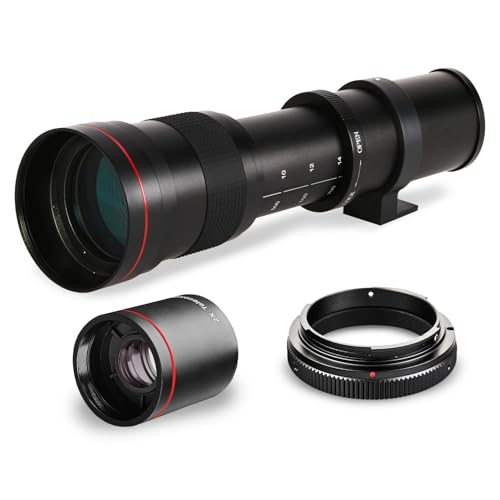
This manual telephoto offers extreme reach by extending from 420mm up to 1600mm, making it suitable for sports, wildlife, and distant scenes. It’s designed for Olympus 4/3 mount cameras, ensuring camera-lens compatibility with Micro Four Thirds bodies. An included 2X teleconverter further amplifies the reach to 1600mm, enabling dramatic compression and detail at a distance. The design prioritizes long-distance performance while maintaining a practical weight for field use.
Buying Guide: Key Purchase Considerations
Purpose and focal length: Shorter telephotos (around 40-150mm) are ideal for portraits, events, and everyday shooting, while longer options (300mm and above) excel at wildlife and distant action. Consider your typical subjects and shooting distances when choosing.
Portability vs. reach: Telephotos vary in weight and bulk. Compact options are easier to carry, but longer lenses offer more reach. Bag space, travel plans, and handheld comfort should influence your decision.
Image stabilization and autofocus: Optical or sensor-based stabilization helps counter hand shake, especially at longer focal lengths. Fast, quiet autofocus is beneficial for video and fast-moving subjects.
Optical quality: Lenses branded with high-end optics (e.g., Leica-design or multi-coated elements) can provide crisper edges and better contrast. Consider coatings, element count, and build quality for challenging lighting.
Compatibility and availability: Ensure the lens is compatible with your Micro Four Thirds body, including mount type and autofocus support. Some lenses offer manual focus options that suit certain creative workflows.
Budget vs. value: Premium long-reach lenses deliver superb image quality but at higher cost and weight. For hobby or travel use, a mid-range telephoto may offer the best balance of performance and value.
Practical tips: When shooting distant subjects, use a stable support such as a monopod or tripod, especially in low light. Shoot with a slightly higher ISO if necessary to maintain a fast shutter speed and minimize motion blur.
In summary, the Micro Four Thirds ecosystem offers a spectrum of telephoto options—from compact zooms to extreme long-range lenses. The five lenses highlighted here provide a mix of portability, reach, and optical performance suitable for wildlife, sports, travel, and everyday photography. Evaluate focal range, autofocus performance, stabilization, and weight to pick the lens that best aligns with your shooting style and gear kit.