Best Micro Four Thirds Prime Lenses for Sharp Portraits and Travel
Discover top micro four thirds prime lenses that balance speed, size, and image quality for Olympus and Panasonic bodies. This guide highlights versatile options for portraits, low light, and everyday shooting, with concise buying tips to compare performance and value.
| Product | Brand | Focal Length | Aperture | Notes |
|---|---|---|---|---|
| Meike 35mm F1.4 Large Aperture Manual Focus Prime | Meike | 35mm | 1.4 | Manual focus, versatile for portraits |
| YONGNUO YN42.5mm F1.7M II | YONGNUO | 42.5mm | 1.7 | Auto focus, compact portrait lens |
| OM SYSTEM Olympus M.Zuiko Digital 45mm F1.8 | OM SYSTEM | 45mm | 1.8 | Compact, bright for low light |
| Olympus M.Zuiko Digital 25mm F1.8 | OM SYSTEM | 25mm | 1.8 | Classic normal field of view |
| Meike 35mm F1.7 Manual Focus Prime | Meike | 35mm | 1.7 | Compact, affordable prime |
Meike 35mm F1.4 Large Aperture Manual Focus Prime MFT
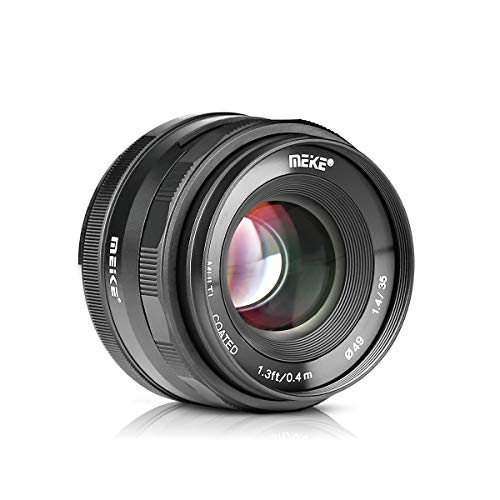
Meike’s 35mm F1.4 is a bright, affordable prime designed for Micro Four Thirds cameras. It uses a 5-group 8-element optical layout to deliver a wide maximum aperture of f/1.4, enabling smooth bokeh and good performance in low light. The lens is compatible with Olympus and Panasonic Micro Four Thirds bodies, including popular models such as the E-P1, E-M1, and GH6 series. Its fixed focal length makes it a strong option for portraiture, street photography, and close-up work, where shallow depth of field and edge-to-edge sharpness are desirable. The manual focus design emphasizes precise focus control for creative framing and emphasis on technique over automation.
YONGNUO YN42.5mm F1.7M II

The YONGNUO 42.5mm F1.7M II is a compact prime with a fast aperture that supports outstanding subject isolation and background blur. It offers a practical focal length close to a natural 50mm on full-frame, equivalent to about 42.5mm on Micro Four Thirds. The lens is designed for ease of travel and daily shooting, delivering sharp results with a bright f/1.7 maximum aperture. Its fixed focal length makes it well-suited for portraits, street, and general-purpose photography on MFT bodies.
OM SYSTEM Olympus M.Zuiko Digital 45mm F1.8

The 45mm F1.8 from Olympus is a defining portrait-length prime for Micro Four Thirds. With a fast maximum aperture of f/1.8, it excels in low light and creates pleasing background blur, even in compact bodies. The lens is praised for its compact design, crisp rendering, and reliable AF for smoother performance in daylight and dim settings alike. It suits headshots and full-body portraits with a natural perspective and strong subject separation.
Olympus M.Zuiko Digital 25mm F1.8

The 25mm prime offers a 50mm equivalent field of view, an ideal everyday lens with a bright f/1.8 aperture. Its compact design and 7-blade diaphragm help produce smooth micro-contrast and pleasing bokeh. Suitable for street, travel, and portrait work, it balances size and performance for Micro Four Thirds shooters seeking a versatile normal-length option.
Meike 35mm F1.7 Manual Focus Prime

The Meike 35mm F1.7 is another budget-friendly manual focus option for Micro Four Thirds. It supports a wide aperture for low-light performance and is compatible with a range of Olympus and Panasonic cameras. The lens emphasizes compactness and portability, making it a practical choice for travel photographers who value a lightweight setup with strong subject separation and a classic 35mm field of view.
Buying Guide
- Focal length and field of view: On Micro Four Thirds, 25mm to 45mm equivalents cover portrait and everyday work well. Consider whether you prefer a normal 25mm, a tighter 45mm, or a standard 42.5mm style for your subjects and working distance.
- Aperture and low-light performance: Faster primes (f/1.4 to f/1.8) provide subject isolation and keep shutter speeds higher in dim light. Manual focus options can save cost but require precise technique; autofocus primes reduce rack focus time in dynamic scenes.
- Autofocus vs. manual focus: If you shoot action or events, AF lenses (like some Yongnuo options) may be advantageous. For controlled studio work, lightweight manual primes can deliver predictable rendering and creative control.
- Size and weight: Travel-friendly primes emphasize compact form factors and light weight. Two prime choices in a small kit can cover most everyday shooting scenarios.
- Optical quality and build: While budget primes offer great value, premium options often provide better edge-to-edge sharpness, reduced distortion, and weather sealing on higher-end models.
- Budget and compatibility: Verify compatibility with your specific MFT body and firmware, especially for older or third-party lenses. Manual vs. electronic communication with the camera can affect focus confirmation and metering.
The Micro Four Thirds ecosystem benefits from a compact lens lineup that delivers fast apertures and clean image quality. This selection prioritizes reliable focal lengths, bright apertures for portrait work, and practical designs suitable for travel and daily photography across Olympus and Panasonic bodies. When choosing, weigh the need for autofocus against the charm and control of manual focus only designs, and consider how each focal length complements your primary shooting style.