Best Micro Four Thirds Portrait Lenses for Sharp Everyday Shots
Finding the right Micro Four Thirds portrait lens can unlock the natural look and soft backgrounds you want without adding weight to your kit. This guide highlights five widely compatible options that excel for portraits, street photography, and everyday moments on Micro Four Thirds cameras. Each lens balances aperture, focal length, and portability to help you achieve professional-looking results with affordable, readily available gear.
Summary of selected products:
- Panasonic LUMIX G 25mm F1.7 ASPH. (H-H025K)
- YONGNUO YN42.5mm F1.7 M II (Fixed Prime)
- Panasonic LUMIX G 42.5mm F1.7 ASPH. (H-HS043K)
- Olympus M.Zuiko Digital 45mm F1.8
- YONGNUO YN25mm F1.7 M (MFT Standard Prime)
Panasonic LUMIX G 25mm F1.7 ASPH.

The Panasonic LUMIX G 25mm F1.7 ASPH is a versatile Micro Four Thirds prime with a natural 35mm-equivalent focal length of about 50mm. Its bright F1.7 aperture yields a creamy background blur, helping portraits stand out against softly defocused scenes. The lightweight build (about 125 grams) makes it a strong travel choice for street photography and casual shoots. Internally, the lens uses 8 elements in 7 groups, including aspherical and ultra-high-refractive elements to improve sharpness and reduce distortions across the frame.
Key strengths include a compact package, bright aperture for low-light portraits, and a natural perspective that flatters facial features. While not the longest lens, its 50mm-equivalent field of view is well-suited for close-cropped headshots and environmental portraits without excessive working distance. Autofocus is reliable for keeping subjects sharp in dynamic settings, and the lens design emphasizes sheet-like bokeh that helps separate subject from background.
YONGNUO YN42.5mm F1.7 M II For Micro Four Thirds

This fixed focal length 42.5mm lens delivers a classic portrait perspective with a bright F1.7 aperture, enabling smooth background blur and beautifully defocused backgrounds in low light. The design is compact enough to slip into a small bag, making it ideal for travel or on-the-go shoots. Its manual-focus-possible feel combined with autofocus support gives photographers flexibility in low-contrast scenes or when fine-tuning expressions at arm’s length.
Performance notes emphasize the lens’s ability to render subject separation with strong micro-contrast, which helps skin textures read well in portraits. The 0.30m minimum focusing distance allows for approachable close-ups without sacrificing working distance for environmental shots. While some users may prefer more modern stabilization, the focal length remains a reliable choice for controlled studio-like portraits or candid street photography.
Panasonic LUMIX G 42.5mm F1.7 ASPH.

The 42.5mm F1.7 is a staple for portraits on Micro Four Thirds cameras, offering a flattering perspective close to a 85mm equivalent. Its bright aperture supports shallow depth of field for creamy bokeh, helping subjects pop from backgrounds. A 31cm minimum focusing distance provides flexible working space for nearly waist-up portraits. The lens also includes Power Optical IS (O.I.S.) for steadier handheld shots and is paired with fast AF to keep faces sharp as expressions change.
Users appreciate the effective balance of focal length, brightness, and portability. This lens suits both studio-like setups and outdoor environments where lighting varies. The combination of image stabilization and a compact form factor makes it a dependable choice for bloggers, event photographers, and enthusiasts documenting everyday moments with a professional edge.
OM SYSTEM M.Zuiko Digital 45mm F1.8

The Olympus M.Zuiko Digital 45mm F1.8 is a compact portrait favorite for Micro Four Thirds bodies, delivering sharp rendering with a bright f/1.8 aperture. Its 45mm focal length translates to roughly a 90mm equivalent, offering an ideal working distance for head-and-shoulders portraits and environmental framing. The lens is known for smooth bokeh and pleasing edge-to-edge sharpness, with a minimum focusing distance around 0.20 meters for close-ups.
Its lightweight build and fast autofocus make it suitable for candid events and everyday photography. The 7-blade diaphragm contributes to soft, rounded out-of-focus highlights, which many portrait shooters seek for a flattering look. The lens complement fits well into a compact kit for those prioritizing image quality and portability without sacrificing subject isolation.
YONGNUO YN25mm F1.7 M Auto Focus For Micro Four Thirds
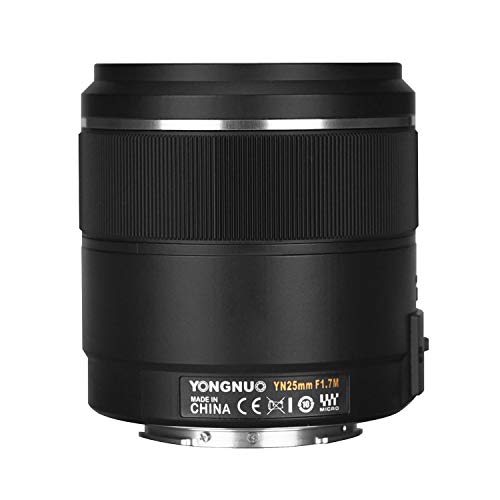
This 25mm F1.7 prime for Micro Four Thirds offers a classic portrait-friendly angle with enough width for environmental portraits while maintaining subject prominence. It supports both autofocus and manual focus modes, giving photographers flexibility in low light or high-contrast scenes. The lens is designed for Olympus and Panasonic cameras within the M4/3 ecosystem, making it a practical option for creators who want a dedicated standard prime with reliable performance across multiple bodies.
OM SYSTEM M.Zuiko Digital 45mm F1.8 (duplicate listing)
Note: The canonical listing for the Olympus 45mm F1.8 is included above; other listings may appear in search results. The focal length and optical characteristics remain consistent, providing reliable portrait performance with a bright aperture and compact design suitable for Micro Four Thirds cameras.
Buying Guide: Key Considerations For Micro Four Thirds Portrait Lenses
When choosing a Micro Four Thirds portrait lens, several factors influence image quality, usability, and long-term value. This guide compares focal length options, aperture capabilities, optical stabilization, autofocus performance, size and weight, and ecosystem compatibility to help you decide what best fits your photography style.
- Focal length and perspective: 25mm and 42.5mm lenses produce roughly equivalent 50mm and 85mm-90mm perspectives, respectively. The 45mm option offers a classic portrait look with a flattering perspective and tighter framing.
- Aperture and depth of field: Wider apertures (f/1.7–f/1.8) create shallow depth of field for subject separation and low-light shoots. Consider stopping-down for larger scenes or tighter focus when needed.
- Sharpness and bokeh: Aspherical and advanced optical elements reduce distortion and improve sharpness while delivering smooth background blur. Bokeh quality is a key aesthetic factor in portraits.
- Autofocus vs. manual focus: For candid or event photography, reliable autofocus is beneficial. In controlled settings, a manual focus option helps achieve precise eye-level focus and expressions.
- Size, weight, and portability: Lightweight primes maximize on-camera balance, especially with long shooting sessions or travel.
- Stabilization: Lenses with optical image stabilization (OIS) aid handheld portraits in lower light by reducing camera shake, allowing slower shutter speeds without blurring.
- Compatibility and ecosystem: Ensure the lens is designed for Micro Four Thirds and supports your camera brand (Panasonic or OM SYSTEM). Cross-brand compatibility can expand your options.
- Price and availability: Prime lenses with bright apertures tend to hold value and offer broad availability, though some third-party options can provide excellent performance at a lower price.
Practical usage scenarios include social events, outdoor portraits at golden hour, street photography with shallow depth, and studio-like setups where space is limited. A common strategy is to pair a 25mm or 42.5mm lens for general portraits with a longer option such as 45mm for headshots or tighter frames. Considering stabilization needs and autofocus behavior will help tailor a kit to your shooting style and subjects.