Best Micro Four Thirds Cinema Lenses for Creators and Filmmakers
For photographers and videographers exploring micro four thirds cinema lenses, this guide highlights five standout options that balance image quality, portability, and cinematic appeal. Each lens is evaluated for MFT compatibility, aperture, focal length, and key strengths for video work. Use the buying guide at the end to compare features across options and identify which lens best fits your shooting style and budget.
| Product | Brand | Focal Length | Max Aperture |
|---|---|---|---|
| SIRUI 50mm F1.8 Anamorphic Lens | Sirui | 50mm (anamorphic) | F1.8 |
| Laowa 17mm f/1.8 MFT | LAOWA | 17mm | f/1.8 |
| Meike 25mm T2.2 Mini Cinema | Meike | 25mm | T2.2 |
| Meike 8mm T2.9 Wide-Angle Cinema | Meike | 8mm | T2.9 |
| Meike 35mm T2.2 Mini Cinema | Meike | 35mm | T2.2 |
SIRUI 50mm F1.8 Anamorphic for MFT
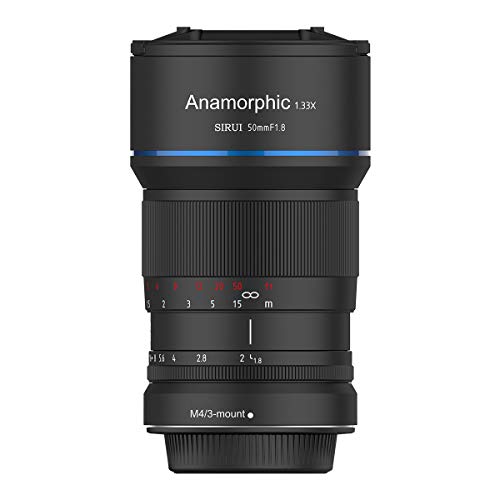
The SIRUI 50mm F1.8 Anamorphic lens is designed for cinema-style shooting on Micro Four Thirds bodies. It delivers a 2.4:1 widescreen look with a 33% wider field of view than typical 50 mm lenses and uses the Micro Four Thirds mount. This lens is aimed at filmmakers seeking a classic anamorphic look, including characteristic flares and horizontal compression that suits narrative scenes and climactic moments. The lens is compatible with Olympus and Panasonic cameras, offering a balance of image quality and portability for handheld and rig-based shoots. Its anamorphic construction lets shooters craft cinematic aspect ratios without swapping systems.
Key features include a dedicated anamorphic design for the MFT ecosystem, a widescreen perspective that pairs well with 2.39:1 or 2.35:1 crops, and a field of view that broadens the standard 50 mm lens experience. While it adds distinctive horizontal compression, it remains relatively compact for on-the-go production. Practical considerations include the need for careful focus management and potential distortions typical of anamorphic optics, which can be creatively leveraged or corrected in post as needed.
What it’s best for: music videos, interview setups with a cinematic edge, and narrative scenes where a distinctive widescreen look enhances storytelling.
Laowa 17mm f/1.8 MFT for Micro Four Thirds

The Laowa 17mm f/1.8 MFT lens is a lightweight option that brings an ultra-wide perspective to Micro Four Thirds cameras. With a fast maximum aperture of f/1.8, it enables shallow depth of field in low light and excels in environmental portraits, landscapes, and interior shoots. The compact design makes it an attractive choice for running gun workflows and travel-friendly rigs. Close focusing distance of roughly 15 cm expands its utility for close-up environmental storytelling and vignetting-friendly backgrounds on micro four thirds bodies.
Strengths include a bright f/1.8 aperture for night scenes, a compact profile ideal for gimbals and shoulder rigs, and a wide-angle perspective that enhances storytelling in confined spaces. Potential caveats are distortion at the extreme edges and the need for careful evaluation of color rendition and flare control, which may require post adjustments for certain scenes.
Best use cases: travel cinema, real-world interiors, wide establishing shots, and creative architecture videography.
Meike 25mm T2.2 Mini Cinema Lens
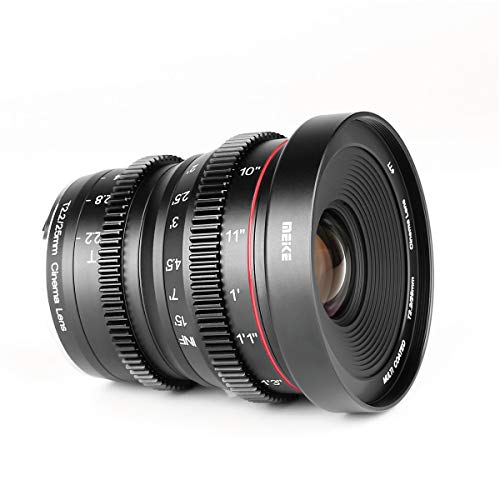
The Meike 25mm T2.2 Mini Cinema Lens provides a compact, fixed focal-length option tailored for Micro Four Thirds cameras. Its T-stop rendition at 2.2 helps achieve consistent exposure control across frames, which is advantageous for video work where lighting may vary between takes. The lens uses a multi-element optical design with eight groups and ten elements, aiming to deliver sharp imagery with manageable distortion and pleasing bokeh when paired with micro four thirds bodies. Manual focus lets operators dial precise focus pulls essential for cinematic storytelling.
Strengths include a compact footprint suitable for small rigs, a cinema-oriented T-stop scale for repeatable exposure, and a straightforward manual focus experience that’s ideal for controlled scenes. Considerations involve the lack of autofocus and the need for meticulous manual operation, especially in dynamic shooting environments.
Best application: indie shorts, interview sequences, and tabletop or product-focused cinema where a compact, controlled setup is desired.
Meike 8mm T2.9 Wide-Angle Cinema

The Meike 8mm T2.9 is a wide-angle cinema lens designed for Micro Four Thirds cameras. With an 8 mm focal length and a bright T2.9, this lens is tailored for expansive environmental shots, tight interiors, and dramatic establishing scenes. A wide 108-degree field of view supports immersive perspectives, while the 12-group, 17-element optical construction helps produce sharp, low-distortion imagery suitable for motion work. Manual focus and consistent exposure control pair well with controlled lighting setups for interview footage and cinematic B-roll.
Considerations include the extreme wide angle, which can exaggerate perspective and distortion if not carefully shot, and the manual operation that demands steady handling and protective rigging for consistent results.
Meike 35mm T2.2 Mini Cinema
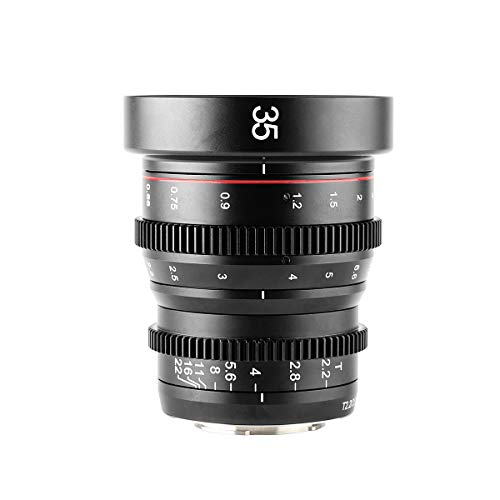
The Meike 35mm T2.2 Mini Cinema Lens offers a mid-telephoto field of view with a cinema-focused T2.2 aperture. This lens is suited for portraiture, interview setups, and tighter framing within indoor environments. Its 8-group, 10-element optical design supports clear, sharp imagery with low distortion, which is beneficial for both narrative shots and close-up storytelling on Micro Four Thirds cameras. Manual focus and controlled exposure help maintain a consistent look across scenes while enabling creative depth of field management.
Use cases include dialogue-heavy scenes, product demonstrations, and controlled performance shots where a natural perspective with subject isolation is desirable. Watch for perspective compression and carefully plan shot composition to maximize the 35 mm focal length’s strengths on MFT bodies.
Buying Guide: Key Considerations for Micro Four Thirds Cinema Lenses
- Mount and compatibility: Ensure the lens is designed for Micro Four Thirds and matches your camera body (Olympus, Panasonic, etc.).
- Aperture and exposure: Fast T/stop or f/stop values influence depth of field and low-light performance; consider whether you need cinema-friendly T-stops for consistent exposure.
- Focal length variety: A mix of wide, standard, and short-tele approaches enables versatile storytelling; anamorphic options deliver a distinctive widescreen look.
- Manual vs. autofocus: Cinema lenses often favor manual focus for precise pulls; verify whether your workflow requires autofocus, and whether the lens supports it.
- Size, weight, and build: Light, compact lenses improve mobility on gimbals and rigs, but ensure build quality matches shooting demands.
- Optical characteristics: Be aware of edge distortions, color rendition, flare behavior, and how these traits suit your color grading and post work.
- Price-to-performance: Cinema lenses vary in price; evaluate whether a given lens’s cinematic benefits align with your budget and expected usage.
- Best use cases: Wide scenes, interior shoots, interview setups, or location work; select lenses that align with your typical production scenarios.
- Maintenance and handling: Some cine lenses require calibration or gear like follow focuses and lens supports; plan for essential rigs and accessories.
In selecting a micro four thirds cinema lens kit, consider your typical shooting environment, lighting setup, and whether you prioritize a distinctive look (such as anamorphic flares) or flexibility across a range of scenes. A balanced lineup—including a fast wide, a standard portrait lens, and a couple of specialty primes—can cover most narrative and documentary workflows while staying within a manageable budget.