Best Micro Four Thirds Wide Angle Lenses for Wide-Angle Photography
Answer: Micro Four Thirds shooters can expand their creative reach with these wide-angle options designed for Panasonic, Olympus, and other MFT cameras. This guide highlights five lenses that balance speed, size, and image quality for landscapes, architecture, interiors, and street scenes. The best picks vary by user type: travel shooters favor compact, lightweight lenses; landscape and architectural shooters want edge-to-edge sharpness and minimal distortion; portrait workers may prefer lenses with pleasing bokeh at wider angles.
Summary table of chosen products:
- Meike 25mm F1.8 Large Aperture Wide Angle Lens (MFT) — best for versatile everyday shooting with shallow depth of field.
- OLYMPUS OM SYSTEM M.Zuiko 9mm F8.0 — best for ultra-wide fisheye accents and compact body cap design.
- Panasonic LUMIX G 25mm F1.7 — best for natural 50mm-equivalent field of view with bright background blur.
- TTArtisan 10mm F2 — best for dramatic ultra-wide landscapes and architectural detail with good control.
- Samyang SY12M-MFT-BK 12mm F2.0 — best for ultra-wide, sharp corners with strong low-light performance.
Meike 25mm F1.8 Large Aperture Wide Angle Lens
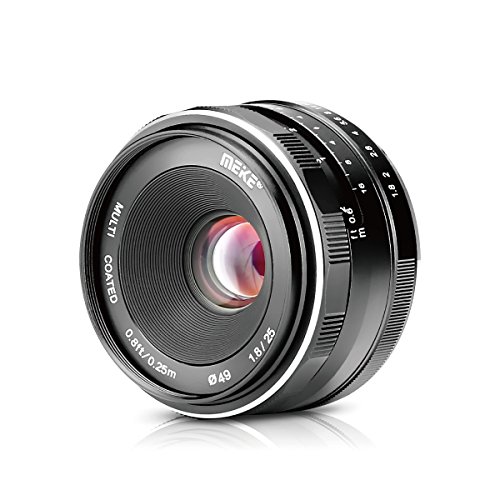
Best for: Everyday shooting with a fast aperture on Micro Four Thirds cameras. This fixed 25mm focal length is a versatile normal-to-wide option that suits street, portraits with environmental context, and travel photography.
Why selected: The 25mm focal length on MFT approximates a natural perspective similar to 50mm on full-frame, while the f/1.8–f/16 range provides smooth bokeh and flexibility in various lighting conditions. The lens uses 7 elements in 5 groups with multi-layer coatings to help control flare and contrast.
Caution: This is a manual-focus lens; enabling M mode or releasing without lens may be required on some bodies. AF-independent shots require manual focus precision, particularly at close distances.
OM SYSTEM M.Zuiko 9mm F/8.0 Fisheye Body Cap Lens

Best for: Ultra-wide, creative fisheye effects in a compact, body-cap design. Ideal for travelers and photographers who want a quirky viewpoint without adding bulk.
Why selected: The 9mm fisheye with manual focus lever and built-in body-cap form factor makes it a standout for ultra-wide creative shots and quick setups on Micro Four Thirds bodies. The body-cap style emphasizes portability and spontaneity.
Caution: Fisheye distortion is intentional and requires composition planning; not suitable when preserved perspective is essential for architectural accuracy.
Panasonic LUMIX G Lens 25mm F1.7 ASPH

Best for: A natural, versatile 50mm-equivalent field of view with excellent low-light performance and pleasing background blur.
Why selected: The 25mm focal length on Micro Four Thirds provides a bright f/1.7 aperture, a compact build (about 125g), and a robust optical design with 8 elements in 7 groups, including aspherical and special elements. It yields sharp results and a lightweight setup for everyday photography and small-studio scenes.
Caution: While very sharp, it is not a wide-angle extreme; for dramatic landscapes or tight interiors you may prefer wider options in this list.
TTArtisan 10mm F2 APS-C Wide-Angle Lens

Best for: Dramatic ultra-wide perspectives with strong subject inclusion, good for landscapes, architecture, and cityscapes on MFT bodies with APS-C compatibility.
Why selected: The 10mm focal length (APS-C equivalent around 15mm on MFT adapters) delivers expansive views and a 105° angle of view, with low-light capability thanks to a bright f/2.0 aperture and a 7-blade diaphragm for smooth bokeh. It supports manual focus for precise composition at close distances.
Caution: Designed for APS-C sensors; check compatibility with your Micro Four Thirds camera and any needed adapters for optimal use on MFT bodies.
Samyang SY12M-MFT-BK 12mm F2.0 Ultra Wide
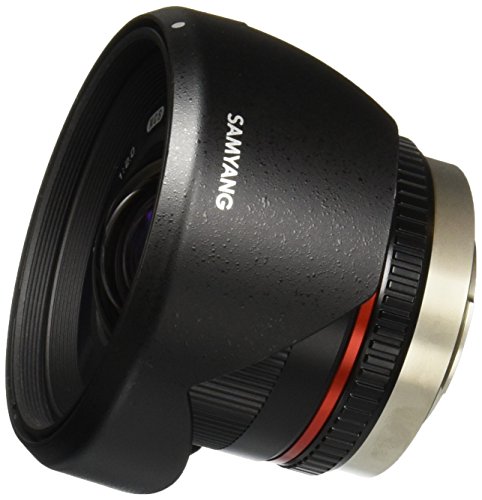
Best for: Ultra-wide landscapes, architecture, and indoor photography where a large field of view is essential and low-light performance matters.
Why selected: The 12mm focal length on Micro Four Thirds yields a 24mm equivalent field of view with a fast f/2.0 maximum aperture for improved low-light performance and shallow depth of field when desired. The lens supports close focusing and maintains good image quality across the frame.
Caution: At extreme angles, you may need to manage distortion and perspective carefully to avoid warping straight architectural lines.
Buying Guide: Micro Four Thirds Wide-Angle Lens Essentials
- What to consider when choosing: Sensor size, focal length, aperture, weight, and whether you need manual focus versus autofocus. For travel and street work, compact primes like the 25mm f/1.7 or 25mm f/1.8 are popular. For interiors and landscapes, wider options such as 9mm fisheyes or 12mm ultra-wide lenses are more suitable.
- Focal length guidance: 12mm–10mm lenses deliver dramatic wide views on MFT. 25mm lenses offer a more standard perspective with versatile low-light performance. Fish-eye effects provide creative distortion at ultra-wide angles.
- Image quality factors: Look for coatings, edge-to-edge sharpness, and distortion control. Prime lenses often give superior sharpness and contrast compared with some zooms, but may lack focal flexibility.
- Aberration and distortion: Fisheye and ultra-wide lenses can show distortion. Plan your composition to either embrace or correct distortion in post-processing.
- Practical setup tips: For manual-focus lenses, use live view magnification to nail focus. For travel, pack a small, lightweight option like the 25mm f/1.7 or the 9mm fisheye body-cap lens for novelty shots without bulk.
Frequently Asked Questions
- Which Micro Four Thirds wide-angle lens is best for landscapes? – Lenses in the 12mm to 25mm range provide broad fields of view and flexibility. The Samyang 12mm F2.0 offers strong low-light performance with minimal distortion, while the Panasonic 25mm F1.7 gives a natural perspective with excellent image quality.
- Do I need autofocus for wide-angle lenses on MFT cameras? – Many wide-angle options are manual focus (like Meike and TTArtisan variants) and can be highly precise with magnified live view. Autofocus is available on certain models, but manual focus can offer better control for landscapes and architectural shots.
- Are fisheye lenses worth it for MFT cameras? – Fisheye lenses (like the 9mm body-cap and other fisheyes) offer unique, ultra-wide perspectives and creative possibilities, especially for travel and urban photography.
- Is a faster aperture important for wide-angle lenses? – A brighter aperture (f/1.7–f/2.0) helps in low light and creates shallower depth of field, which can be desirable for portraits with context or night photography. Some ultrawide lenses are smaller and slower but provide dramatic perspective.
- What should I consider when buying a lens for Micro Four Thirds? – Consider compatibility with your camera body, weight, size, focus mechanism (manual vs. autofocus), and the intended use case (landscape, architecture, travel, or portraits).
- Can I use APS-C wide-angle lenses on MFT cameras? – Some lenses like TTArtisan 10mm F2 are listed as APS-C compatible but can be adapted for MFT bodies; check your camera’s compatibility and any adapter requirements before purchasing.