Best Micro Four Thirds Macro Lenses: Close-Up Clarity for MFT Shooters
Answering the question, these micro four thirds macro lenses are optimized for close-up work on Olympus and Panasonic bodies. They are best for macro enthusiasts who want true 1:1 magnification, reliable weather sealing, and compact designs that fit travel-friendly kits. The top picks balance image sharpness, working distance, and practical handling for nature close-ups, product photography, and intricate detail shoots. The following five lenses are selected for their relevance to MFT users seeking macro performance without excessive bulk.
| Product | Mount Type | Magnification | Best For |
|---|---|---|---|
| OM SYSTEM M.Zuiko Digital ED 60mm F2.8 Macro | Micro Four Thirds | 1:1 | Professional macro, weather-sealed comfort |
| Brightin Star 60mm F2.8 2X Macro | Micro Four Thirds | 2x | 2x magnification, detailed macro work |
| 7artisans 60mm F2.8 II Macro | Micro Four Thirds | 1:1 | Budget macro with solid sharpness |
| Meike 60mm F2.8 Macro | Micro Four Thirds | 1:1 | Affordable macro for MFT systems |
| 7artisans 60mm F2.8 Macro (Original) | Micro Four Thirds | 1:1 | Classic macro option with rich character |
OM SYSTEM M.Zuiko Digital ED 60mm F2.8 Macro

Best for: Serious macro shooters who need weather sealing and 1:1 magnification. This lens features a bright F2.8 aperture for working in lower light and a 7.4-inch minimum focusing distance. Its internal focusing and MSC mechanism prevent lens length changes during focusing, a key benefit at close working distances.
Why selected: It is purpose-built for Micro Four Thirds with reliable construction and close-up performance. The 60mm focal length provides a comfortable working distance for small subjects, such as insects or tiny studio props, while maintaining edge-to-edge sharpness.
Caution: The weather-sealed design adds weight; ensure proper care when transporting in humid environments.
Brightin Star 60mm F2.8 2X Macro
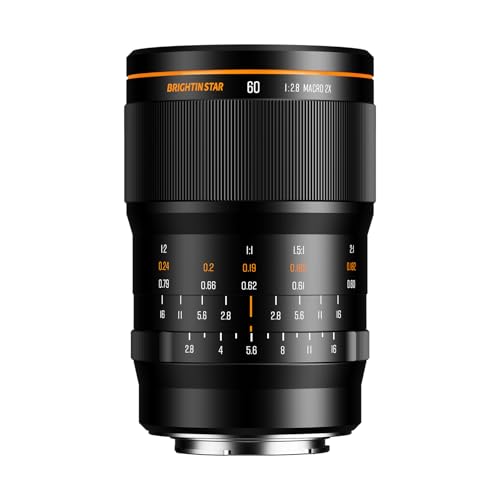
Best for: Macro shooters needing extra magnification for fine subject detail. The 2x magnification makes it a strong choice when you want to fill the frame with texture and micro patterns.
Why selected: Highlights a distinct 2x macro capability within an affordable package, with a standard 60mm focal length that remains comfortable for handheld macro work on MFT bodies.
Caution: Image quality can show more chromatic aberration at higher magnifications; consider stopping down slightly or using in well-controlled lighting.
7artisans 60mm F2.8 II Macro for MFT

Best for: Budget-conscious photographers seeking 1:1 macro with solid sharpness and a practical minimum focus distance. Good for hobbyists who want reliable macro performance without high cost.
Why selected: The lens features 11 elements in 8 groups with HOYA low-dispersion glass, enhancing color fidelity and reducing flare. Its minimum focus distance of 0.175 m helps capture unseen details.
Caution: Manual focus only; users preferring autofocus should consider other options or plan for manual focus workflow.
Meike 60mm F2.8 Macro for MFT

Best for: A versatile macro option for budget-minded shooters who want a dedicated MFT macro lens with a close minimum focusing distance and good edge-to-edge sharpness.
Why selected: It offers 8 groups and 11 elements with a compact body, making it a practical everyday macro tool for MFT systems and travel kits.
Caution: Build quality and autofocus behavior may be less polished than higher-end brands; plan for careful handling and manual focus when needed.
7artisans 60mm F2.8 Macro for MFT (Original)

Best for: Macro enthusiasts who want a lightweight, traditional macro experience with 1:1 magnification and a classic design.
Why selected: Combines a robust 1:1 macro capability with a relatively simple user experience, which can be appealing for learners and hobbyists adjusting to macro photography.
Caution: Some users may prefer newer optics with reduced chromatic aberration; evaluate how it fits your subject choices and lighting conditions.
Buying Guide
- Which magnification matters most? Choose 1:1 for true macro; 2x magnification is excellent for tiny subjects and detail, but may demand brighter light or tighter depth of field.
- Working distance preferences: 60mm macro lenses offer a moderate working distance. If you need more space, consider lenses with longer focal lengths within the Micro Four Thirds system.
- Weather sealing and durability: If you shoot outdoors or in humid environments, prioritize weather-sealed designs like the OM SYSTEM lens.
- Autofocus vs. manual focus: For fast macro work or moving subjects, autofocus-capable lenses are beneficial. For precise control, manual focus models like some 60mm options can be preferable.
- Budget and value: Meike and 7artisans options provide macro capability at lower prices, but check build quality and consistency against more established brands.
- Compatibility: Ensure the lens mount matches your Micro Four Thirds camera, especially for compact kits and travel setups.
Important buyer considerations
- Light and color: Higher-end macro lenses tend to deliver better contrast and color rendition across magnifications.
- Depth of field: Macro work often requires small apertures; plan for adequate lighting or tripod-based setups to manage exposure.
- Maintenance: Weather sealing and dust resistance matter for close-up work in field conditions.
FAQ
- Q: Do all these lenses support 1:1 magnification on Micro Four Thirds?
- A: Most listed macro lenses offer 1:1 magnification or higher, suitable for true macro photography.
- Q: Is autofocus available on these macro options?
- A: Several lenses offer autofocus; some budget or vintage designs are manual focus only.
- Q: Which lens is best for travel macro work?
- A: Lighter, compact options like the 60mm macro variants in the list are well-suited for travel without sacrificing macro capability.
- Q: Should I choose 2x macro magnification?
- A: 2x magnification is excellent for small subjects and texture, but may require brighter lighting and precise focus control.