Best Low-Light Wide-Angle Lenses for Amazing Expansive Shots
For photographers and videographers seeking broad, dramatic scenes in dim lighting, selecting a low-light friendly wide-angle lens is essential. The following handpicked options cover DSLR, mirrorless, and action-camera ecosystems, delivering bright apertures, minimal distortion, and solid edge-to-edge sharpness. Each choice is evaluated on brightness, field of view, and optical performance to help you decide which lens best fits your camera system and shooting style.
Buying snapshot: This summary table highlights the chosen five lenses, their brand, focal length, and standout trait.
| Product | Brand | Approx. Focal Length | Key Benefit |
|---|---|---|---|
| Canon EF-S 10-18mm f/4.5-5.6 IS STM | Canon | 10-18mm | Versatile ultra-wide with stabilization |
| TTartisan 10mm F2.0 | TTARTISAN | 10mm | Bright f/2.0 for APS-C |
| Rokinon 12mm f/2.0 NCS CS (Sony E) | Rokinon | 12mm | Fast aperture, low distortion |
| Rokinon 12mm f/2.0 NCS CS (Micro Four Thirds) | Rokinon | 12mm | Compact, fast, sharp |
| Xenocam FPV 2.5mm Wide Angle | XENOCAM | 2.5mm | 170° field of view, low distortion |
Canon Ef-S 10-18mm Ultra-Wide Zoom Lens
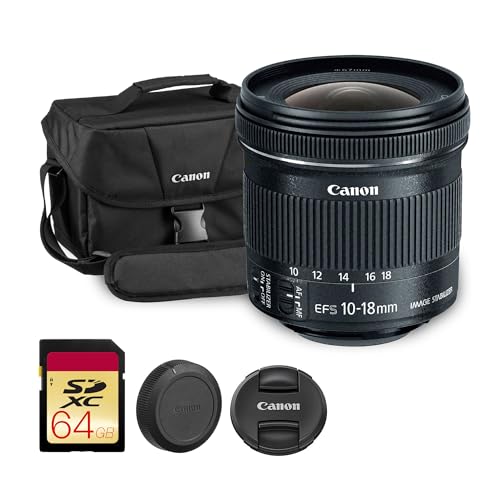
The Canon EF-S 10-18mm f/4.5-5.6 IS STM is a compact, travel-friendly wide-angle zoom designed for APS-C Canon DSLRs. Its 10-18mm focal range delivers expansive interiors and landscapes with a 16–28.8mm equivalent field of view. The lens includes image stabilization to help in low-light conditions and a quiet stepping-motor autofocus system for smooth operation in photo and video work. Optical elements include low-dispersion components to minimize chromatic aberrations and keep edges crisp across the frame.
Key considerations: The variable aperture (f/4.5-5.6) can limit speed in very dark scenes; however, IS aids hand-held shooting. It’s best paired with cameras in well-lit to moderate-light environments, where the wide perspective adds a sense of space without heavy distortion at the edges.
TTartisan 10mm F2.0 Ultra-Wide Lens

The TTartisan 10mm f/2.0 is an ultra-wide prime designed for APS-C mirrorless cameras. It delivers a broad 105° angle of view and a bright f/2.0 maximum aperture, enabling markedly better low-light performance than slower zooms. The lens is built with an emphasis on optical clarity, employing multiple elements and coatings to minimize flare and maintain contrast in challenging lighting. Its compact design makes it a strong value for landscape and architectural shooters who want fast glass in a lightweight package.
Key considerations: Manual focus requires careful technique and testing for accurate focusing at close distances. It’s best for users who prefer a dedicated prime lens with a bright aperture and wide field of view, especially in dusk and dawn shoots or shaded interiors.
Rokinon 12mm f/2.0 NCS CS (Sony E)

This Rokinon 12mm f/2.0 NCS CS is a fast, wide-angle prime optimized for Sony E-mount APS-C bodies. Its 98.9° field of view provides broad landscapes and architectural shots with limited edge distortion for most scenes. The Nano Coating System helps suppress flare and ghosting, preserving contrast in backlit or challenging lighting. Manual focus ensures precise control over depth of field, while the bright f/2.0 aperture aids low-light performance and selective focus in creative compositions.
Key considerations: Being manual focus, it requires practice to nail focus in dynamic scenes. This lens excels in landscapes, night photography, and cityscapes where you want fast glass and minimal distortion at the edges.
Rokinon 12mm f/2.0 NCS CS (Micro Four Thirds)
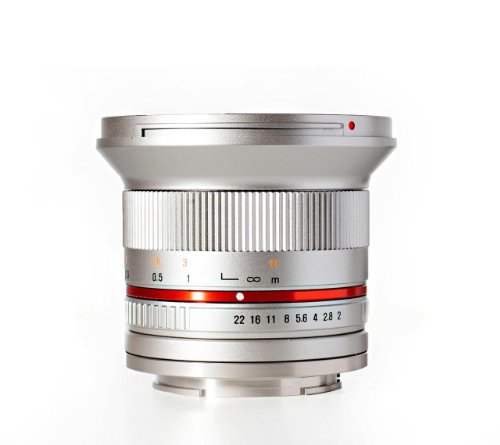
This variant mirrors the Sony E version for Micro Four Thirds cameras, delivering a 12mm focal length on a smaller sensor with a 98.9° view. The design emphasizes compactness without sacrificing optical performance. The Nano Coating System reduces glare, ensuring clearer images in backlit scenes or urban nightscapes. As with other manual-focus wide lenses, users should rely on precise focusing techniques or focus peaking where available.
Key considerations: The MFT version is ideal for Olympus and Panasonic bodies, offering lightweight handling and wide perspective. It’s particularly suitable for travel photography and architecture where space and weight matter.
Xenocam FPV 2.5mm Wide Angle Lens

This Xenocam 2.5mm lens provides an ultra-wide 170° viewing angle, designed for FPV and action cameras as well as drones. Its base format is compatible with M12 thread cameras and several action-camera systems, offering low distortion relative to extreme wide angles. It supports a 1/2.5″ sensor size with a fixed focal length and a fast f/2.65 equivalent performance for immersive wide-shot results. This lens is a practical option when you need maximal scene coverage in compact rigs.
Key considerations: It is not compatible with all GoPro models and is generally suited to FPV cameras and certain action cam setups. Edge sharpness and distortion control may vary with sensor size and mounting configuration, so testing on your device is advised.
Buying Guide: Low-Light Wide-Angle Lens Considerations
- Camera mount and sensor compatibility: Ensure the lens mount (Canon EF-S, Sony E, Micro Four Thirds, etc.) matches your camera body. APS-C sensors benefit most from wide-angle options, but full-frame users should consider appropriate full-frame lenses.
- Aperture and light gathering: Lenses with f/2.0 or similar apertures typically perform better in low light than slower zooms. Variable apertures (like f/4.5-5.6) can limit light intake at the long end.
- Edge sharpness and distortion: Look for lenses with coatings to reduce flare and ghosting, and designs that minimize edge distortion for landscapes and interiors.
- Autofocus vs. manual focus: Some ultra-wide primes require manual focus, which can be ideal for static scenes but challenging for dynamic subjects. If you need speed, prioritize lenses with reliable autofocus.
- Weight and portability: Wide-angle lenses range from compact primes to heavier zooms. Consider travel needs and stabilization features when choosing.
- Build quality and coatings: Multi-element coatings and rugged construction help sustain image quality in backlit and high-contrast environments.
- Real-world use cases: Landscapes and interiors benefit from wide fields of view; night cityscapes require bright optics and good control of aberrations. FPV and action-cam scenarios favor ultra-wide, lightweight options.
In summary, the Canon EF-S 10-18mm offers a flexible zoom with stabilization for general use on APS-C cameras. TTartisan and Rokinon options provide fast, bright glass for prime wide angles on APS-C and MFT systems, ideal for low-light and high-contrast scenes. The Xenocam 2.5mm serves specialized FPV and action-camera setups where extreme width is desirable. Consider your camera system, desired field of view, and whether you prefer autofocus or manual focus when choosing the best low-light wide-angle lens for your projects.