Best Low Light Board Cameras for Clear Night Recording
For creators, makers, and security setups, low light board cameras offer vital performance when lighting is scarce. This guide highlights five capable options around the Arducam and related USB camera categories, focusing on 1080p resolution, wide dynamic range, and anti-noise features that help preserve detail in dim environments. Each product section includes a quick spec snapshot, an image, and a direct link to the official Amazon listing for easy comparison. Use this overview to choose a camera that matches your hardware ecosystem, whether you’re building a Raspberry Pi project, a PC surveillance rig, or a compact live-streaming setup.
| Product | Sensor / Type | Low Light Features | Video Frame Rate | Best Use |
|---|---|---|---|---|
| Arducam 1080P Low Light WDR Ultra Wide Angle USB Camera Module | 2MP IMX291 | 80 dB WDR, min 0.001 Lux | 1080p 30fps | Wide-angle surveillance and streaming |
| Arducam 1080P USB Camera Module Low Light Low Distortion Lightburn | 2MP IMX323 | 0.01 Lux @ F1.2, 83° distortion <1% | 1080p 30fps | Clear imaging in dim rooms |
| Arducam for Raspberry Pi Camera, 4K IMX415 Low Light | 8.3MP IMX415 | STARVIS, strong low-light performance | 3840×2160, up to 30fps | Pi projects needing high detail |
| Arducam 2MP Webcam, Low Light USB Camera | 2MP CMOS sensor | 80 dB WDR, enhanced low light | 1080p30 | Compact desktop use |
| ELP 0.0001Lux Starvis USB Camera Module | 2K Starvis | 0.0001 Lux, 100 dB WDR | 1080p, up to 30fps | Best for ultra-dark environments |
Note: The following sections present five selected options most aligned with the request for low-light, board-format cameras. Each product block includes a direct Amazon link, an image, and a concise feature summary drawn from the official product listings. Where relevant, these modules support Windows, Linux, Mac OS, or Raspberry Pi environments, with USB UVC compatibility and audio options in some models.
Arducam 1080P Low Light WDR USB Camera

This USB camera module uses the 2MP IMX291 color sensor with an 80 dB wide dynamic range to handle scenes with contrasting light. It delivers a minimum illumination of 0.001 Lux, which supports reliable capture in near-dark environments. The device features a 160-degree ultra-wide M12 lens with an IR filter, enabling broad coverage. Video capabilities include H.264 at 30fps in 1920×1080 and MJPG at 30fps, with a built-in microphone for single-channel audio.
Arducam 1080P USB Camera Module Low Light Low Distortion

Built around the IMX323 2MP sensor, this module excels in low-light scenarios. It achieves 0.01 Lux at f/1.2 and features an 83° distorted-free M12 lens with distortion under 1%. It supports 1080p at 30fps with audio options via the USB interface (frame rates include H.264/MJPG and YUYV as needed). The kit is compatible with Windows, Linux, Android, and Mac OS, making it a versatile option for diverse setups.
Arducam Raspberry Pi Camera, 4K IMX415 Low Light
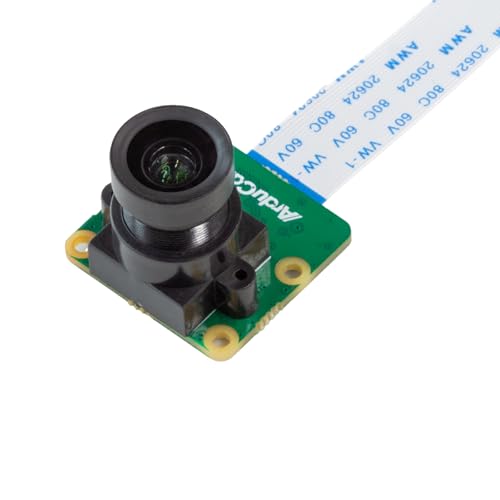
This Raspberry Pi camera uses the 8.3MP IMX415 sensor, calibrated for low-light and high-detail imaging, delivering 3840×2160 resolution with a pixel size of 1.45 µm. It is designed for Pi-based projects requiring crisp visuals in dim environments. The package includes a 15-15 pin interface and a 15-22 pin ribbon cable, with pre-calibrated lens optics to maximize image fidelity in challenging lighting.
Arducam 2MP Web Camera Low Light With Holder

This compact USB webcam captures 1080p30 video with a 1/2.8″ color CMOS sensor and an 80 dB WDR, delivering improved detail in low-light scenes. The conical lens provides a wide 95° diagonal field of view and distortion is reported to be under 13%. A built-in microphone supports basic audio capture, making it suitable for home surveillance and casual conferencing in dim rooms. The small form factor enhances portability and ease of use with laptops and desktops alike.
Arducam 1080P Low Light WDR 100 Degree Wide

This 2MP IMX291-based camera combines low-light performance with a 100° diagonal wide-angle lens and an IR filter. The module supports 1080p at 30fps via H.264/MJPG and YUY2 options, and includes a microphone for audio capture. It’s well-suited for wide-angle surveillance, streaming, and projects requiring broad coverage in low-light settings.
ELP 0.0001Lux Starvis USB Camera Module

The ELP camera leverages a Starvis sensor with 0.0001 lux sensitivity and a 100 dB WDR for day-night scenes. It offers 1080p video at up to 30fps and a wide no-distortion 100° lens with an infrared filter. This module emphasizes high dynamic range and clear nighttime recording for computer, Pi, or hobbyist use.
DORHEA Infrared LED Light Board Module
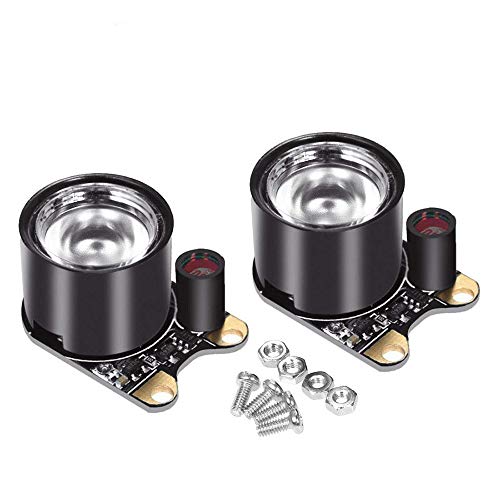
This accessory kit includes infrared LEDs designed to boost night visibility for Raspberry Pi camera setups. The three-watt high-power 850 IR LEDs pair with an onboard photoresistor to help manage illumination thresholds, and an adjustable resistor lets you tune lighting for different environments. It’s a practical complement to low-light boards requiring additional IR capability.
Buying Guide: Key Purchase Considerations
- Sensor quality and low-light performance: Look for cameras with highlighted sensors (IMX291, IMX323, IMX415, Starvis) and wide dynamic range (WDR) for scenes with shadows and highlights.
- Lens and field of view: Decide between ultra-wide (e.g., 120–160 degrees) for surveillance or a tighter field for close-up detail. Consider distortion levels with wide-angle lenses.
- Connectivity and compatibility: Confirm USB UVC compatibility and cross-platform support (Windows, Linux, Mac OS, Raspberry Pi). Check whether audio is included.
- Resolution and frame rate: For dynamic scenes, aim for full HD 1080p at 30fps or higher; higher resolutions (4K) require compatible hosts and more bandwidth.
- Form factor and integration: Board-style modules are ideal for embedded projects, while standalone webcams suit desktop setups. Verify cable length to match your installation.
- IR and lighting aids: If ambient light is consistently low, consider modules with infrared support or pairing with an IR LED board to boost visibility.
- Calibration and lens integrity: Some Raspberry Pi cameras come with factory calibration notes; ensure compatibility with your system image and kernel version if needed.
When selecting a low-light camera, balance sensor performance with hardware compatibility and the intended usage scenario. For embedded projects, prioritize board-mounted modules with compact footprints and robust drivers. For desktop or streaming use, prioritize larger image quality, audio support, and straightforward plug-and-play USB interfaces. Consider adding an infrared lighting option for guaranteed nighttime visibility in practical deployments.