Best Light Meter for Landscape Photography
Choosing the right light meter helps landscape photographers nail exposure in varied light conditions, from golden hour to overcast skies. This guide highlights five reliable meters that balance accuracy, usability, and versatility for outdoor shoots, film or digital, and plant-light scenarios. Each product includes core features to help you compare quickly and make an informed choice.
Summary Of Selected Products
- URCERI Light Meter Digital Illuminance Meter – 0 to 200,000 Lux; ambient temperature; color LCD
- Sekonic L-308X-U Flashmate – ambient and flash metering; precise exposure in stop fractions
- LightMate AirPro (LightNova brand) – 35° wide-angle metering; long battery life; retro dial design
- UNI-T UT383 Light Meter – Lux/FC display; auto shutdown and data hold
- Ohcans Digital Illuminance Light Meter – 0 to 200,000 Lux; rotating sensor; backlit display
URCERI Light Meter Digital Illuminance Meter
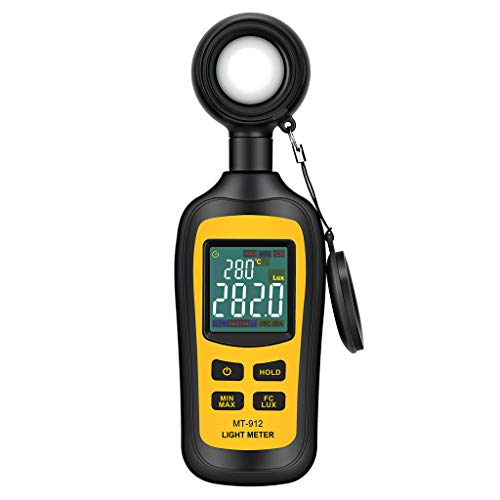
The URCERI lux meter combines high-accuracy illuminance readings with ambient temperature measurements in a compact handheld unit. It measures from 0 to 200,000 Lux, making it suitable for bright sunlit landscapes and shaded areas alike. The instrument features a four-digit color LCD for clear visibility, MIN/Max readings for tracking exposure changes, data hold to capture readings, and an auto power-off function to preserve battery life. Its accuracy is specified as ±3% rdg ±8 dgt under low-range conditions and ±4% rdg ±10 dgt at higher lux levels, providing dependable data for exposure decisions during field work.
Sekonic L-308X-U Flashmate Light Meter

Designed for both ambient and flash metering, the Sekonic L-308X-U offers precise measurements down to a tenth of a stop in full-stop mode. With ISO 100, its ambient exposure range spans EV 0 to 19.9, and flash exposure covers f/stops from f/1.0 to f/90.9 across a shutter speed range of 60 seconds to 1/8000 second (1 sec to 1/500 for flash). The unit supports Photo Mode for still photography, displaying ambient and flash readings in a user-friendly interface. It is particularly useful for photographers balancing natural light with strobe or speedlight setups.
LightMate AirPro (LightNova)

The LightMate AirPro features a 35° wide-angle reflective metering design with a rechargeable battery boasting up to 20 hours of life. Its scale provides ±0.1EV accuracy and handles ISO ranges from 1 to 3200, with shutter speeds from 60s to 1/8000s and apertures from F1 to F64. It includes Manual (M) and Auto (A) modes for aperture or shutter priority, plus an EV mode. Three independent dials control aperture, ISO, and shutter speed, with tactile feedback and half-stop resolutions. This model is well-suited for photographers seeking tactile control in studio and outdoor environments alike.
UNI-T UT383 Light Meter

The UNI-T UT383 provides a compact, professional-grade digital illuminance measurement experience. It reads 0 to 199,900 Lux (0 to 18,500 FC) with a high accuracy of about ±4% plus 8 dgt, depending on conditions. Key features include a large backlit four-digit LCD, 0.5-second sampling, max/min readings, data hold, and auto shutdown for power saving. This meter suits field photographers who require quick, reliable lux values with a straightforward interface and a portable form factor.
Ohcans Digital Illuminance Light Meter

The Ohcans illuminance meter offers a broad 0 to 200,000 Lux range with a stated accuracy of ±4% plus 10 dgt. It emphasizes a 180° rotating sensor to measure from multiple angles and a backlit LCD for easy reading in low light. Its versatility covers photography, plant growth, office, and indoor environments. The device supports fast 0.5-second sampling and recognizes common light sources such as LED, fluorescent, and HID. This makes it a practical option for landscape shooters managing diverse lighting conditions indoors or out.
Buying Guide: Light Meters For Landscape Photography
- Range and sensitivity: Look for meters that cover at least 0–200,000 Lux to handle bright sun and shaded scenes. A broader dynamic range helps in high-contrast landscapes.
- Measurement modes: A combination of ambient and flash measurement is valuable if you blend natural light with strobe or fill flash. Some models offer auto exposure or manual trigger options suitable for on-location shoots.
- Display and readability: A backlit LCD or color display aids when shooting in dawn, dusk, or forested areas. Ensure the device shows clear MAX/MIN readings to monitor exposure changes over time.
- Accuracy and consistency: Check stated accuracy (often within 3–5%). Reputable brands tend to deliver stable results across repeated measurements in varied temperatures and angles.
- Rotating sensors and angle flexibility: Meters with rotating sensors or wide-angle metering accommodate difficult angles and provide better readings for landscapes with complex light falloff.
- Battery life and portability: For field work, battery efficiency and a compact form factor reduce weight and maintenance. Rechargeable units are convenient for extended trips.
- Ease of use: Clear controls, multiple metering modes, and straightforward data hold functionality help photographers capture rapid changes in light without slowing down the shoot.
- Durability and weather sealing: Landscape work often encounters outdoor conditions. A rugged build and basic splash resistance help the device survive field use.
- Brand support and compatibility: Consider brands with good customer support and a track record of accuracy. Some meters also come with downloadable manuals and firmware updates that improve performance over time.
Additional Data And Tips
Light meters are tools to inform exposure decisions, not absolute determiners of perfect image quality. When shooting landscapes, combine meter readings with histograms, zebra warnings, and exposure bracketing to achieve balanced highlights and shadows. For HDR workflows, use consistent exposure steps and calibrate meters to your preferred workflow. If you shoot both indoors and outdoors, a versatile meter with auto and manual modes can streamline transitions between environments.
Buying Guide: Key Scenarios And Comparisons
- Outdoor landscapes in bright sun: Prioritize meters with a wide lux range and fast sampling to capture quick changes as sunlight shifts across the scene.
- Shade and backlit scenes: Look for meters with good low-light sensitivity and clear backlit displays to read subtle light differences.
- Studio and location shoots with fill light: A meter that handles both ambient and flash readings with easy mode switching helps manage exposure across mixed lighting.
- Plants and horticulture: Some meters offer lux or foot-candle measurements aligned to plant photosynthesis needs, aiding optimization of light for growth.
- Portability vs. function: Weigh the benefit of compact meters with essential features against larger models with more controls. For frequent travel, a lighter option reduces burden.
In selecting a light meter for landscape photography, consider how you balance daylight exposure with shadow detail, the level of control you want, and how you plan to integrate the device into your workflow. The products listed here provide a spectrum of capabilities to suit beginners through professional shooters, offering reliable data to support well-exposed landscapes in varied environments.