Best Lenses for a 35mm Camera: Top Picks for Every Budget and Style
Looking for the perfect lens for a 35mm camera? This guide highlights five versatile options ideal for street, portrait, and landscape photography. Each pick is evaluated for compatibility, image quality, and user needs. Best for entry-level shooters, best for travel, best for macro-capable work, and more—so you can choose with clarity. Below, you’ll find quick-to-scan buyer notes and a compact comparison table to help you decide fast.
Summary table of selected products
| Product | Best For | Key Strength | Mount Type |
|---|---|---|---|
| Canon RF35mm F1.8 is Macro STM | Canon EOS R series shooters | Macro ability, compact design | RF |
| Nikon AF-S DX NIKKOR 35mm f/1.8G | Nikon DX format shooters | Affordable, sharp across frame | F-mount DX |
| Sony FE 35mm f/1.8 | Sony full-frame E-mount | Compact, strong bokeh | FE |
| YONGNUO YN35mm F2 for Canon EF | Canon EF users on budget | Auto/Manual focus, versatile | EF |
| YONGNUO YN35mm F2N for Nikon DSLR | Nikon DSLR users seeking AF/MF | Live view support, flexible focus | Nikon F |
Canon RF35mm F1.8 is Macro STM Lens

Best for Canon EOS R series mirrorless cameras, this compact macro lens offers 0.5x magnification and a short minimum focusing distance. The control ring enables direct setting changes, making it convenient for on-location macro work. Suitable for shooters who want close-up subjects with crisp detail without switching lenses.
Best for macro enthusiasts who want a lightweight option with close focusing. Avoid this if you need traditional macro magnification beyond 0.5x or shoot on non-RF bodies without an adapter.
Nikon AF-S DX NIKKOR 35mm f/1.8G
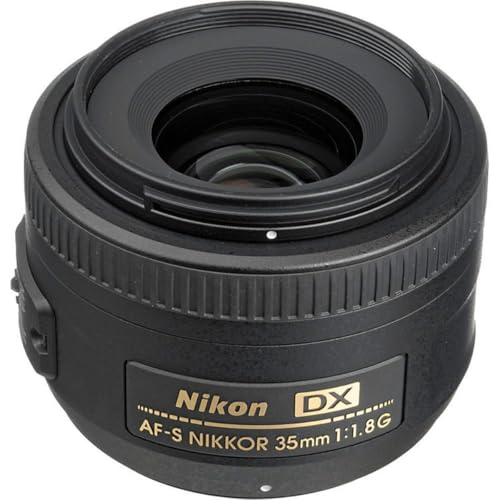
This DX-format Nikon lens is optimized for Nikon DSLRs, delivering a 52.5mm equivalent field of view with a bright f/1.8 aperture. It’s a solid all-purpose option for street and everyday photography, offering reliable performance, good subject isolation, and a compact build. Best for Nikon DX shooters who want a dedicated prime without breaking the bank.
Choose this if you shoot Nikon DX and want a budget-friendly 35mm prime. Consider alternatives if you’re on FX-format or require macro capabilities.
Sony FE 35mm f/1.8 Lens for Sony E
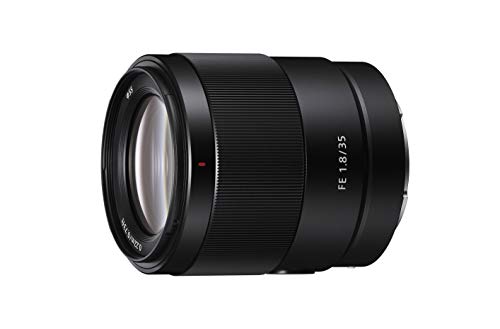
Compact and lightweight, this Sony E-mount lens delivers a bright f/1.8 aperture with a nine-blade circular design to deliver pleasing bokeh. It’s well-suited for street, documentary, and travel photography where you value portability and consistent performance across lighting conditions.
Best for Sony shooters prioritizing portability and creamy background blur. Better for system-wide lens compatibility and color rendering within Sony’s lineup; avoid if you need macro capabilities beyond standard close focusing.
YONGNUO 35mm f/2.0 for Canon EF

Budget-friendly 35mm prime for Canon EF-mount cameras. Offers a fast f/2.0 aperture suitable for low-light and a shallow depth of field. The lens emphasizes practical street and portrait shooting, with a design that supports both autofocus and manual override for creative control.
Choose this if you’re budget-conscious and use Canon EF. It’s not ideal for users needing higher-end image quality or advanced AF features found in more premium glass.
YONGNUO YN35mm F2 Auto Focus for Nikon DSLR
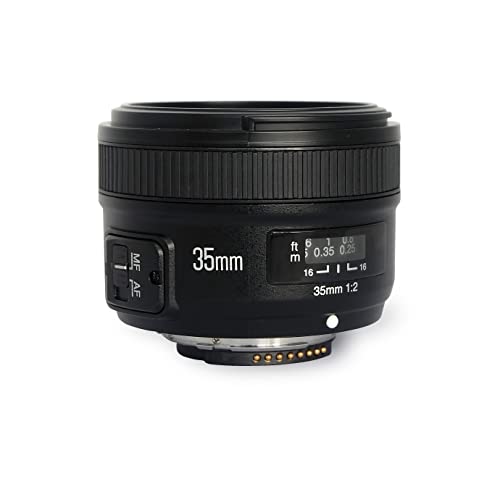
This Nikon F-mount lens supports both AF and MF modes, with a relatively fast aperture and 7-blade design for pleasing bokeh. It offers manual focus override and lens construction aimed at durability. It’s a practical option for Nikon DSLR users who want a compact 35mm prime with flexible focus control.
Best for Nikon DSLR shooters seeking a versatile, value-oriented 35mm prime. If you need higher-end autofocus performance or image quality, consider higher-priced brands or models.
YONGNUO YN35mm F2N for Nikon

Designed for Nikon DSLRs, this 35mm F2N lens blends AF and MF functionality with live view focusing. The large aperture and multiple aperture blades help create background blur while offering practical manual controls. It’s a balanced pick for Nikon users who want flexible focusing and creative options.
Best for Nikon shooters who value live view focusing and combined AF/MF control. If you primarily shoot in low light, confirm the lens’ performance in your camera body’s AF system and live view functionality.
Buying Guide: What To Look For In A 35mm Lens
- Camera compatibility: Ensure mount type matches your body (Canon RF, Nikon F/DX, Sony FE, etc.).
- Aperture and low-light performance: Wider apertures (f/1.8–2.0) deliver better low-light performance and subject isolation; consider stabilization needs for your shooting style.
- Focal length and field of view: 35mm provides a natural perspective for street, documentary, and landscapes on full-frame cameras; DX or APS-C bodies render a tighter field of view equivalent to ~52–58mm.
- Autofocus vs. manual control: Some lenses emphasize AF with MF override; others offer robust manual focus, useful for precise focusing in landscapes or macro work.
- Macro capabilities: If macro work is a goal, prioritize lenses offering close focusing distances and magnification near 0.5x or more.
- Size and weight: Lighter lenses improve portability for travel and street work; heavier lenses can offer weather sealing or rugged build.
- Price vs. performance: Budget options can be attractive, but consider long-term needs such as AF speed, quietness, and optical quality for your typical subjects.
Frequently Asked Questions
- What is a 35mm lens best used for? – It provides a natural perspective ideal for street, documentary, and environmental portraits, with a balance between field of view and depth of field.
- Do macro capabilities matter on a 35mm lens? – Macro features help with close-up subjects; if you shoot macro often, prioritize a lens offering 0.3x–0.5x magnification.
- Is it better to buy a native mount lens or a third-party option? – Native mounts guarantee optimized AF performance and compatibility; third-party options often offer cost savings and aperture choices.
- Should I choose f/1.8 or f/2.0 for low light? – Both are strong; f/1.8 provides slightly more light but depth of field is shallower, which can help separate subjects in portraits.
- What should I consider for travel photography? – Look for light, compact, and versatile lenses with reliable AF and consistent image quality across lighting conditions.
- Can I use these lenses on crop-sensor bodies? – Yes, but expect a narrower field of view; for DX/APS-C bodies, a 35mm lens acts similar to ~50mm on full-frame.