Best Led Strip Light Photography Kits for Studio Quality Video
Instantly improve your lighting for photos and videos with affordable, portable LED lighting kits. This guide focuses on options that are well-suited for beginners and enthusiasts who want consistent color, adjustable brightness, and easy setup. The top picks below are best for portrait work, product photography, YouTube streaming, and on-the-go shoots. A concise product comparison table is provided to help you compare at a glance.
| Product | Key Benefit | Best For |
|---|---|---|
| GSKAIWEN 2 Packs LED Lighting | Wide color range, sturdy build | Beginners, budget-friendly studio |
| uyled RGB LED Light Wand | Full color, remote control | Creative color effects, videos |
| Hagibis RGB Handheld Light | Portable, long battery life | On-location fill, run-and-gun |
| NiceVeedi 25W Lighting Kit | High CRI, large light panel | High fidelity color for videos |
| GSKAIWEN 180 LED Studio Light | Compact, versatile | Portraits, stills, casual shoots |
GSKAIWEN 2 Packs LED Photography Lighting

The GSKAIWEN kit features high-luminance 192 LEDs in a 40 cm strip with 3200K-5500K adjustable color temperature and stepless brightness control. The aluminum housing provides durability and heat dissipation. This option is best for budget-conscious shoppers who want steady color and a wide white-to-warm range for portraits or product shots. A simple hand-held design makes it suitable for small studios and on-the-go shoots. One potential limitation is the fixed form factor, which may not suit large lighting setups.
uyled RGB LED Video Light Wand Kit

This two-pack includes 29″ extendable light wands with RGB color control and 2500K-6500K CCT. An LCD display helps with precise parameter adjustments, and a wireless remote controls brightness and color from up to 50 feet. Best for creators who want dynamic color effects and flexibility for live streams or location shoots. A caveat is that battery life is limited at full brightness, so plan charging or tethering as needed.
Hagibis RGB Handheld LED Video Light Wand
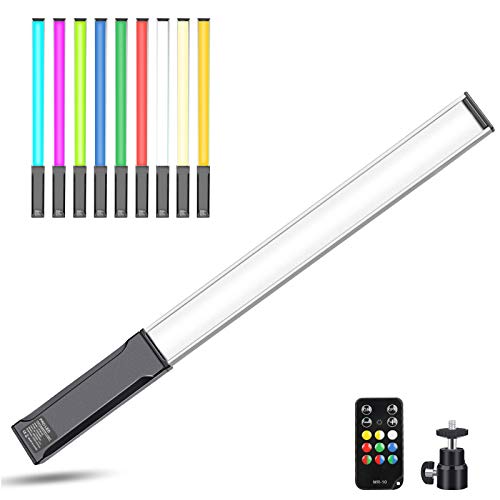
The Hagibis wand offers nine color modes with up to 1000 lumens and a 3200K-5600K range. It includes a remote (7 meters) for convenient adjustments mid-shot and runs on a built-in rechargeable battery. This is ideal for handheld use, travel shoots, and closework with a compact footprint. The smaller form factor may have lower output compared to larger panels, which could limit shadow control in bigger setups.
NiceVeedi 25W Lighting Kit

With 352 LEDs, 3 color temperatures (2900K, 4800K, 7000K), and a high CRI of 97+, this kit provides bright, color-accurate light. The light panel offers a larger soft-light surface, and the included stand extends up to about 61 inches. This setup is especially suitable for YouTube and livestreams where consistent color rendering matters. A possible downside is the need for the separate power adapter and potential bulk for travel compared to smaller wand-style options.
GSKAIWEN 180 LED Studio Light
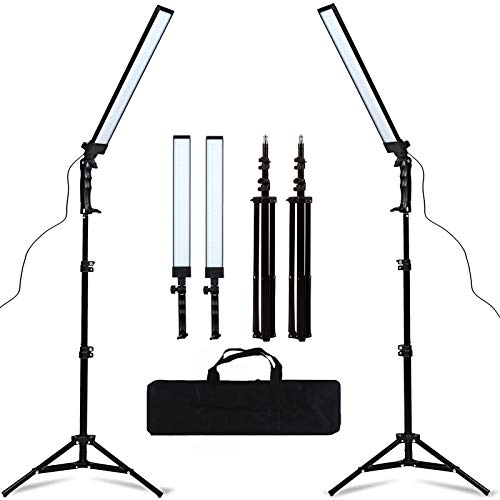
This compact light uses 180 LEDs for steady, flattering illumination with multiple uses in photography and video workflows. It’s well-suited for portrait work, product photography, and live streaming where a lightweight, versatile option is desired. A limitation is that the output may be smaller than larger studio kits, requiring closer proximity to the subject for strong lighting impact.
Buying Guide: How to Choose the Right LED Light for Photography
What should you consider when selecting an LED lighting kit for photography and video?
- Color temperature range: Look for adjustable ranges that cover warm (around 3200K) to cool (around 5600K-6500K) to match ambient light and skin tones.
- Brightness control: Prefer stepless brightness or a wide percentage range to fine-tune exposure without changing color balance.
- Color rendering index (CRI): A higher CRI (90+ or 97+) yields more accurate skin tones and true colors in photos and video.
- Output format: Decide between strip lights, panel lights, or wand-style lights based on space, portability, and the desired look.
- Power source: USB-powered, built-in rechargeable batteries, or AC adapters—choose based on whether you shoot on location or in-studio.
- Portability vs. power: Smaller units are easy to transport; larger panels provide broader, softer light and better shadow control.
- Mounting options: Tripod compatibility and tilt/rotation capabilities matter for overhead shots or dynamic angles.
- Accessories: Remote control, diffusion accessories, and carrying cases add value for fieldwork and consistent setups.
Common scenarios and recommended configurations
- YouTube and livestreaming: A high-CRI panel around eye level with a 4:3 or 16:9 framing, plus a fill light on the opposite side for balanced skin tones.
- Product photography: A larger light panel with diffusion to soften shadows; a backlight or hair light helps separate the subject from the background.
- On-location shoots: A handheld wand or compact LED with a long battery life to allow quick adjustments without heavy gear.
- Portraits: A warm-to-neutral setup at 5200K-5600K with a secondary light as a kicker to add dimension and reduce shadows.
What to avoid and how to optimize light quality
- Avoid overly dim lighting in cramped spaces; increase brightness or add diffusion to soften hard shadows.
- Don’t rely on a single light source for all scenes; layering light (key, fill, backlight) generally yields better depth.
- Be mindful of color cast from mixed lighting; match or adjust white balance to prevent unnatural hues.
FAQ
- What is the best color temperature for portrait photography?
Answer: A neutral to warm white in the range of 4800K to 5600K is commonly preferred for natural skin tones. - Do LED strip lights work well for video?
Answer: Yes, when paired with diffusion and a stable power source; they’re lightweight and easy to position. - Should I choose RGB or single-color LEDs?
Answer: RGB adds creative flexibility for color effects, while single-color LEDs are often sufficient for standard lighting needs. - Can these lights be used for on-location shoots?
Answer: Yes, many listed options are portable or battery-powered, facilitating field work and quick setups. - What is CRI and why does it matter?
Answer: CRI measures color accuracy; higher CRI ensures more true-to-life skin tones and object colors in photos and video.