Best Lapel Microphone for Video Camera: Clear Audio on the Go
If you’re filming video and need crisp, hands-free audio, a lapel (lav) microphone is a smart choice. This guide highlights top 5 lavalier mics that work well with video cameras, smartphones, and computers. It helps you pick for on-camera interviews, vlogs, or live streams. The best options balance ease of use, range, and noise cancellation to suit different setups and budgets. The buyer’s table below summarizes each recommended model for quick comparison.
| Product | Brand | Best For | Connection Type |
|---|---|---|---|
| Hollyland Lark M2 | HollyView | Pro video creators needing long range | 2 TX, 3 RX, USB-C |
| QINOJA 4-in-1 Wireless Lavalier | QINOJA | Multi-device setups | USB-C / 3.5mm / USB |
| NEEWER CM28 | NEEWER | Outdoor recording, multi-channel | 1 RX + 2 TX + charging case |
| Movo LV1-USB | Movo | Camera and computer use | USB / 3.5mm adaptable |
| Gicorino 4 Packs | Gicorino | Group interviews, multi-person shoots | 3.5mm / USB-C adapters |
Hollyland Lark M2 Wireless Microphone

The Lark M2 is designed for on-the-go creators who need reliable, high-fidelity sound with minimal setup. It weighs about 9 grams, making it easy to clip on without adding bulk. Best for solo vloggers and interviewers who require long-range wireless transmission up to 1,000 feet line-of-sight. It records in 48kHz/24-bit with a 70dB SNR for clear voice capture and low noise. The kit includes a charging case and multiple transmitters for multi-person shoots. A limitation is the need to manage battery life in longer shoots, though the case helps with charging.
Who this is best for: Filmmakers, YouTubers, or podcasters who need a compact, high-quality wireless mic with extended range and robust audio performance. Choose this if you plan multi-voice setups or primarily film in open spaces.
QINOJA 4-in-1 Wireless Lavalier

This 4-in-1 universal receiver system supports USB-C, 3.5mm TRS, USB, and is compatible with Apple devices, Android phones, cameras, and computers. It can connect two microphones at once or just one. It features an integrated noise-cancellation chip to minimize ambient noise and keep voice clear. Auto-connection is straightforward; no apps or Bluetooth are required. Some Android devices may require enabling OTG in settings for full compatibility. Best for versatile setups across devices, or when you need to upgrade to multiple mics for a session.
Who this is best for: Content creators who work with multiple devices and need a single receiver to cover phones, cameras, and laptops. Choose this if multi-device compatibility is a priority.
Movo LV1-USB Lavalier Microphone
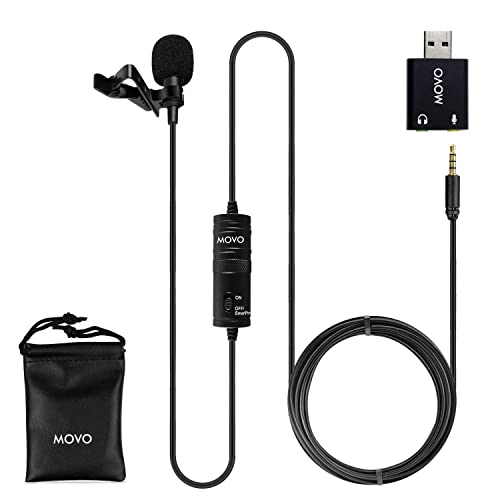
The Movo LV1-USB is a USB lavalier microphone designed for easy use with cameras, smartphones, and computers. It emphasizes universal compatibility via a 3.5mm and USB adapter, enabling smooth integration into video tutorials, calls, and streams. It’s a straightforward plug-and-play option with a simple setup and a one-year warranty. A potential limitation is that some users may require adapters for specific devices or activities that demand higher channel counts. Best for: quick, dependable voice capture across platforms without specialized gear.
NEEWER CM28 Wireless Lavalier Microphone

The CM28 kit includes two transmitters and one receiver with 4GB storage per transmitter for standalone recording, making it versatile for field work. It supports up to 9 hours of recording per TX and 8 hours for RX, with a charging case that refuels the battery quickly. It offers one-click noise cancellation and displays status via an LCD, helping manage settings in busy shoots. Best for documentarians or interview setups where independent recording on the TX units is beneficial. Consider the extra management of the storage feature for some workflows.
Gicorino 4 Packs Wireless Lavalier

Gicorino’s four-pack system is designed for multi-person recording, with smart noise reduction and 360° omnidirectional pickup. It claims broad compatibility across iOS, Android, and various devices through 3.5mm or USB-C adapters. The kit is intended for group conversations, podcasts, and collaborative content where multiple speakers are present. A cue to watch is ensuring the Android OTG setting is enabled for seamless operation. Best for interviews or panel-style shoots where several voices must be captured clearly.
Buying Guide: Key Purchase Considerations
- Device compatibility: Check whether the mic supports USB-C, USB-A, 3.5mm, Lightning, or direct camera input. If you shoot with a camera, confirm that the receiver can connect to the camera’s mic input without adapters.
- Number of transmitters: For solo work, a single TX is fine. For interviews or multi-person shoots, choose a system with 2 TX or more or add-on mics.
- Transmission range: Outdoor shoots benefit from longer ranges. Consider models offering 600–1,000 feet line-of-sight ranges.
- Noise reduction: A built-in noise-canceling chip improves clarity in windy or noisy environments. Evaluate the mic’s pickup pattern (omnidirectional) to ensure it captures desired voices.
- Battery life and charging: Long sessions require longer battery life or a charging case. Verify TX and RX endurance and whether the case can recharge them quickly.
- Storage options: Some kits offer onboard storage for standalone recording. This can be useful if wireless transmission is unstable.
- Ease of setup: Look for auto-connect features that avoid apps and Bluetooth. OTG compatibility may be needed for some Android devices.
Frequently Asked Questions
- Can lapel mics work with a video camera directly? Yes, many lavalier systems include a receiver that plugs into the camera’s mic input, but check the output connector type.
- Do I need batteries for both transmitter and receiver? Most kits include rechargeable batteries; some offer charging cases to manage power for multiple TX units.
- What is the difference between USB-C and 3.5mm connections? USB-C often provides digital audio with broader device compatibility, while 3.5mm is universal for older cameras and equipment.
- Is noise cancellation essential for outdoor filming? It helps reduce wind and ambient noise, but placement and wind protection also impact results.
- Should I buy a four-pack if I only need two mics? A four-pack offers future expandability for group shoots or multiple devices.
- Do these mics require Bluetooth or apps? Most recommended options avoid Bluetooth apps for quick, reliable setup; some Android devices may require OTG adjustments.