Best IP vs Analog Camera Options for Home or Biz Security
When choosing between IP and analog cameras, the best option depends on your monitoring needs, network setup, and future scalability. IP cameras excel for high resolution, smarter features, and easy remote access. Analog cameras are often simpler and more affordable for basic surveillance. This guide presents five relevant cameras—balancing traditional analog-style units and modern IP solutions—so you can compare quickly and decide which suits your space and budget. The following quick-reference table highlights how each product aligns with IP or analog systems.
Quick reference: Selected products
- Real HD 2MP Dome TVI/AHD CVI: Analog-friendly with versatile video output modes
- CUMCITIN 4-in-1 Dome Camera (Grey): 4 modes for AHD/CVI/TVI/CVBS
- CUMCITIN 4-in-1 Dome Camera (White): 4 modes for AHD/CVI/TVI/CVBS
- Anpviz 4MP PoE IP Dome Camera (U Series): PoE IP camera with local network access
- Anpviz 4MP Wired PoE IP Camera (H Series): IP66 rugged, mic included
Real HD 2MP Dome TVI/AHD CCTV Surveillance Camera
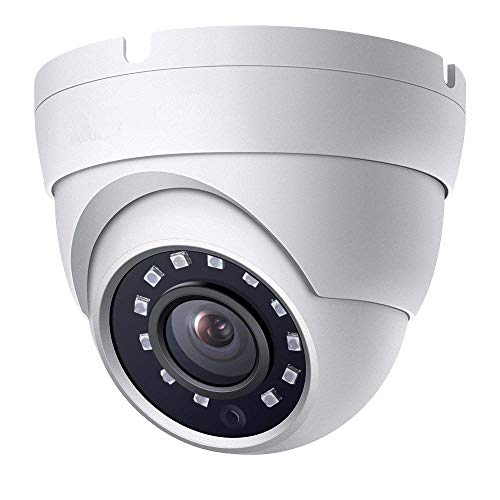
This 2MP dome camera is designed for traditional analog-dvr setups. It outputs in TVI, AHD, CVI, or 960H, making it flexible for various DVRs. A 2.8mm fixed lens yields a 100° field of view, and infrared night vision reaches about 65 feet. It is housed in full metal housing for outdoor use. Best for: renters or property owners updating existing analog systems who want multi-format compatibility without replacing the entire DVR.
Why chosen: It combines broad compatibility with straightforward installation, reducing the need for a fully new IP-based network. Caution: Video output mode must be set to match your DVR type, which can require a quick DIP-switch adjustment.
Analog CCTV Camera HD 1080P 4-in-1 (Grey)
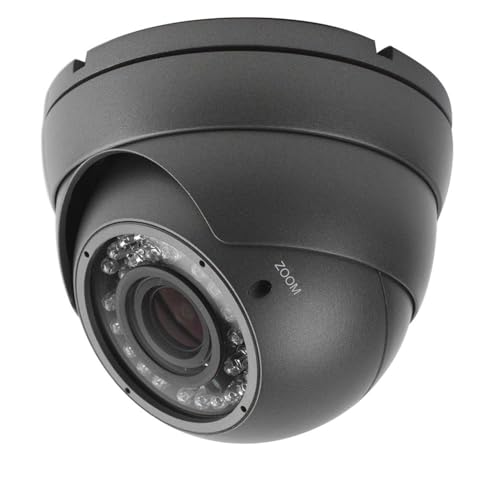
This 4-in-1 camera supports AHD, CVI, TVI, and CVBS outputs, defaulting to TVI 1080P. Its 2.8–12mm varifocal lens allows manual focus/zoom, and 36 IR LEDs provide up to 100 feet of night vision. A 1/2.9″ color CMOS sensor delivers clear daytime visuals. Best for: users who want flexibility across multiple analog formats and adjustable focal length for indoor/outdoor monitoring.
Why chosen: The 4-in-1 feature enables easy compatibility with a wide range of existing DVRs. Caution: It is still an analog camera, so you won’t gain native IP features like advanced analytics unless paired with an IP-capable NVR or encoder.
Analog CCTV Camera HD 1080P 4-in-1 (Grey) White Variant

This 4-in-1 dome camera shares the same multi-format outputs as the grey version, with a 2.8–12mm manual focus/zoom lens and 36 IR LEDs for night vision up to 100 feet. A 1/2.9″ CMOS sensor delivers 1080p imaging for reliable day/night monitoring. Best for: customers who favor a white housing for outdoor installations and want consistent 4-in-1 flexibility.
Why chosen: Similar versatility to the grey model, making it adaptable to various DVR ecosystems. Caution: Like the grey model, it remains analog-focused and lacks native IP features unless integrated with an IP-enabled setup.
Analog CCTV Camera HD 1080P 4-in-1 (White) 3.6mm Lens
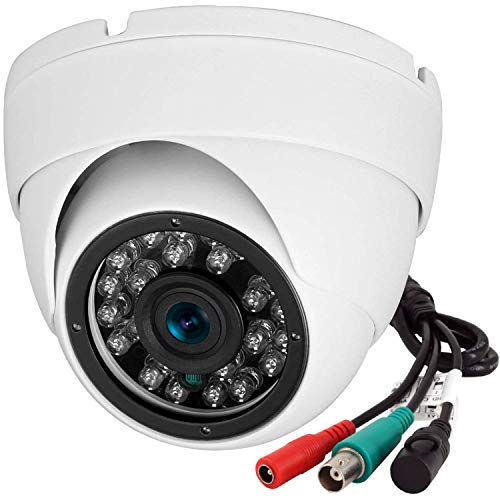
This white variant uses a 3.6mm lens with an 85° field of view, offering 65 feet of true night vision via 24 IR LEDs. It also provides 1080p through 4-in-1 outputs (AHD/CVI/TVI/CVBS). Best for: small to medium outdoor areas where a compact lens and modest FOV are acceptable.
Why chosen: Lightweight option with a fixed focal length suitable for straightforward installations. Caution: Narrower lens might require closer camera placement to cover wide entryways effectively.
Anpviz 4MP PoE IP Dome Camera with Microphone

This 4MP PoE IP camera delivers higher resolution with network connectivity and an integrated microphone for audio capture. It supports long-range infrared night vision (65–98 ft) and is suitable for indoor or outdoor use due to a rugged design. Best for: users who want high-detail video and remote access via network video recording, with audio context included.
Why chosen: PoE simplifies power and data delivery over a single cable, reducing wiring complexity. Caution: Requires a PoE-capable NVR or switch; not a standalone camera for non-networked setups.
Anpviz 4MP Wired PoE IP Camera with Mic

This IP camera combines 4MP resolution with a built-in microphone for real-time audio alongside network access. It features AI-enhanced human motion detection, smart dual-color night vision with white light for color imagery upon human detection, and IP66 weatherproofing. Best for: surveillance settings requiring precise human-detection alerts and clearer color footage at night.
Why chosen: AI-driven motion detection helps reduce false alarms, and dual-light night vision improves detail in dark outdoor areas. Caution: White light activation is triggered by detected motion, which may briefly illuminate the scene.
Buying Guide: IP vs Analog Camera Essentials
- What’s your primary monitoring goal? If you need high resolution and smarter analytics, IP is typically best. For simple, budget-friendly surveillance, modern analog 4-in-1 cameras can suffice.
- How scalable is the system? IP networks scale well with more cameras and advanced features, while analog may require new DVRs or encoders as you expand.
- What is your installation terrain? Outdoor areas benefit from weatherproof IP cameras with robust night vision; many analog domes are also weatherproof but lack IP access.
- Do you have or want remote access? IP cameras provide native remote viewing and cloud/NVR integration; analog systems rely on DVRs and may need network encoders for remote access.
- Power delivery: PoE IP cameras simplify wiring by combining power and data over a single Ethernet cable. Analog cameras usually require separate power and video cables.
- Data considerations: IP cameras deliver higher resolution and potential analytics but may require more network bandwidth and storage. Analog cameras use less bandwidth and storage but offer fewer smart features.
Key buyer questions
- Is IP better than analog for beginners? Generally yes for future-proofing and remote access, but analog can be cheaper upfront for simple needs.
- Do I need a new DVR/NVR to use IP cameras? IP cameras require an NVR or compatible software, not a traditional analog DVR.
- What resolution should I choose? Higher resolution (4MP or more) provides clearer detail, especially for facial recognition and license plate capture.
- Are there privacy concerns with IP cameras? IP cameras log data on the network; ensure secure passwords and encryption where available.
- How important is night vision? Modern cameras offer infrared or dual-light color night vision; choose based on your lighting conditions and desired color imagery at night.
- What about installation difficulty? Analog systems are typically simpler; IP cameras require network setup but offer easier remote management.
FAQ
- What is the main difference between IP and analog cameras? IP cameras transmit data via a network for remote access and advanced features, while analog cameras rely on coaxial connections to a DVR with more limited analytics.
- Can analog cameras be upgraded to IP? Yes, with encoders or by replacing the DVR with an IP-capable NVR and compatible cameras.
- Do IP cameras require a separate NVR? Yes, or compatible software on a PC/NAS for recording and playback.
- Are wireless IP cameras a good option? They exist but typically require strong Wi‑Fi and may introduce latency or interference; PoE wired IP cameras are often more reliable.
- What should I consider when buying night-vision cameras? Look at infrared range, true day/night capability, and whether dual-light color night vision adds value for color detail at dusk or nighttime.
- Is audio important in surveillance? If audio is needed, ensure the device supports a microphone and complies with local privacy laws where recording audio is regulated.