Best Infrared Illuminator Light for CCTV Camera: Clear Night Vision Guide
If you need reliable night vision for CCTV, an infrared (IR) illuminator is essential. This guide highlights five top IR illuminators that balance range, even light, and durability. It helps buyers choose based on camera type, lens size, and installation needs. Best for outdoor surveillance, long-range monitoring, or cameras with small housings, these options cover a range of budgets and setups.
Summary of selected products:
- Tendelux BI8: Long-range, compact 120 ft, 90° flood for mid-to-large outdoor setups
- Tendelux DI20B: Ultra-compact, long-range, 360° swivel with 90° tilt for flexible mounting
- Univivi IR Illuminator: 90° wide-angle, IP67 outdoor grade with automatic day/night feature
- JC Infrared Illuminator (JCHENG SECURITY): 65 ft range with four-LED array for compact needs
- GODIYMODULES 48pcs LED IR Illuminator: 850 nm, 50 mm shell fitment for CCTV cameras
Tendelux BI8 120ft IR Illuminator
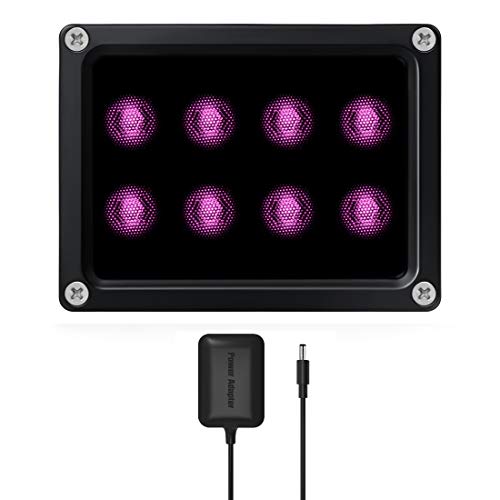
Best for: Outdoor security setups that require long-range night vision with even illumination. This model uses eight 1W 850 nm LEDs and a 90° flood spread, pairing with cameras that have 2.8–4 mm lenses.
Why it stands out: It includes an anti-UV IR pass filter to minimize hot spots and overexposure, along with a robust IP66 rating for weather resistance. The built-in CdS photocell enables automatic day/night switching, reducing manual adjustments.
Limitations: While powerful, installation may require a stable mounting point and power access. Check the lens compatibility with your camera to ensure full coverage.
Key specs at a glance
- Range: Up to 120 ft
- LEDs: 8 x 1W, 850 nm
- Angle: 90° flood
- Enclosure: IP66, weatherproof
Tendelux AI4 80ft IR Illuminator
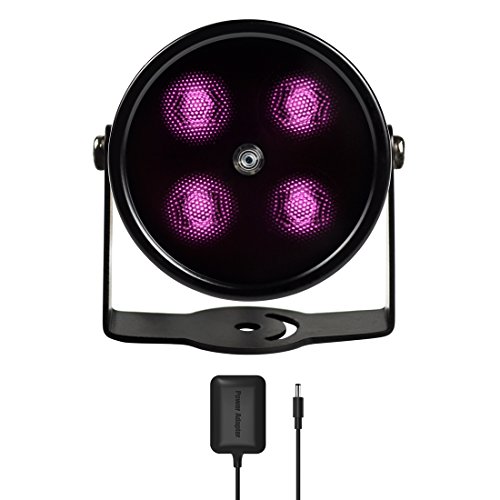
Best for: Smaller or mid-sized surveillance zones where wide coverage and a compact form factor are valuable interactions with 2.8–4 mm lens cameras.
Why it stands out: The AI4 model offers a compact design with an upgraded black coating and 90° flood spread. It delivers even illumination and reduces hotspot issues compared with older mini-IR lamps.
Limitations: Effective range is shorter than the BI8 option; consider this when choosing for expansive outdoor areas.
Why choose this?
- Even lighting without hotspots
- Suitable for cameras with standard wide lenses
- Simple power adapter setup
GODIYMODULES 48pcs IR Illuminator

Best for: Basic night-vision needs using a dedicated IR board, compatible with CCTV cameras that accept an infrared illumination board in a 50 mm shell.
Why it stands out: It provides a simple board-style IR solution with 850 nm illumination, designed to fit specific camera housings. It’s a practical option for DIY installations or cameras with compatible shells.
Limitation: This option is more of a board-level illuminator; ensure your camera housing supports this form factor and mounting approach.
Ideal matches
- Direct replacement for compatible shells
- Low-profile illumination in tight spaces
Tendelux DI20B IR Illuminator

Best for: Long-range security needs with a compact form factor that still delivers strong illumination for camera fields of view.
Why it stands out: The DI20B is half the size of some larger models yet provides substantial lighting. It features an integrated lens design to spread IR light evenly and offers 360-degree swivel with 90-degree tilt for flexible positioning.
Limitation: Aluminum construction helps with durability, but ensure it’s securely mounted in sunny or windy outdoor environments to prevent vibration over time.
What to consider
- Compact power: good for small enclosures
- 360° swivel, 90° tilt for flexible installation
JC Infrared Illuminator 4 LED Array

Best for: Small or budget-friendly CCTV setups needing a compact IR option with a simple plug-and-play approach.
Why it stands out: Built with four high-power IR LEDs and a 65 ft range, this option is a practical fit for basic surveillance needs and IP cameras that require a straightforward illumination solution.
Caution: Verify compatibility with your camera’s IR sensitivity and ensure the 850 nm wavelength aligns with your system’s requirements.
Deployment tips
- Verify distance to coverage area
- Plan wiring for outdoor weatherproof connections
Buying Guide: Infrared Illuminators for CCTV
What to consider when choosing an IR illuminator
- Range vs. coverage: Longer-range units suit larger outdoor spaces; wide-angle models cover broader areas but may have shorter reach.
- LED count and wavelength: Most devices use 850 nm LEDs. If you need complete invisibility, look for 940 nm models, noting potential reduced visibility but sometimes lower performance with certain cameras.
- Beam spread and hotspot management: Look for products that advertise even illumination and hotspot reduction, especially for night-time image quality.
- Housing and weather resistance: IP ratings (e.g., IP66, IP67) indicate weatherproofing suitable for outdoor use.
- Mounting flexibility: Swivel and tilt features simplify alignment with camera angle and field of view.
- Power and wiring: Check for included power adapters and the required voltage; ensure a safe outdoor power source or use a weatherproof enclosure.
Choosing by use case
- Outdoor perimeters: Prefer long-range, IP66/IP67-rated units with adjustable angles.
- Small enclosures or cameras with tight mounts: Look for compact designs with 360° swivel.
- Budget-conscious installations: Consider 4-LED or 8-LED models with straightforward plug-and-play setup.
Maintenance and safety tips
- Regularly inspect for corrosion on mounting hardware and seals.
- Protect cables from weather exposure and secure connections.
- Avoid placing IR lamps too close to reflective surfaces that could cause glare in footage.
FAQ
- What is the difference between 850 nm and 940 nm IR illuminators? Answer: 850 nm is more common and often brighter to certain cameras, but some cameras have better sensitivity to 940 nm for near-invisible illumination. 940 nm may be less detectable and gentler on some lenses.
- How do I know if an IR illuminator is compatible with my camera? Answer: Check your camera’s night vision wavelength sensitivity (nm) and lens size. Ensure the illuminator’s beam spread suits your field of view.
- Is IP66 the minimum for outdoor use? Answer: Yes, IP66 or higher generally indicates adequate protection from water jets and dust for outdoor cameras.
- Can I install IR illuminators on indoor cameras? Answer: Yes, if the indoor environment requires enhanced night vision and there is a power source, but ensure safety for indoor use and avoid glare on reflective surfaces.
- Should I choose a dedicated IR illuminator or a camera with built-in IR LEDs? Answer: External illuminators typically offer greater range and adjustability, while built-in LEDs are simpler but may be limited in distance.
- Do IR illuminators require maintenance? Answer: Routine checks for mounting stability and weather sealing are advised; replace failing LEDs as needed.