Best Hiking Camera Tripod Options for Stable Outdoor Shots
Choosing the right hiking camera tripod means balancing portability with stability. The following picks are tailored for outdoor use, hiking journeys, and field shoots, offering strong load support, versatile heights, and quick setup. Each model listed here supports a range of cameras and smartphones, making them suitable for landscape photography, vlogging, or on-the-go filming in rugged environments.
The table below summarizes five top hiking-friendly tripods, highlighting key specs to compare at a glance.
| Product | Brand | Height Range | Load Capacity | Notable Feature |
|---|---|---|---|---|
| K&F CONCEPT 64 inch/163 cm Camera Tripod | K&F CONCEPT | 20.4″ to 64.1″ | 17.6 lbs / 8 kg | 360° ball head, lightweight folding |
| Amazon Basics 50-inch Tripod | Amazon Basics | 16.1″ to 50″ | Lightweight aluminum, ~1.23 lb | Compact and portable, comes with carrying bag |
| CAMBOFOTO 74″ Aluminum Tripod | CAMBOFOTO | 20″ to 74″ | 8.8 lbs | 360° pan head, multi-device compatibility |
| ULANZI Mini Flexible Tripod | ULANZI | Flexible short reach (varies by setup) | Depends on mounting; adaptable for phones and cameras | Hidden phone mount, cold shoe option |
| SmallRig 71″ Foldable Tripod | SMALLRIG | 16″ to 71″ | Payload up to 33 lb | 3-way head, 360° ball head, monopod option |
Outdoor shooters need robust build quality, quick setup, and reliable stability. The following sections provide detailed looks at five top picks aligned to hiking and field photography needs.
K&F CONCEPT 64 Inch Tripod With 360° Ball Head

This lightweight 4-section tripod extends from 52 cm to 163 cm, and folds to 39.5 cm for backpack carry. It weighs about 1.15 kg with the ball head, aiding portability on hiking trips. The 360° ball head supports up to 8 kg (17.6 lbs) and provides precise panning thanks to a dedicated rotation dial, making it ideal for landscape panoramas or time-lapse sequences in outdoor settings. Quick flip leg locks enable one-handed setup, saving time when adjusting in the field.
Amazon Basics 50-Inch Lightweight Tripod

An accessible option for hikers seeking portable gear. The 50-inch height and 3-section steel and aluminum legs offer a stable base for most compact setups. The included zippered bag facilitates transport, and the tripod weighs just over 1 lb, making it easy to slip into a daypack. While simpler in feature set, its lightweight design and travel-ready form factor suit everyday hiking photography and casual vlogging.
CAMBOFOTO 74″ Aluminum Tripod

Designed for durability and versatility, this tripod extends up to 74 inches with a sturdy aluminum build. It accommodates DSLRs, mirrorless cameras, smartphones, GoPros, and more, thanks to a quick-release plate and a phone mount. A heavy-duty stance helps mitigate wobble on uneven terrain, making it suitable for hiking shoots, group photos, or starry-night timelapses. The 360° pan head enables smooth panoramic movements for expansive landscape capture.
ULANZI Camera Tripod With Hidden Phone Holder

This compact flexible stand emphasizes versatility for mobile videography. A hidden phone tripod mount with a cold shoe enables attachment of a microphone or LED light for on-the-go vlogging. With a universal 1/4″ thread, you can add an extension arm or other attachments. The phone holder accommodates a broad range of models, making it a practical add-on for hikers who regularly shoot with smartphones or action cameras.
SMALLRIG 71″ Foldable Tripod/Monopod

With a 71-inch height range and a 33 lb payload, this model supports heavier cameras and longer lenses, which can be advantageous for hikers who shoot wildlife or landscapes from distance. The tripod features a 360° ball head and a 3-way pan head for flexible compositions. Its foldable design and dual capability as a monopod make it a practical all-terrain companion for field photographers seeking stability without sacrificing portability.
K&F CONCEPT 60 Inch Carbon Fiber Tripod

Carbon fiber construction reduces weight while increasing stiffness and stability. Weighing around 2.2 lbs, this tripod offers portability for hikers and mountaineers. The 5-section legs, quick-release plate, and 0.25″ screws ensure compatibility with a wide range of cameras and accessories. A compact folded size supports airline travel and backpacking, while the 25mm head provides smooth 360° panorama capabilities for landscape shooters.
Victiv 74-Inch Tripod For Camera and Phone
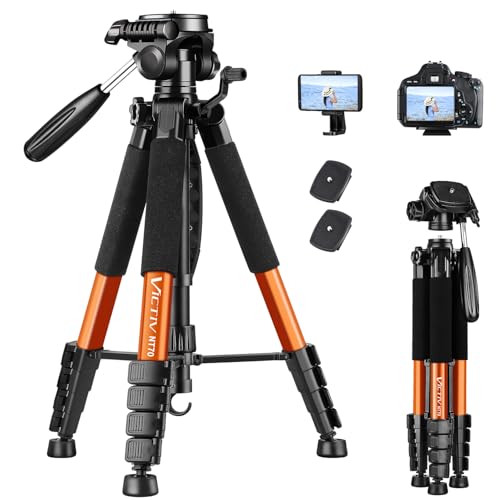
This tall tripod provides a 19-74 inch height range and includes a carrying bag for outdoor shoots. It supports both cameras and phones with a standard 1/4″ screw and a 3/8″ option, and it ships with a stable 3-way pan head for precise framing. Non-slip pads improve grip on uneven ground, while the weight hook adds stability in breezy outdoor conditions. It’s a practical option for hikers requiring flexible positioning and reliable support.
Buying Guide: How To Choose The Right Hiking Tripod
- Weight and portability: For long hikes, prioritize lighter materials like carbon fiber or compact foldable designs. Consider both the tripod weight and folded length to fit your pack comfortably.
- Height range: Choose a model that reaches eye level when possible for comfortable composition. Taller heights are beneficial for natural landscapes and overhead shots; shorter models are easier to stabilize on uneven ground.
- Load capacity: Match the tripod to your camera system and any accessories (long lenses, LED lights, or external mics). Exceed by a safe margin to maintain stability on wind-prone terrains.
- Head type and pan control: Ball heads give fast tracking and 360° rotation, while 3-way heads offer precise tilting for portrait work. A pan-tilt setup is useful for panoramic landscape photography and video panning.
- Versatility: Some tripods include monopod functionality or phone mounts. If you shoot with both DSLR/mirrorless cameras and smartphones, a model with universal compatibility simplifies gear management.
- Durability and weather resistance: Look for corrosion- and wear-resistant materials, especially if you’ll shoot in humid, dusty, or salty coastal environments.
All proposed options emphasize a balance between portability and stability for hiking photography and on-site filming. When selecting, consider your typical shooting style, preferred camera system, and the types of landscapes you plan to capture on outdoor adventures.