Best High Speed Motion Cameras for Fast Action Capture
Discover top high-speed motion cameras that deliver crisp, distortion-free footage of rapid events. This guide targets buyers seeking clear slow-motion analysis, ballistics tracking, or precise motion study. Each pick is suited to specific use cases—from lab-grade machine vision to field-recording enthusiasts—helping you choose the right camera for your needs. Below is a quick reference table of the five selected models and what they’re best for.
| Product | Best For | Key Strength |
|---|---|---|
| QILOVE Global Shutter USB Camera – 800P 640fps – 5-50mm CS Lens | Industrial vision, slow‑motion analysis | Wide 5-50mm varifocal lens, high fps |
| QILOVE Global Shutter USB Camera – 800P 640fps – 2.8-12mm Lens | Machine vision, tighter zoom | Smaller zoom range with strong image clarity |
| IFWATER Global Shutter 90fps USB Camera – 5-50mm Varifocal | Golf swing, 3D printing monitoring | Plug-and-play UVC, adjustable zoom |
| High Speed USB3.0 0.3MP Color Industrial Camera – 790fps | Industrial imaging, rapid capture | Fast transfer, simple SDK |
| QILOVE Global Shutter USB Camera – 1200P 90fps – 2.8-12mm Lens | High-speed inspection, motion analysis | Global shutter with high-resolution, observable zoom |
QILOVE Global Shutter USB Camera – 800P, 640fps, 5-50mm Lens

This monochrome USB camera uses a global shutter to capture distortion-free images of fast-moving subjects. It supports high-speed modes up to 640fps at 160×120 resolution and offers a 5-50mm CS-mount varifocal lens for flexible framing. Best for: machine vision, ballistic tracking, and fluid analysis where precise frame integrity matters. Limitation: lower megapixel count restricts detail at full motion resolution; best used for high-speed, monochrome imaging rather than color detail.
QILOVE Global Shutter USB Camera – 800P, 640fps, 2.8-12mm Lens

Equipped with a 2.8-12mm CS-mount lens, this model provides a tighter zoom range with 4x optical zoom and maintains global shutter benefits for smear-free monochrome images at high speeds. Best for: compact machine-vision setups requiring adjustable focal length without swapping lenses. Caution: narrower focal range may require careful distance planning for distant targets.
Casio Exilim EX-FH20 9.1MP Digital Camera

High-speed still photography capabilities are the main feature here, with 9.1MP resolution and up to 20x zoom. Best for: casual action shots and general-purpose photography, not optimized for dedicated high-speed machine vision analysis.
High Speed USB3.0 0.3MP Color Machine Vision Camera

Offers rapid data transfer and an SDK for easy integration, with support for external triggers and flash. Best for: industrial inspection and quick setup in controlled environments. Caution: color resolution is limited at 0.3MP, which may affect detailed color analysis at high speeds.
QILOVE Global Shutter USB Camera – 1200P, 90fps, 2.8-12mm Lens
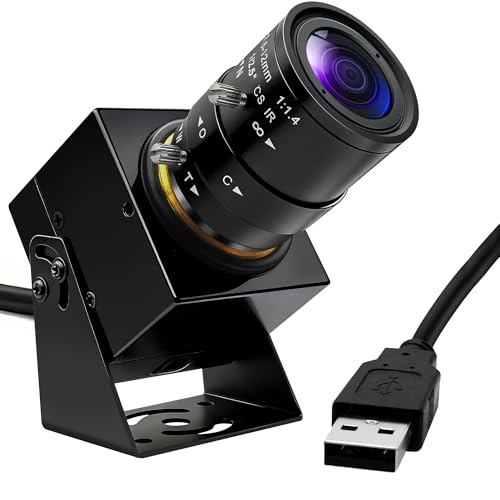
This model supports 1920×1200 resolution at 90fps with a 2.8-12mm manual zoom lens. Best for: high-speed inspection and motion analysis where both resolution and adjustable zoom are required. Limitation: 90fps, while high, may be less suitable for ultra-fast events compared to 640fps monochrome options.
Buying Guide: Key Purchase Considerations
What frame rate do you need? For capturing ultra-fast events with minimal motion blur, higher fps like 640fps is advantageous, especially with a global shutter. For detailed color analysis, consider color cameras, but note that many high-speed monochrome options excel in clarity and contrast in low light.
Is a zoom range important? Varifocal lenses (5-50mm or 2.8-12mm) let you frame subjects without moving the camera. Wider ranges enable flexibility across distances, but tighter zooms can improve detail on distant targets.
Do you need plug-and-play vs. customization? UVC-compliant cameras offer immediate setup on many devices, while cameras with SDKs enable deeper control for automation and analysis.
What environment will you record in? Monochrome sensors perform well in low light and high-contrast conditions, beneficial for machine vision and scientific analysis. Color sensors offer more natural color but may require more lighting to maintain speed.
What is your target application? Industrial inspection, ballistic tracking, and fluid dynamics analysis have different requirements. Global shutter helps avoid rolling shutter artifacts, especially in fast motion scenarios.
FAQ
- What is a global shutter and why does it matter for high-speed video?
- Should I choose monochrome or color for high-speed recording?
- What lens options are most versatile for high-speed cameras?
- How important is frame rate vs. resolution?
- Are these cameras easy to integrate into existing systems?
Global shutter exposes all pixels simultaneously, reducing rolling shutter distortion and smear in fast-moving scenes. Critical for precise frame-by-frame analysis in engineering and research.
Monochrome cameras often provide higher sensitivity and contrast in low light, which can yield clearer motion details. Color cameras can be preferable when color information is essential, though they may require more lighting.
Varifocal CS-mount lenses (such as 5-50mm or 2.8-12mm) offer adjustable focal lengths for flexible framing, useful in workshops and lab setups where distance to subject varies.
For high-speed motion analysis, higher frame rates often matter more than ultra-high resolution. A balance between fps and resolution ensures clear, analyzable frames without excessive data.
Many options support USB interfaces and UVC protocols for quick setup. Others provide SDKs and driver support for custom automation and machine vision pipelines.