Best High-Resolution 360 Camera Options for Immersive Adventures
Exploring the world in 360 degrees requires a camera that can capture sharp detail, vibrant colors, and smooth motion across panoramas. The following picks represent the best high-resolution 360 cameras currently available, with a focus on image quality, stabilization, and usability for enthusiasts and professionals alike. Each model offers distinct strengths, from cinematic 8K/5.7K recording to robust waterproof builds and advanced HDR capabilities. Use the product table below to compare at a glance, then dive into detailed sections for each option.
| Product | Brand | Key Strength |
|---|---|---|
| DJI Osmo 360 Camera | DJI | 8K 360 videos, 1-inch imaging, large built‑in storage |
| Ricoh Theta X 360° Camera | RICOH | 11K stills, 5.7K video, RAW support, GPS |
| DJI Osmo 360 Adventure Combo | DJI | 8K recording, dual 1-inch sensors, long battery life |
| Insta360 X3 (5.7K 360 Active HDR) | Insta360 | 5.7K 360 HDR video, AI reframing, 2.29″ touchscreen |
| Insta360 X3 Waterproof 360 Action Camera | Insta360 | Waterproof, 5.7K 360 HDR, dual 48MP sensors |
DJI Osmo 360 Camera

The DJI Osmo 360 Camera emphasizes high-resolution capture with a groundbreaking 1-inch sensor for enhanced low-light performance. It records native 8K 360° video and includes substantial built-in storage (105GB), helping you store extended shoots without swapping memory cards. The device supports immersive ultra-wide action, delivering 4K/120fps footage and a 170° field of view for dynamic, cinematic experiences. This model is suited for sports, travel, and event videography where detail and color accuracy matter.
Key highlights
- 1-inch 360° imaging for better low-light performance
- 8K 360° video with ample built-in storage
- 170° ultra-wide action plus 4K/120fps capabilities
DJI Osmo 360 Adventure Combo
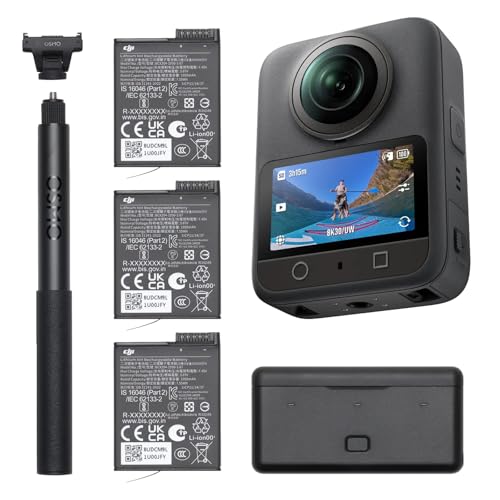
The Osmo 360 Adventure Combo builds on the flagship by pairing dual 1-inch sensors with robust 8K/50fps native recording. It offers a cinematic HDR workflow with 13.5 stops of dynamic range, ensuring strong detail in challenging lighting. The combo includes extra power and extended recording times (100 minutes at 8K), with gesture and voice control for hands-free operation during outdoor shoots, sports, and exploration. It supports multiple modes, including 8K/50fps and 4K/120fps in various configurations.
Key highlights
- Native 8K/50fps 360° video with dual 1-inch sensors
- Longer recording times and high dynamic range
- Gesture and voice control for action-oriented shoots
Ricoh Theta X 360° Camera

The Ricoh Theta X focuses on high-resolution stills and video with an emphasis on professional workflow. It’s capable of capturing up to 11K high-resolution 360° still images (up to 60 MP) and 5.7K video, paired with HDR-DNG RAW support for post-production flexibility. The built-in GPS enables precise geolocation tagging for mapping and storytelling, while enhanced stabilization helps create smooth motion in dynamic settings like travel vlogs and sports footage.
Key highlights
- 11K high-resolution stills and 5.7K video
- RAW support for professional editing
- Embedded GPS data for location-based storytelling
Insta360 X3 — 360 Action Camera

The Insta360 X3 combines 5.7K 360 Active HDR video with a 2.29″ touchscreen and AI editing features. It enables reframing after capture, allowing creators to choose their preferred angle post-shoot. Dual 1/2″ 48MP sensors deliver high-resolution stills, up to 72MP photos, and robust performance for motorcycling, winter sports, and vlogging. The device supports a strong stabilization framework and a versatile ecosystem for post-production and sharing.
Key highlights
- 5.7K 360 Active HDR video with HDR stills
- AI-assisted editing and reframing
- Dual 48MP sensors for detailed images
Insta360 X3 — Waterproof 360 Action Camera

This waterproof version of the Insta360 X3 is designed for challenging environments. It retains the same 5.7K 360 Active HDR video and 72MP photo capabilities, with added ruggedization for underwater use, weather resistance, and outdoor adventures. The model emphasizes stabilization, fluid motion, and reliable performance when shooting in rain, snow, or under-water explorations, making it a compelling choice for action sports and travel in unpredictable conditions.
Key highlights
- Waterproof build for aquatic or harsh-weather shoots
- 5.7K 360 HDR video and 72MP photos
- Preserved AI editing and reframing features
Buying Guide: Key Purchase Considerations
When selecting a high-resolution 360 camera, consider image quality, stabilization, workflow, and durability. Below are important factors and how they apply across the models listed above.
- Resolution and sensor size: Larger sensors and higher resolution yield better low-light performance and more detailed panoramas. The 1-inch sensors in DJI models outperform many entry-level options in dim environments.
- Video specifications: Look for 8K or 5.7K capture options for immersive footage. Higher frame rates (120fps in 4K) help with fast action and smoother slow-motion effects.
- Stabilization and motion handling: Built-in stabilization (Gimbal-free or FlowState) reduces shake. When shooting action, models with robust stabilization win for post-production.
- Storage and battery life: Built-in storage helps during long shoots; consider battery life and modular or hot-swappable options for extended sessions.
- HDR and RAW support: HDR video and RAW stills offer greater dynamic range and flexibility in editing, especially for contrasting environments.
- Post-production and app experience: AI reframing, easy editing, and seamless sharing ecosystems simplify workflows for creators and teams.
- Durability: Waterproof or rugged builds extend usability in weather-exposed or underwater contexts; consider IP ratings and protective housings if needed.
- Geolocation and metadata: GPS tagging and other metadata features can enhance travel storytelling and asset management for larger projects.
- Portability and usability: Touchscreens, voice control, gesture control, and glove-friendly interfaces improve on-site operation during shoots.
These considerations help determine whether you need the absolute highest resolution for cinematic production, or a versatile, rugged model for travel, sports, and outdoors. Analysts often weigh ease of use and ecosystem compatibility alongside raw specifications to select the best fit for their projects.