Best High-Resolution Negative Scanners for Digitizing Old Photos and Slides
Find the right high-resolution negative scanner for turning film negatives and slides into sharp, digital memories. This guide highlights five top options, detailing who they’re best for, what to expect, and any limitations. Ideal buyers include hobbyists digitizing personal archives, educators archiving classroom media, and families preserving old slides for easy sharing.
Below is a quick comparison to help you decide at a glance. The table covers each product’s output, screen presence, and whether it operates without a computer. Consider these factors: resolution, ease of use, dedicated film handling, and whether you need HDMI or SD card storage for standalone use.
| Product | Best For | Key Benefit | Limitations |
|---|---|---|---|
| KODAK Slide N SCAN | Casual users with 135/110/126 slides | 5” LCD for instant preview | Requires SD card (not included) |
| Plustek OpticFilm 8300i Ai | Advanced users and archivists | SilverFast Ai Studio bundle for professional workflow | More complex setup |
| Portta Film Scanner | Users needing multiple formats | Options up to 22MP output | Software not included |
| Magnasonic All-in-One 24MP | Families preserving many formats | Built-in memory with HDMI option | Display is separate when not using HDMI |
| BEONEGLOBAL ClearScan P7 | Sliders and film collectors | 7” large LCD and 24MP resolution | Newer model may have limited accessories |
KODAK Slide N SCAN Film & Slide Scanner
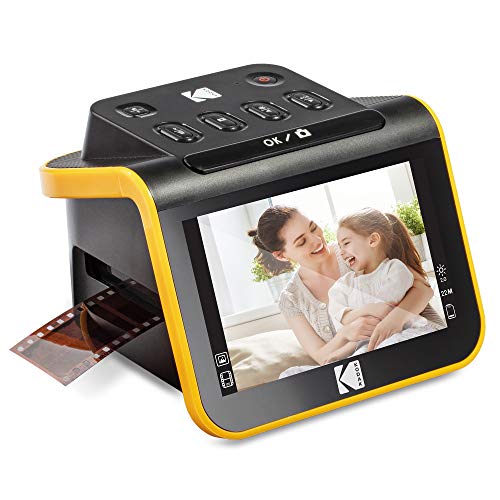
The KODAK Slide N SCAN is designed for quick digitization of classic negatives and slides. It uses a built-in 5” LCD to preview and edit images directly on the device, reducing the need to switch between a computer and scanner. This model supports 135, 126, and 110 formats, making it a versatile choice for mixed collections. It also includes a slide holder and adapters, enabling straightforward loading and workflow. Best for casual users who want an all-in-one solution and a tangible viewing experience on the scanner screen.
Best for: Hobbyists who prefer stand-alone scanning with immediate review. Avoid this if you need sophisticated color calibration beyond basic editing or plan to digitize large archival kits regularly.
Limitation: SD card storage is required to save scans, and SD card compatibility is not stated. Ensure you have a compatible card on hand.
Plustek OpticFilm 8300i Ai Film Scanner
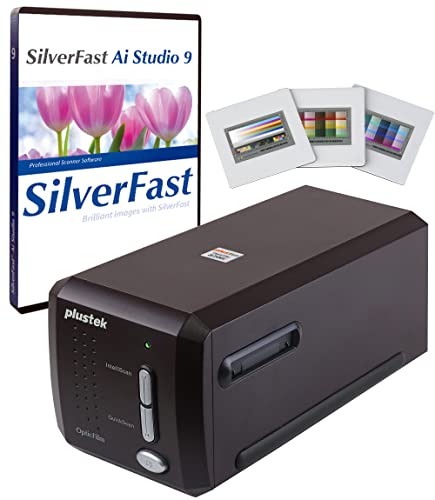
The Plustek OpticFilm 8300i Ai combines a high-speed capture with advanced software, including SilverFast Ai Studio. It features an updated microprocessor for faster scans and comes with IT8 targets for precise color calibration, enabling more accurate film reproduction. It’s a strong choice for enthusiasts who need reliable color accuracy and robust software tools in a single package.
Best for: Archivists and serious hobbyists who want professional-grade software integration and calibration. Choose this if you value calibration targets and a powerful workflow, even if setup is more intricate.
Caution: The bundled software requires learning time to maximize its capabilities; not ideal for users who want a plug-and-play approach.
PORTTA Film Scanner With 5″ LCD

The PORTTA scanner offers a flexible 22MP output option and supports multiple film formats, including 135, 126, and 110. It can function without a computer, and it provides HDMI output for display on a larger screen. The 5” LCD enables quick previews and adjustments on-device, which helps keep digitization workflows simple for personal collections.
Best for: Users who want a middle-ground scanner with good resolution and standalone operation. Better for those who need HDMI output to review scans on a TV or monitor. Avoid if you require the absolute fastest workflow or advanced color workflows.
Limitation: It requires selecting between 16MP and 22MP output, which may require testing to find the best balance of detail and file size.
Magnasonic All-in-One 24MP Film Scanner

The Magnasonic all-in-one scanner takes a broad approach, converting 35mm, 110, 126, and Super 8 film, as well as slides, into 24MP digital photos. It includes built-in memory and an SD card slot for expanded storage, and an HDMI output option allows viewing on a larger display. It’s a practical pick for families with varied formats and a need for simple, consolidated digitization without a computer.
Best for: Households with mixed media formats seeking a user-friendly, standalone device. Choose this if you want a compact solution that covers many common film types. Caution: The on-device display may be less bright in well-lit rooms, and HDMI for viewing on a TV is an optional extra.
BEONEGLOBAL ClearScan P7 Film Scanner

The BEONEGLOBAL ClearScan P7 emphasizes a large 7” LCD and a 24MP sensor, delivering high-resolution scans of 35mm, 110, 126, Super 8, and 8mm film. It’s designed for ease of use, offering a more ergonomic interface and a straightforward workflow for digitizing older slides and negatives. It’s a solid option for those who want a brighter display and a dedicated scanning path without computer dependence.
Best for: Image-heavy collectors who need a large viewing area and consistent results. Choose this if you value a bigger screen for review and prefer a streamlined, all-in-one process. Limitation: The 7” display may invite longer review sessions, potentially slowing rapid batch scanning.
Buying Guide
What should you consider when choosing a high-resolution negative scanner?
Resolution and detail
Look for scanners offering at least 22MP to 24MP output, which provides crisp detail for negatives and slides. Higher resolution helps with larger enlargements and preserves fine grain information.
Screen size and on-device preview
Devices with built-in LCDs let you preview and crop before saving, reducing wasted scans. A larger screen (5″–7″) is helpful for viewing subtle color shifts and scratches.
Standalone use vs. computer dependence
Some models require a computer for software processing, while others save directly to SD cards or support HDMI for external displays. Choose based on your workflow preference and space constraints.
Software and calibration features
Professional bundles (like SilverFast Ai) and calibration targets improve color accuracy and consistency across scans. If you are archiving archival material, calibration may be worth the extra setup time.
Format compatibility
Confirm compatibility with your film formats: 35mm (including full and panoramic), 110, 126, and Super 8. Some scanners also handle printed photos and business cards, expanding the kit’s usefulness.
Storage options and ease of loading
Consider built-in memory, SD card capacity, and whether the device supports continuous loading. Quick-feed trays speed up batch scanning for larger collections.
Price vs. value
Higher-end models offer better calibration, software suites, and broader format support. Balance cost against how often you’ll digitize and how precise you need the output to be.
FAQ
- Do I need a computer to use these scanners?
- Which scanner is best for 35mm slides?
- Is 22MP sufficient for archiving?
- Can I view scans on the device screen?
- Are calibration targets necessary?
- What formats do these scanners support?
Some models operate standalone with an SD card or HDMI output, while others rely on a computer for processing. Check the product details to confirm your preferred workflow.
Models with high resolution sensors and robust slide adapters, such as the Plustek OpticFilm 8300i Ai and BEONEGLOBAL ClearScan P7, perform well on 35mm slides, especially when color calibration is included.
Yes, for most personal archives, 22MP–24MP provides ample detail for print enlargements and digital viewing. For very large prints, higher resolution can be advantageous.
Yes. Several models include a built-in LCD (5″–7″) for on-device previews, which helps verify focus and framing before saving files.
Calibration targets improve color accuracy and consistency, particularly for archival projects. They are beneficial if you require precise color reproduction across batches.
Common formats include 135, 110, and 126 negatives, slides, and some models support Super 8 film. Always verify format support in the product specs.