Best Heavy Duty Tripod for Video Cameras and Camcorders
Finding a sturdy, reliable tripod is essential for professional video work. This guide reviews five top-rated heavy‑duty tripods designed to support DSLRs, camcorders, and other large cameras, with fluid heads for smooth motion and robust build quality. Each option offers different height ranges, load capacities, and compatibility features to fit diverse shooting environments—from weddings and sports to outdoor cinema. The selections below emphasize stability, fluid control, quick release versatility, and long-term durability for American videographers.
| Product | Brand | Max Load | Height Range | Key Benefit |
|---|---|---|---|---|
| NEEWER TP74 | NEEWER | 17.6 lb / 8 kg | 34.6″ to 78.7″ (88 cm to 200 cm) | Fluid drag pan head with quick release versatility |
| NEEWER 79″/200cm | NEEWER | 17.6 lb / 8 kg | 34.6″ to 78.7″ (88 cm to 200 cm) | Strong aluminum alloy with 360° head rotation |
| K&F CONCEPT 90”/230cm | K&F CONCEPT | 10 kg | 54 cm to 230 cm | Overhead and horizon shooting, detachable monopod |
| JOILCAN 74″ Tripod | JOILCAN | 15 lb | 19.5″ to 74″ (≈50 cm to 188 cm) | Lightweight with quick-release and broad compatibility |
| RAUBAY DV-1 PRO | RAUBAY | 17.6 lb / 8 kg | 29.5″ to 70.8″ (75 cm to 180 cm) | Premium fluid head with strong mid-level spreader |
NEEWER TP74 74-Inch Video Tripod With Fluid Head

The NEEWER TP74 is a heavy-duty aluminum tripod designed to stabilize cameras and camcorders during dynamic events. Its double-tube aluminum legs deliver reliable support for up to 17.6 lb (8 kg). A mid-level spreader and rubber feet further enhance stability on varied surfaces, making it suitable for sports, weddings, and product shoots. The fluid drag pan head provides smooth, damping motion with 360° rotation and a wide tilt range from -75° to +90°. A 75 mm bowl base and built-in bubble level help maintain precise framing, while a telescoping handle simplifies operation and storage. The head supports quick switching between two QR modes, compatible with gimbals like DJI RS2/RS3 and with standard quick-release plates for fast transitions between tripod and gimbal setups.
Load distribution and fluid performance are the core strengths here, delivering steady pans and tilts with consistent resistance. This makes it a practical choice for shooters who demand smooth motion without requiring frequent recalibration on uneven terrain.
NEEWER 79-Inch / 200cm Heavy Duty Tripod

This aluminum tripod stands tall and sturdy, designed to handle a range of DSLR cameras and camcorders. The 70 mm bowl base at the head can be adjusted for stable contact on most surfaces, aiding outdoor shoots. Height is adjustable from about 34.6″ to 78.7″ (88 cm to 200 cm), with flip locks for quick setup and breakdown. A dedicated tripod bag helps simplify transport. The large quick-release plate accommodates 1/4″ and 3/8″ screws, ensuring broad compatibility with Canon, Nikon, Sony, and other major brands. The setup emphasizes reliability and ease of use in variable environments.
Overall stability and straightforward operation make this model a solid option for studios and field work alike, particularly when long periods of standing and mobile shooting are involved.
K&F CONCEPT 90”/230cm Overhead Tripod

The K&F CONCEPT 90” overhead tripod delivers an impressive height for standout framing and panoramic shots. With a maximum height of 2.3 meters (90 inches) and a 4-section leg design, it folds compactly to around 21.3 inches, aiding transport. The central axis uses a 28 mm enlarged pipe diameter for stability, reducing lens shake during shooting. A detachable monopod adds versatility for limited spaces or on-location runs. The design supports 10 kg loads, making it suitable for mid‑size DSLRs and camcorders while maintaining solid rigidity on varied ground surfaces.
The combination of height, stability, and a detachable monopod broadens creative options, especially for interview setups or overhead shots where space is a constraint.
JOILCAN 74-Inch Tripod For Camera And Phone

The JOILCAN 74-inch tripod balances height, weight, and versatility for both cameras and phones. It offers a lightweight profile with an 18″ compact form and about 3.15 lbs, making it easy to carry in travel bags. The trapezoidal flap lock system supports height adjustments from 19.5″ to 74″. Rubber feet provide strong grip to reduce shifting on uneven terrain, while thicker tubes improve torsional rigidity and anti-shake performance. Quick-release plates and standard 1/4″ screws ensure broad compatibility with contemporary DSLRs, camcorders, and even phone mounts for hybrid setups in field projects.
Designed for portability without sacrificing stability, this model is well-suited for vloggers and event shooters who require quick setup without heavy equipment.
JOILCAN 74-Inch Tripod For Camera Cell Phone
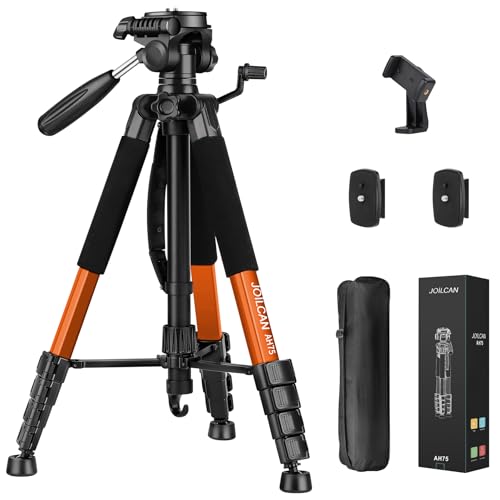
This JOILCAN model mirrors the previous entry with emphasis on broad compatibility and ease of use. It features a similar height range, lightweight construction, and robust non-slip feet for stable performance on varied surfaces. Quick-release plates and 1/4″ screws maintain universal compatibility with cameras, DSLRs, and smartphones. The design focuses on value for money, offering reliable support for creators who need a dependable tripod for both photography and video work in travel or on-location shoots.
RAUBAY DV-1 PRO Fluid Head Tripod

The RAUBAY DV-1 Pro combines a professional aluminum mid-level spreader with a heavy-duty twin-tube leg design. It supports up to 17.6 lb and provides stable support for DSLR cameras, camcorders, and other devices. The fluid head offers 360° horizontal movement and a vertical range of -75° to +90°, enabling versatile shooting angles. The upgraded mid-level spreader enhances rigidity, which is particularly beneficial for long takes or studio-style setups where precise framing is essential. This model emphasizes reliability under demanding shooting conditions and steady, controlled motion for video capture.
Buying Guide: Key Purchase Considerations
- Load Capacity vs. Camera Weight: Match the tripod’s maximum load to your actual rig, including accessories like microphones, lights, and viewfinders. Overloading reduces stability and head performance.
- Height and Reach: Consider both maximum and minimum heights to cover low-angle and tall-people shooting scenarios. A mid-level spreader improves stability for mid-to-high height setups.
- Head Type and Fluidity: Fluid heads with damping provide smooth pans and tilts. Check rotation range (usually 360°) and tilt range (-75° to +90° is common) for flexibility.
- Quick-Release Flexibility: Ensure compatibility with your existing quick-release plates and gimbal systems. Some models offer multiple QR modes for quick transitions between tripod and gimbal use.
- Build Materials: Aluminum is common, offering good strength-to-weight. Twin-tube designs increase stability, especially on uneven surfaces.
- Portability and Storage: Consider fold length, weight, and included carry bags. A compact footprint helps during travel shoots and on-location work.
- Accessories: Presence of mid-level spreaders, monopod options, and compatibility with 1/4″ and 3/8″ screws expands use cases across a range of cameras and accessories.
- Intended Use: For field interviews, weddings, sports, or cinema, choose stiffness, head responsiveness, and height that align with your typical shooting environment.
In selecting a heavy-duty tripod, balance stability with weight and height needs. Consider future gear upgrades and whether a given model can support larger lenses or heavier camcorders as your projects evolve.