Best Heavy Duty Professional Tripods for Serious Photography and Videography
The right heavy-duty tripod can elevate any shoot, whether you’re capturing fast-paced sports, nature landscapes, or studio-style video. This guide highlights five top-rated, high-capacity tripods designed to withstand demanding environments while offering dependable stability, versatility, and adaptable heads. Below is a quick overview of the selected models to help you compare at a glance.
| Product | Brand | Maximum Load | Key Head Type |
|---|---|---|---|
| NEEWER 79″/200cm Video Tripod | NEEWER | 17.6 lb / 8 kg | 360° Fluid Drag Head |
| NEEWER 74″ Video Tripod with Fluid Head | NEEWER | 17.6 lb / 8 kg | Fluid Drag Pan Head |
| MACTREM 84″ Camera Tripod | MACTREM | 33 lb / 15 kg | 360° Ball Head |
| CAMBOFOTO 74″ Aluminum Tripod | CAMBOFOTO | 8.8 lb | 360° Pan Head |
| Victiv 78″ Professional Tripod | Victiv | 31-35 lb | 360° Pan Head with 360° Tilt |
In this article, you’ll find objective comparisons of build quality, height range, head movement, portability, and compatibility with common cameras and accessories. Each product section provides a concise overview, specs highlights, and practical considerations to help you choose the best heavy-duty option for your needs.
NEEWER 79″/200cm Video Tripod With Fluid Head

The NEEWER 79″/200 cm tripod is built from sturdy aluminum alloy and features a 360-degree fluid-drag head for smooth panning. The 70 mm bowl base helps maintain stability on uneven surfaces, making it suitable for outdoor shoots. Height adjusts from 34.6 inches to 78.7 inches, with a collapsed length of 35.8 inches for travel. It includes a large quick-release plate compatible with Canon, Nikon, Sony, and other DSLRs and camcorders. This model balances robust load capacity with practical transport, fitting a wide range of professional setups.
Key considerations: The 8 kg (17.6 lb) maximum load supports mid-range DSLR bodies and zoom lenses, but heavier cinema cameras may require a heavier-duty alternative. The tripod bag aids portability, though additional stabilization accessories may be desirable for windy locations. The dual-lock leg system provides quick height adjustments, while the included plate makes field setup fast.
NEEWER 74″ Video Tripod With Fluid Head

This NEEWER TP74 model emphasizes a premium fluid-drag head designed for smooth motion, with a sturdy aluminum twin-leg construction. The head supports 360-degree rotation and tilt movement, enabling fluid panoramas and precise framing for both photography and video. The 75 mm bowl base ensures stable panning and leveling, and the tripod accepts DJI RS2/RS3 style quick-release configurations, adding versatility for gimbal workflows. The mid-level spreader and non-slip feet improve stability on varied terrains.
Key considerations: This option pairs a compact, metric-capable design with a generous load rating, but it’s primarily built for lighter cinema and event work. If you frequently switch between handheld and tripod-mounted shots, this model’s quick-release flexibility can save setup time. For more heavy-lift needs, consider alternatives with higher payload ratings or reinforced legs.
MACTREM 84″ Camera Tripod
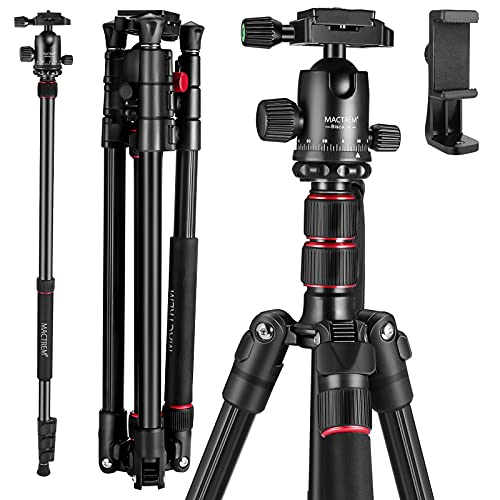
The MACTREM 84″ tripod is designed for travel and studio versatility, boasting a 33 lb (15 kg) maximum load and an adjustable height from compact to tall. Its 360° ball head provides full rotational and tilt control, allowing precise alignment for portraits, landscapes, and video capture. A substantial center column extension supports taller subjects, while the included carry bag facilitates transport between locations. The kit’s sturdiness comes from its aluminum construction and the robust locking mechanism that maintains stability across various shooting angles.
Key considerations: If you frequently shoot with heavy lenses or in dynamic environments, the higher load capacity is advantageous. The 34″ monopod conversion option adds shooting flexibility for low-angle or mobile setups. The trade-off for added strength is a slightly heavier build, which may impact long-haul travel if weight is a critical factor for you.
CAMBOFOTO 74″ Aluminum Tripod

The CAMBOFOTO 74″ aluminum tripod emphasizes balance between portability and stability, with a 8.8 lb (around 4 kg) load rating that suits most DSLRs, mirrorless cameras, and mid-size accessories. The quick-release plate and phone mount offer simple transitions between cameras and mobile devices, making it a versatile option for content creators who alternate between photos, live streams, and video calls. The sturdy aluminum legs and broad base provide reliable stability on varied surfaces.
Key considerations: While excellent for everyday professional use, this model’s load rating may limit support for heavy cinema cameras or large telephoto lenses. If you require more payload, pairing with a more robust head or a higher-capacity tripod might be necessary. Its multi-device compatibility makes it a flexible pick for mixed-media work.
Victiv 78″ Professional Tripod

The Victiv 78″ tripod positions itself as a portable heavy-duty option with a 31-35 lb load range. Its three-section aluminum legs extend to 78 inches (with an optional monopod conversion to 85 inches) and feature twist-locks for quick height changes. The setup is designed for photographers who need strong stability across uneven terrain, with wide-ranging compatibility for DSLRs, spotting scopes, monoculars, and other devices. The included carrying case enhances transport between sites.
Key considerations: This model’s versatility shines in travel-heavy workflows where you may switch from stills to video or use spotting scopes. The ability to convert to a monopod adds nimbleness for action shots. The trade-off is that very large professional cinema rigs may exceed its payload, so verify your gear before procurement.
Buying Guide: Key Purchase Considerations For Heavy-Duty Tripods
- Load capacity: Match the tripod’s maximum load with your heaviest camera body plus lenses and accessories. If you anticipate future upgrades or heavier rigs, lean toward higher-rated models (15 kg / 33 lb and above).
- Head type and motion: Fluid heads deliver smooth panning for video, while ball heads offer quick positioning for stills. Consider whether you need independent pan locks or tilt limitations for precise framing.
- Height range and stability: A broad height range supports varied shooting perspectives. Look for leg design with locking mechanisms and wide stance to reduce wobble on uneven ground.
- Portability: Weight and foldable length matter for travel. Tripods that fold compactly and include protective bags save space and reduce setup time on location.
- Compatibility: Ensure the tripod’s quick-release system and plate are compatible with your cameras and any gimbals or accessories you routinely use.
- Material and build: Aluminum tripods strike a balance between strength and weight, while carbon fiber options are lighter but typically more expensive. Consider climate and environment where corrosion resistance matters.
- Monopod conversion: Some models convert to monopods for dynamic, on-the-go shots. If your work involves frequent vertical motion or trekking, this versatility can be valuable.
When selecting a heavy-duty tripod, align your choice with typical shooting scenarios: indoor productions and controlled environments may benefit from a robust fluid-head system, while outdoor or field shoots may prioritize stability, payload, and transport efficiency. Evaluating a few options against your gear setup will help ensure that you pick a tripod that remains reliable across a broad range of applications.