Best HD Infrared Waterproof Camera Setup for Outdoor Surveillance
Answering the need for reliable outdoor monitoring, this guide highlights five durable, infrared-ready cameras that perform well in wet conditions and low light. This selection is best for homeowners, RV owners, boaters, and outdoor security setups seeking clear night images and rugged build. Each entry explains who it’s best for, why it was selected, and a practical limitation to consider before buying.
| Product | Best For | Key Benefit | Limitations |
|---|---|---|---|
| ELP 3.6mm Dome Camera | Outdoor homes with simple installation | 1080p with auto IR and waterproof housing | USB camera limits integration with some systems |
| SVPRO Outdoor USB Camera | Rugged outdoor setups | High frame rates up to 1080p with IR and metal casing | USB-powered; cable management needed |
| Underwater Fishing Camera TMACTIME | Waterfront rigs, boats, and ice fishing | IP68 waterproof with IR night vision | Designed for underwater viewing; generic use outside water varies |
| Digitgarden Trail Camera | Wildlife monitoring and remote locations | 32MP photos, 2.7K video, no-glow IR | Trail-camera style; not designed for continuous surveillance |
| FONDAIL Solar Security Camera | Solar-powered, camera-ready external areas | 2K video, color night vision, AI alerts | Wireless setup requires stable solar exposure |
ELP 3.6mm Dome Camera with IR Night Vision

The ELP dome camera offers 1080P resolution from a 1/2.7-inch CMOS sensor, with IR night vision for low-light scenes. It uses a compact metal case and is designed for outdoor surveillance, making it a practical option for small-to-mid-sized properties. Best for users who need a simple, weatherproof IP-free camera that can plug into USB-enabled systems. A potential limitation is its USB-based protocol, which may limit compatibility with some standalone DVR/NVR setups.
SVPRO Outdoor USB Camera 1080P
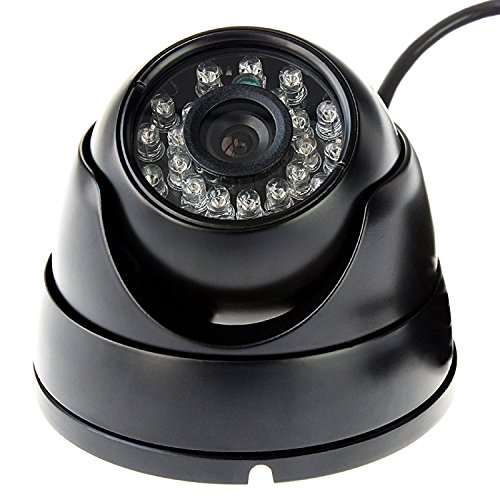
The SVPRO USB camera brings Full HD 1080P with a 1/2.7″ CMOS OV2710 sensor and multiple frame rates (up to 30fps at 1080p, higher at lower resolutions). Its IP-rated waterproof metal housing and IR LEDs enable reliable outdoor operation in dusk or night. This model suits outdoor installations requiring robust casing and straightforward USB connectivity. A caveat is its dependence on a direct USB connection, which can limit placement flexibility and long-distance wiring.
Underwater Fishing Camera TMACTIME 1080P

TMACTIME combines 1080P HD monitoring with a rugged IP68 rating and a 4.3″ LCD display for real-time underwater viewing. Six built-in IR lights improve nighttime visibility, making it a strong choice for fishing, boat-use, or ice angling. It’s ideal when you need a dedicated underwater view or a stand-alone monitor. Limitation: designed primarily for underwater use; performance may vary for conventional above-water surveillance unless paired with an appropriate mount and housing.
Digitgarden Trail Camera 32MP 2.7K

Digitgarden offers high-resolution stills and 2.7K video with no-glow infrared, a 120° field of view, and a 0.2s trigger. While excellent for wildlife monitoring or remote security monitoring at controlled sites, it is a trail-style camera rather than a fixed-perimeter surveillance camera. Choose this if you need long-term field deployment with wildlife-orientated features. A potential limitation is that it may require frequent SD storage management and field maintenance in harsh environments.
FONDAIL Solar Security Camera

FONDAIL pairs solar power with 2K HD video and color night vision, offering a long-run solution for outdoor areas without frequent battery changes. Its 355° horizontal and 100° vertical rotation helps cover wide areas, and AI detection plus two-way audio support actionable alerts and communication. This model is best for remote or sun-exposed sites where wiring is a challenge. Limitation: reliance on sunlight may affect performance during extended cloudy periods unless battery storage is robust.
Buying Guide: Key Considerations for an HD Infrared Waterproof Camera Setup
- Resolution and frame rate: Higher resolution (1080P or above) and higher frame rates improve detail and motion capture. Balance with storage needs and bandwidth if streaming externally.
- Night vision and IR range: Look for IR LEDs and automatic day/night switching. The distance and clarity of IR illumination determine performance in complete darkness.
- Waterproofing and build: An IP rating (e.g., IP68) is essential for harsh weather. Metal housings tend to offer better durability than plastic in long-term outdoor use.
- Power and connectivity: Consider wired (ethernet/Coax) versus wireless (Wi‑Fi, USB). Solar-powered units offer independence but require sun exposure and battery management.
- Field of view and mounting: Wide-angle lenses reduce blind spots. Check mounting options to ensure proper placement for the target area.
- Storage and accessibility: Local storage (SD card or HDD) versus cloud. Remote access features are helpful for monitoring from a distance.
- AI and alerts: Motion detection, person/vehicle detection, and customizable zones help minimize false alarms.
- Maintenance: Outdoor cameras need weatherproof seals, UV resistance, and ease of cleaning to maintain image quality.
Frequently Asked Questions
- What is the best outdoor infrared camera for low-light conditions?
Answer: Cameras with strong IR illumination and no-glow IR, such as no-glow infrared designs, tend to perform best in total darkness while remaining discreet. - Do I need a wired or wireless setup for outdoor cameras?
Answer: Wired systems offer stable connections and consistent power, while wireless setups provide flexible placement but may require regular signal optimization. - What should I consider when choosing solar-powered cameras?
Answer: Ensure sufficient sun exposure, reliable battery storage, and a robust wireless link to maintain continuous monitoring. - Is higher resolution always better for outdoor surveillance?
Answer: Higher resolution improves detail but increases storage and bandwidth needs; balance with your network capacity and retention goals. - Can infrared cameras record color night vision?
Answer: Some models offer color night vision modes using supplemental lighting; otherwise, infrared modes capture monochrome images at night. - What is the practical impact of IP ratings on outdoor cameras?
Answer: Higher IP ratings indicate better protection against dust and water; IP68 is common for robust outdoor use, especially in harsh weather.