Best Global Shutter CMOS Cameras for High-Speed Imaging
Global shutter CMOS cameras are essential for capturing fast-moving subjects without the distortions caused by rolling shutters. For hobbyists wiring Raspberry Pis, up-and-coming makers, and professional labs alike, these cameras offer high frame rates, precise exposure control, and robust trigger options. The following selections emphasize widely supported sensors like IMX296 and AR0234, plus versatile USB options for desktops and embedded systems. This guide helps compare five strong choices that balance performance, compatibility, and value for American users building fast, accurate imaging setups.
Whether you’re doing machine vision, robotics, astronomy, or rapid prototyping, the right global shutter camera hinges on sensor quality, interface, and ease of integration. The products below are selected for clear documentation, broad platform support, and practical use-cases. A quick reference table in the next section summarizes core specs to help you decide at a glance.
| Product | Sensor / Resolution | Max Frame Rate | Interface | Key Advantage |
|---|---|---|---|---|
| Innomaker GS Global Shutter Pi Camera | IMX296 Mono, 1.58MP (1456×1088) | 60 fps | Pi-compatible interface | Plug-and-play with Raspberry Pi boards; external trigger support |
| Arducam IMX296 Global Shutter Pi Camera | IMX296, 1.58MP | 60 fps | MIPI / Pi compatibility | Flexible FPC with manual focus option |
| SVBONY SC432M Global Shutter Astronomy Camera | IMX432, 1.77MP | 120 fps | USB 3.0 | Great sensitivity for astrophotography and fast targets |
| ELP Global Shutter USB Camera Wide Angle | AR0234-based, 2MP | 90 fps | USB | Wide 120-degree distortion-free lens |
| InnoMaker USB2.0 UVC Camera | OV9281, 1MP | 720p at 120 fps | UVC (USB 2.0/3.0) | External trigger and strobe for precise capture |
Innomaker GS Global Shutter Pi Camera
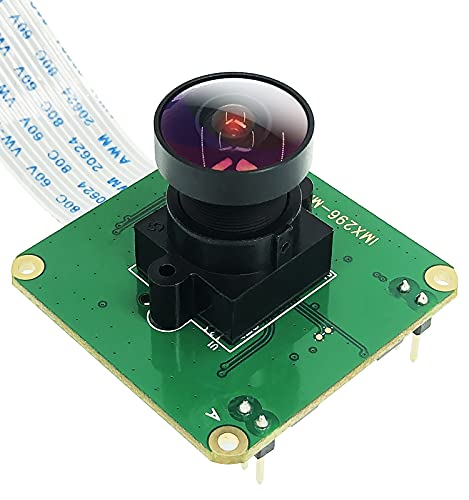
The Innomaker GS camera module uses the IMX296 monochrome global shutter sensor, delivering 1.58 megapixels at up to 60 frames per second. It is designed for Raspberry Pi platforms (Pi 5/4/3/Zero) with plug-and-play drivers and external trigger support. The 6.3mm type 1/2.9 CMOS sensor enables variable charge integration to optimize exposure in changing lighting. With Mode0 continuous streaming and Mode1 fast trigger (<1 μs latency), users can synchronize captures with events or strobe lighting, reducing motion blur in high-speed scenes.
- Sensor: IMX296 Mono Global Shutter
- Resolution / Framerate: 1.58MP @ 60fps
- Output: Y10 / YUV; supports streaming and fast triggering
- Compatibility: Raspberry Pi boards with plug-and-play drivers
Arducam IMX296 Global Shutter Pi Camera

Arducam’s Raspberry Pi camera module leverages the IMX296 sensor for global shutter imaging, offering a 1.58MP image with 60 fps and a versatile M12 lens mount. It comes with a 15-22 pin FPC cable, enabling flexible connections to Raspberry Pi 5, 3, and 4 models. The package includes a 45° horizontal field of view (HFOV) M12 lens and a manual focus option, which can be beneficial for macro work or scenes requiring precise focus control. This configuration is particularly suitable for applications requiring accurate motion capture and reliable exposure control in embedded systems.
- Sensor: IMX296 Global Shutter
- Lens: M12 with adjustable focus
- FPC Cable: 15-22 pin
- Platform Support: Raspberry Pi 5/4/3 A/B
SVBONY SC432M Global Shutter Astronomy Camera

SVBONY’s SC432M is a monochrome cooled planetary camera built around the IMX432 sensor, offering true global shutter imaging for high-speed astronomy and precise tracking. With USB 3.0 connectivity and a 1.1-inch frame, the camera provides a 9 μm × 9 μm pixel size for strong light sensitivity and fine detail. The 120 Hz frame rate enhances the ability to image fast lunar features, planetary transits, or ISS passes. Its cooling helps reduce thermal noise during long exposures, delivering cleaner dark frames and more reliable calibration data for astrophotography workflows.
- Global Shutter: IMX432 sensor
- Frame Rate: Up to 120 fps
- Pixel Size: 9 μm × 9 μm; 1.1″ frame
- Cooling: Reduces thermal noise
ELP Global Shutter USB Camera Wide Angle

The ELP wide-angle global shutter camera targets desktop and industrial systems needing fast, distortion-free imaging. It uses a 2 MP AR0234-based sensor with a 1920×1200 resolution and 90 fps capability, enabling sharp, real-time visualization of fast motion. The lens is a 120-degree wide-angle with minimal distortion, and the compact 38 mm × 38 mm board fits into tight enclosures. This camera is well-suited for machine vision, automated quality checks, and educational demos that require a broad field of view without rolling artifacts.
- Resolution / Frame Rate: 1920×1200 @ 90 fps
- Sensor: AR0234-based global shutter
- Lens: 120-degree wide-angle; distortion controlled
- Interface: USB
InnoMaker USB2.0 Global Shutter UVC Camera

This InnoMaker module uses the OV9281 1-megapixel global shutter sensor and provides 720p at 120 fps, ideal for fast-moving machine-vision tasks. It’s a plug-and-play UVC camera compatible with Windows, Linux, Mac OS, Android, Raspberry Pi, and Jetson Nano, simplifying integration across a range of platforms. The external trigger and strobe output pins enable precise synchronization with external lighting, which is critical for high-speed capture in production lines or research setups where timing matters.
- Sensor: OV9281; 1 MP; Global Shutter
- Resolution / Frame Rate: 720p @ 120 fps
- Connectivity: UVC; USB 2.0/3.0 compatible
- External Trigger & Strobe
Buying Guide
Choosing a global shutter camera involves balancing sensor performance, interface compatibility, and practical deployment needs. The following considerations help buyers compare options across embedded, USB, and desktop workflows.
Sensor Type And Image Quality
Global shutter sensors eliminate rolling shutter artifacts, making them ideal for high-speed scenes. Resolution and pixel size matter for both detail and light sensitivity. Larger pixels (like 9 μm) improve low-light performance, while higher megapixel counts deliver more detail at the cost of sensitivity and bandwidth. Users should match sensor choices to their subject speed, lighting, and required post-processing effort.
Frame Rate And Exposure Control
Higher frame rates enable smoother motion capture but demand more bandwidth and processing. A camera with adjustable exposure, external trigger options, and low-latency modes is valuable for synchronization with lighting or events. If you need rapid bursts, prioritize models that advertise sub-microsecond trigger latency and robust streaming modes.
Connectivity, Compatibility, And Ecosystem
USB 3.0 offers higher data throughput for 2 MP or higher sensors, while USB 2.0 suffices for 1 MP at modest frame rates. Raspberry Pi and Jetson platforms require drivers or kernel modules, so devices with broad driver support and documented APIs save setup time. UVC devices provide plug-and-play compatibility across major operating systems, whereas MIPI-based modules may require more specialized integration.
Lens Mounts And Optics
Lens compatibility is crucial. M12 lenses are common on inline Pi cameras, while C- and CS-mounts suit higher-end imaging tasks with interchangeable optics. Wide-angle lenses reduce the required camera-to-subject distance but can introduce distortion unless the lens is designed for minimum distortion. Consider whether you need fixed focus or adjustable focus to optimize depth of field for your scene.
External Triggering And Synchronization
External trigger inputs and strobe outputs enable precise capture tied to external events or lighting conditions. This feature is essential for synchronized machine-vision systems, astrophotography with timed exposure, and dynamic lab experiments. Confirm latency specs and compatibility with your lighting hardware when evaluating options.
Cooling, Durability, And Form Factor
Astronomy cameras, like cooled SVBONY models, reduce thermal noise for long exposures, but cooling adds size, power requirements, and heat dissipation considerations. For compact robotics or embedded projects, lightweight, self-contained units without active cooling may be preferable. Assess the operating environment, enclosure space, and power availability when choosing form factor and robustness.
Software Support, Drivers, And Data Workflow
Driver availability, SDKs, and sample code influence integration speed. UVC devices simplify software setup, while specialized modules may require vendor-specific libraries. Consider your target software stack (Windows, Linux, macOS) and whether you need real-time streaming, offline processing, or integration with third-party vision tools.
Use-Case Fit And Budget Considerations
For Raspberry Pi projects, low-latency streaming and simple setup often trump ultra-high resolution. Desktop or lab environments may justify USB 3.0 cameras with higher frame rates and better cooling. Balance initial costs with expected workloads, maintenance, and upgrade paths. Global shutter cameras provide long-term reliability in robotics, industrial inspection, and astronomy, but the best pick hinges on your specific imaging goals and available ecosystem support.