Best Full-Frame Camera Bodies for Every Photographer
The world of full-frame cameras offers superb image quality, dynamic range, and low-light performance. This guide highlights five strong body-only options from Canon and Sony that cover a range of needs—from fast action shooting and high-resolution stills to cinema-grade video. Each entry focuses on core strengths, sensor performance, autofocus capabilities, and overall suitability for different shooting styles. Use this overview to narrow your choices before investing in lenses and accessories. The selections below prioritize dependable performance, versatile use cases, and a balance between stills and video capabilities.
| Product | Brand | Sensor / Type | Notes |
|---|---|---|---|
| Canon EOS R6 Mark II Body | Canon | Full-Frame CMOS / Mirrorless | Strong autofocus and high-speed shooting |
| Sony a7 III Body | Sony | Full-Frame BSI / Mirrorless | Balanced performance for stills and video |
| Canon EOS RP Full-Frame Body | Canon | Full-Frame CMOS / Mirrorless | Lightweight entry into full-frame |
| Canon EOS R5 Mirrorless Body | Canon | Full-Frame CMOS / Mirrorless | High resolution and strong video options |
| Sony FX2 Full-Frame Cinema Body | Sony | Full-Frame Exmor R / Mirrorless Cinema | Cinema-focused with advanced log and grading |
Canon EOS R6 Mark II Body

The Canon EOS R6 Mark II offers a versatile full-frame design focused on speed and reliability. Its 24.2-megapixel full-frame CMOS sensor supports low-light performance with a Dual Pixel CMOS AF system that adapts to moving subjects across a range of shooting scenarios. Powered by the DIGIC X image processor, image processing and video functions are enhanced for clearer detail with reduced noise. With electronic shutter speeds reaching up to 40 fps at 20MP, this body is suited to fast action, sports, and wildlife photography, as well as video work. The combination of high-speed shooting and strong autofocus makes it a go-to choice for enthusiasts and professionals who value speed, accuracy, and portability in a body-only package. In addition to stills, the R6 II supports high-quality video workflows with reliable color and detail, making it a balanced option for hybrid shooters who want a capable all-around body.
In practice, the R6 II shines when you need responsive AF tracking and rapid frame rates without carrying heavy gear. Its build remains robust for field use, and the body-only format allows you to choose lenses that fit your subject matter—from compact primes to fast, long telephotos. While it emphasizes speed and autofocus, photographers who prioritize ultra-high resolution above 24 MP may look to higher-megapixel models. Nonetheless, for action, portraiture, and documentary work in varying lighting, the R6 Mark II provides a reliable, well-rounded full-frame option.
Sony a7 III Full-Frame Body

The Sony a7 III is a veteran favorite that balances resolution, dynamic range, and performance in a compact body. It features a 24.2-megapixel BSI full-frame sensor with a wide dynamic range and efficient readout. The camera supports high-quality stills and video, delivering 15 stops of dynamic range and 14-bit RAW data, which preserves tonal information for post-processing. With 10 frames per second continuous shooting and solid AF tracking, it remains effective for sports, action, and wildlife. The a7 III also offers compatibility with Sony E-mount lenses, broadening the range of available glass. Its long-lasting battery and reliable performance make it a practical choice for everyday use by enthusiasts and professionals who prioritize a strong all-around performer in a body-only package.
For video shooters, the a7 III provides strong baseline capabilities and smooth color rendering, though more recent models push 4K with higher bitrates. The camera’s compact form factor and ergonomic grip support extended shooting sessions. The Sony ecosystem’s lens availability and affordable third-party options help build a versatile setup. If your priority is dependable autofocus, good image quality, and a balanced feature set without chasing the latest specs, the a7 III remains a compelling option among full-frame bodies.
Canon EOS RP Full-Frame Body

The Canon EOS RP marks a lighter, more portable entry point into full-frame Canon mirrorless systems. It is described as the lightest and smallest full-frame EOS camera, making it a practical choice for travel, street, or events where weight matters. The RF mount remains compatible with RF glass and EF/EF-S lenses when used with an adapter, giving photographers a broad lens ecosystem to work with. The RP houses a 26.2-megapixel full-frame CMOS sensor and relies on Canon’s DIGIC 8 processor to deliver quality images with good color rendition. While it may not match higher-end bodies in speed or resolution, it offers an attractive value proposition for budding full-frame shooters seeking portability and modern Canon features in a body-only package.
In use, the RP shines for stills enthusiasts who prioritize manageable size, comfortable handling, and access to Canon’s evolving RF lens lineup. Video capability exists, but shooters focusing primarily on still photography or casual video production will find the RP to be an approachable entry into full-frame imaging. Its balance of weight, ease of use, and compatibility with legacy lenses through adapters makes it a flexible platform for photographers expanding into the Canon ecosystem.
Canon EOS R5 Mirrorless Body
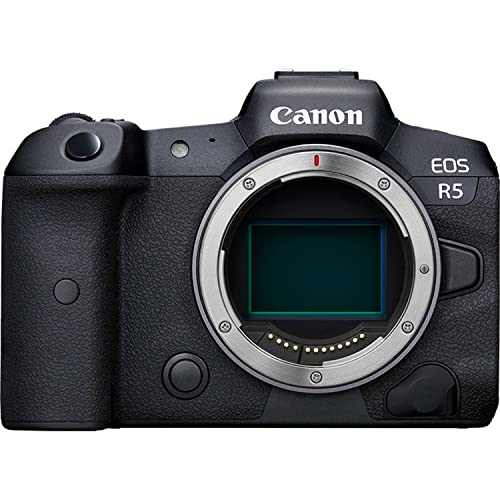
The Canon EOS R5 is a high-resolution full-frame option designed for photographers who demand extensive detail and strong video capabilities. It features a 45-megapixel CMOS sensor and the powerful DIGIC X image processor, enabling excellent image quality with impressive color, tonal depth, and low-light performance. The R5 supports rapid shooting with up to 12 frames per second using a mechanical shutter and up to 20 frames per second with electronic shutter, making it suitable for fast action and wildlife. For videographers, 8K video capture provides expansive creative options, while robust autofocus tracking helps keep moving subjects sharp. This body caters to professionals who seek top-tier stills resolution and versatile video performance within a single system.
In practice, the R5 sits at the premium end of Canon’s mirrorless lineup, offering a blend of resolution, speed, and robust video features. The camera’s weight and size reflect its capabilities, which appeals to users who value performance and future-proofing. If ongoing high-resolution work and advanced video features are priorities, the R5 represents a strong, comprehensive option in a body-only package.
Sony FX2 Full-Frame Cinema Body

The Sony FX2 is a cinema-focused full-frame body designed for sophisticated video production. It features a large-format Exmor R CMOS sensor with 33MP capability and the BIONZ XR image processor, delivering high-quality stills and flexible color science for grading. Its dynamic range is enhanced by “15+ stops” in Log mode, complemented by Dual base ISO options (800/4000), which help maintain detail across bright and dark scenes. The camera supports flexible shooting configurations, including various Log profiles, enabling professional workflows for narrative, documentary, and cinema-style projects. This body is ideal for videographers who require a robust, cinema-oriented platform with extensive dynamic range and logging options.
In practice, the FX2 excels where video quality and color grading are paramount. Its cinema-oriented features pair well with high-end lenses and controlled shooting environments. While it may be overkill for casual photography, it provides a dedicated, capable solution for film-style productions, enabling precise control over exposure, color, and texture. For professionals prioritizing video-first capabilities in a full-frame body, the FX2 offers a compelling option within the Canon/Sony ecosystem, especially for users who value film-like latitude and workflow flexibility.
Buying Guide
Choosing the right full-frame body depends on how you prioritize stills quality, video capabilities, and system compatibility. The following considerations help compare options across brands and use cases:
- Intended use: If your focus is still photography with occasional video, prioritize resolution, autofocus reliability, and battery life. For documentary or cinema work, assess dynamic range, color science, and available log profiles.
- Sensor and image quality: Higher megapixels yield more detail but can demand more storage and processing power. Consider dynamic range and low-light performance for your typical shooting conditions.
- Autofocus and tracking: Face/Eye detection, subject tracking, and AF speed are critical for moving subjects. Dual Pixel AF in Canon bodies and comprehensive phase-detection systems in Sony bodies are key strengths.
- Video capabilities: If 4K/8K recording, color profiles, and log options matter, look at the Cinema-oriented models (like the FX2) or high-end hybrid bodies (R5) for flexibility in post.
- Lens ecosystem: A broad selection of native lenses and third-party options affects long-term versatility. Consider future lens investments and compatibility with existing glass.
- In-body stabilization (IBIS): IBIS helps counter camera shake with non-stabilized lenses. If you plan to shoot handheld video or telephoto stills, this can be a decisive feature.
- Ergonomics and handling: Weight, grip feel, and control placement impact comfort during long shoots. Ergonomics become especially important for action or travel work.
- Battery life: Longer battery life reduces downtime in fieldwork. Some cameras benefit from compatible batteries or power options for extended shoots.
- Durability and weather sealing: For outdoor or harsh environments, build quality and sealing matter for long-term reliability.
- Budget and future-proofing: Balance current needs with anticipated lens purchases and potential upgrades. Investing in a capable system early can reduce friction as your skills grow.
In summary, for fast action and reliable performance, the Canon EOS R6 Mark II and Sony a7 III bodies offer strong all-around capability. If you want a lighter entry into full-frame imaging, the Canon EOS RP delivers portability with a solid feature set. For high-resolution stills and robust video, the Canon EOS R5 stands out, while the Sony FX2 serves dedicated cinema work with advanced log and color grading options. Your final choice should align with your primary subject matter, preferred workflow, and lens ecosystem to maximize value over time.