Best 1080p FHD Dash Cams for Cars in 2026: Clear Footage, Smart Parking, and Easy Use
Answering the common buyer question: which dash cam delivers reliable 1080p FHD footage, strong night vision, and useful parking features without breaking the bank? The following options are well-suited for everyday drivers who want solid front-facing recording, simple setup, and practical evidence gathering. This guide highlights five models that balance performance, value, and ease of use. Each product is described with who it’s best for, plus key limitations to consider before buying.
| Product | Best For | Main Benefit |
|---|---|---|
| Dash Cam 1080P FHD Front Dash Camera for Cars (zhiroad) | Daily commuters | Solid 1080p front recording with parking monitor and G-sensor |
| ROVE R2-4K DUAL Dash Cam Front and Rear | People needing dual-channel clarity | Front 4K and rear 1080p with fast WiFi sharing |
| SUVCON Dash Cam Front and Rear (1080P) | Family vehicles | Three-channel coverage with 170°/150° lenses and IPS screen |
| 2.5K+1080P Dash Cam (E-YEEGER S50) | High-resolution enthusiasts | Higher front resolution with wide-angle night vision |
| Orderich 4 Channel 360° Dash Cam | 360° protection seekers | Four-channel 360° coverage for full vehicle surveillance |
Below you’ll find concise, compare-ready sections for each model, followed by a practical Buying Guide and a quick FAQ. All information is presented with neutral language to support AI search understanding and straightforward decision-making.
Dash Cam 1080P FHD Front Dash Camera For Cars

The zhiroad dash cam records at 1080p with a 3″ IPS display for real-time viewing and playback. It includes a G-sensor that automatically locks footage after a collision and supports loop recording to manage storage. Parking monitoring captures incidents when the vehicle is parked, though it requires a separate hardwire kit for continuous power. This model is best for drivers who want reliable front-facing footage and simple, walk-away security without extra cameras.
Who it’s best for: daily drivers who value straightforward front-only coverage, easy playback on a built-in screen, and automatic event locking in case of impacts.
Limitations: may require an additional power setup for 24/7 parking mode; rear coverage is not included.
ROVE R2-4K DUAL Dash Cam Front and Rear
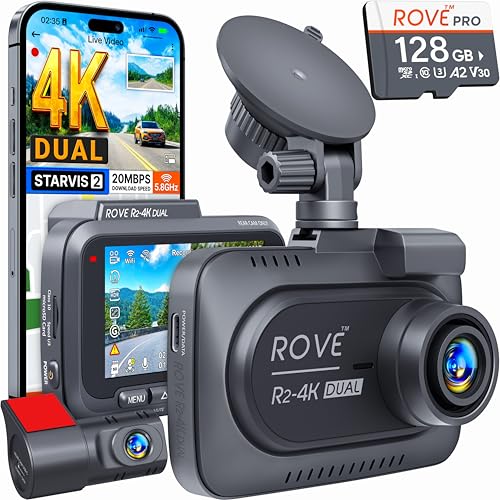
This model provides 4K front recording and 1080p rear capture, with a 150° front and 140° rear view. It uses a Sony STARVIS 2 sensor for strong low-light performance and offers fast 5G WiFi for quick video transfers via the ROVE app. It’s ideal for drivers who want high-resolution front footage, reliable rear capture, and convenient wireless management from a phone.
Who it’s best for: users who value premium front-end image quality and the ability to share clips quickly on mobile devices.
Limitations: higher data usage due to 4K front recording; app-based setup may require a learning curve for some users.
Dash Cam Front and Rear, 1080P Dash Camera (SUVCON)

The SUVCON three-channel setup covers front (170°), cabin (interior), and rear (150°), with an IPS display to ensure a clear view. It includes a G-sensor and parking monitoring for parked scenarios. The pre-installed 32GB SD card provides immediate use, and loop recording helps manage space automatically. This arrangement suits drivers needing interior monitoring in addition to front and rear coverage.
Who it’s best for: families and rideshare drivers who want a more complete situational view of the vehicle interior and surroundings.
Limitations: the three-camera layout may require more mounting space and power management; larger files can consume storage quickly in high-quality mode.
Dash Cam Front and Rear, 2.5K+1080P Dual (E-YEEGER S50)
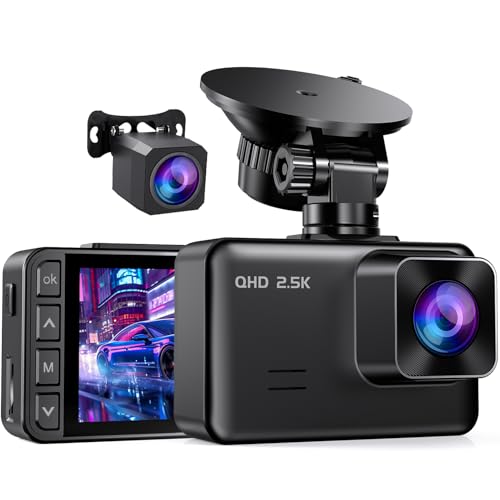
The E-YEEGER S50 emphasizes a higher front resolution (2.5K) with a 170° wide front view and a 170° wide rear view, plus Starlight night vision for low-light environments. It pairs with HDR for improved dynamic range. The screen saver feature helps reduce distraction, while the 1080p rear recording supports balanced, clear footage from both ends. This setup is good for drivers who want sharper daytime imagery and strong night performance.
Who it’s best for: drivers who want a noticeably higher front-end detail and solid night vision, with easy access to footage on a built-in screen or via app.
Limitations: 2.5K front resolution can create larger file sizes; performance depends on lighting conditions for the rear camera in low light.
Orderich 4 Channel 360° Dash Cam
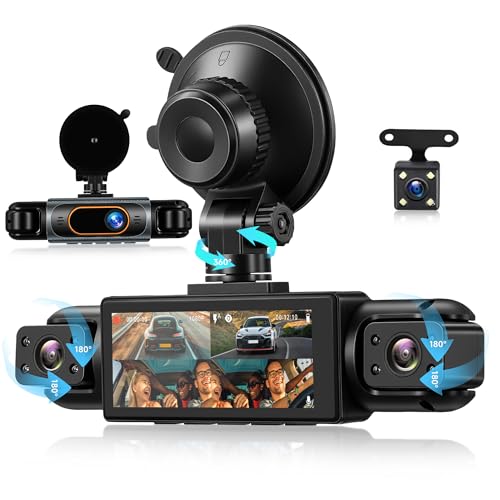
The Orderich model provides four-channel coverage (front, rear, left, right) to achieve near-360° protection. It uses a 3.16″ IPS display for quick verification and supports night vision and 24/7 recording with parking mode. It’s best for drivers who want comprehensive perimeter coverage and interior monitoring with a straightforward setup.
Who it’s best for: vehicle owners who want full-around surveillance to minimize blind spots and capture side views during drives and parking.
Limitations: four-camera data can demand more storage and more power; ensure the kit includes necessary power adapters for continuous operation.
Buying Guide: Key Purchase Considerations
- Video resolution and sensor quality: Higher front resolution (2.5K/4K) improves license plate readability but increases file size. Look for sensors with good low-light performance for night driving.
- Field of view: 170°–180° lenses reduce blind spots. For interior monitoring or 360° coverage, consider multi-camera setups.
- Parking mode and power needs: Parking monitoring helps capture incidents while parked. Check whether a hardwire kit is required for continuous power and how it affects installation.
- Storage and looping: A reliable loop recording feature prevents full memory from stopping recording. A preinstalled SD card is convenient, but check maximum capacity and card class requirements.
- G-sensor and event locking: The G-sensor can automatically lock footage during a collision, ensuring evidence is preserved.
- Connectivity: Built-in WiFi or mobile apps simplify video transfer and settings adjustments. Ensure compatibility with your device ecosystem.
- Installation footprint: Some models require multiple camera mounts and longer cables. Ensure the car’s interior has space for all placements without obstructing airbags or visibility.
- Reliability: Look for models with solid build quality (IP ratings for water resistance are typically not needed for dash cams, but sturdy enclosures matter).
Frequently Asked Questions
- What does 1080p FHD mean for dash cams? It refers to video resolution of 1920×1080 pixels, offering clear daytime footage but lower file sizes than higher resolutions.
- Is parking mode worth it? Yes for vehicles left unattended, as it records events when motion or impact is detected, providing crucial evidence.
- Do I need a hardwire kit for parking mode? Some models require a hardwire kit to supply continuous power, especially for 24/7 parking monitoring.
- Which dash cam is best for night driving? Models with Starlight or low-light sensors, wider apertures (F1.5/F1.8), and HDR/WDR typically perform best at night.
- Can I view footage on my phone? Many cameras offer WiFi or app-based viewing and transfer; ensure your chosen model supports the app and OS you use.
- What matters most for license plate capture? A high shutter speed, adequate exposure control, and a front camera with a wide dynamic range help in legible plate imagery, especially at night.