Best Fastest SD Card for DSLR: High-Speed Options for Pro-Quality Shots
The fastest SD cards for DSLRs are those that deliver sustained read and write speeds, support C10/U3 and V30 classes where applicable, and maintain reliability during long shoots. This guide highlights top options that balance speed, capacity, and durability, helping photographers choose the right card for action, sports, wildlife, or cinema-quality stills and 4K/8K video. Best for professional photographers needing rapid transfers, long recording sessions, and robust endurance, with clear reasons to pick each option.
| Product | Best For | Key Benefit |
|---|---|---|
| Lexar 128GB Professional 2000x SD Card | DSLR shooters needing fast transfers | Up to 300 MB/s read speed with UHS-II |
| Lexar 256GB Professional 2000x SD Card | Long shoots & 8K video | Up to 300 MB/s read, durable design |
| SanDisk Extreme Pro 128GB SD UHS-I Card | 4K/Full HD capture on a budget | Up to 250 MB/s read, 170 MB/s write |
| ORICO 128GB SDXC UHS-I Card | Everyday DSLR use with 4K readiness | Up to 100 MB/s read, V30 |
| Transcend SDC300S 128GB SDXC | Reliable Full HD to some 4K needs | Up to 100 MB/s read, UHS-I |
Note: All cards listed here are designed to support DSLR workflows, with attention to read/write speeds, reliability, and compatibility across a broad range of DSLR bodies and video requirements. This article explains who each card is best for and why it was selected, along with practical buying guidance.
Lexar 128GB Professional 2000x SD Card

Best for: Pro DSLR users who need quick file transfers and reliability for extended shoots. This card leverages UHS-II technology (U3) to achieve read speeds up to 300 MB/s, enabling rapid offloads from the camera to storage. It supports Full HD and cinema-quality 8K capture, making it suitable for high-resolution projects where speed matters. It is backwards compatible with UHS-I devices, offering flexibility for older gear.
Why selected: Its high read speed reduces downtime between takes and after-session backups. Choose this if you frequently shoot high-bitrate video or burst stills that require fast buffer clearing.
Caution: Real-world write speeds may be lower than read speeds; confirm camera compatibility with UHS-II in your setup to maximize performance.
Lexar 256GB Professional 2000x SD Card

Best for: Photographers planning long recording sessions or multi-day shoots with large footage files. This card shares the same high-speed capabilities as the 128GB version but provides double the capacity for extended projects without swapping cards. It supports up to 300 MB/s read speeds and is built for durability to withstand field use.
Why selected: The larger capacity minimizes card changes during shoots, reducing interruption. It’s ideal for 8K workflows and sequences with heavy data demands.
Caution: Higher capacity cards can take longer to format; plan backup and data management to avoid overlap with critical shoots.
SanDisk Extreme Pro 128GB SD UHS-I Card
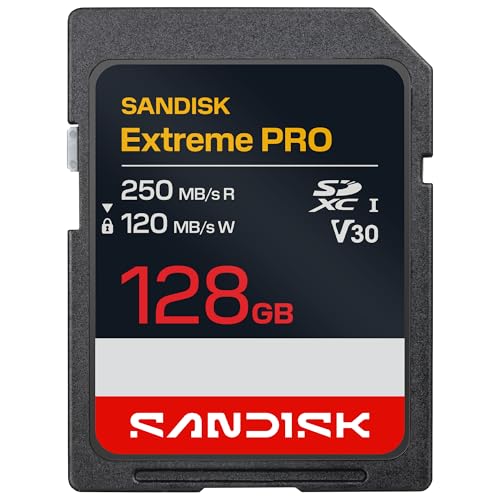
Best for: DSLRs and action shooters seeking dependable 4K/Full HD performance on a more budget-conscious card. The card delivers read speeds up to 250 MB/s and write speeds around 170 MB/s in many use cases, supporting high-bitrate video and rapid file transfers.
Why selected: It provides robust performance with 4K capable speeds, while often offering a favorable price-to-capacity ratio. It’s a solid choice for those prioritizing speed with proven reliability in a UHS-I format.
Caution: While fast, it is not UHS-II. For the absolute fastest DSLR workflows, UHS-II cards may offer greater headroom in bursts or high-bitrate video.
ORICO 128GB SDXC UHS-I Card

Best for: Entry-level to mid-range DSLR users who want reliable 4K-ready performance without premium pricing. The card features a C10/U3/V30 rating, ensuring smooth 4K Ultra HD recording with minimal frame drops in typical workflows.
Why selected: It offers practical read speeds up to 100 MB/s and write speeds around 50 MB/s, which is sufficient for many 4K shoots and everyday photography tasks. It’s a flexible option for those upgrading from older, slower cards.
Caution: Data transfer speeds are model-dependent; some cameras may not utilize the full 100 MB/s announced speeds.
Transcend SDC300S 128GB SDXC

Best for: Photographers and videographers who need dependable Full HD performance with broad device compatibility. The card offers up to 100 MB/s read and 25 MB/s write speeds, making it a steady choice for everyday shoots and standard-definition to high-definition capture.
Why selected: It emphasizes reliability and compatibility across cameras, drones, and tablets, suitable for professionals who value dependable data management and broad device support.
Caution: For fast 4K recording or high-bitrate video, consider higher-speed UHS-II or faster UHS-I cards to avoid potential bottlenecks.
Buying Guide: Fast SD Cards For DSLRs
- What speed class do I need? Look for UHS-II cards (for the fastest read/write) or UHS-I with high read/write specs. Video speed classes (V30/V60/V90) indicate sustained performance for video capture.
- What capacity is right for me? Consider mission length, number of scenes, and backup strategy. Larger capacities reduce card changes but cost more and may be heavier to manage.
- What camera compatibility matters? Ensure the card’s interface (UHS-II or UHS-I) is supported by your DSLR. Some bodies benefit significantly from UHS-II’s higher transfer rates.
- Durability and reliability: Field conditions matter. Look for cards designed with rugged protection against shock, temperature, and water exposure if you shoot outdoors.
- Budget vs. need: For high-end 8K or 4K workflows, prioritize higher-speed cards. For casual or transitionary setups, a fast UHS-I card can suffice.
- Workflow strategy: Consider a backup plan with computer read speeds and card readers capable of exploiting the card’s maximum performance to save time during post-production.
Frequently Asked Questions
- Q: What’s the difference between UHS-I and UHS-II cards for DSLRs? A: UHS-II offers higher theoretical speeds with additional signaling on the card’s interface, which translates to faster data transfers in compatible cameras and readers.
- Q: Is a higher megabyte-per-second (MB/s) rating always better? A: Higher MB/s is beneficial for high-bitrate video and rapid burst shooting, but the real-world gains depend on your camera, the card reader, and your workflow.
- Q: Do I need a card with V30 for 4K video? A: V30 indicates a sustained write speed suitable for 4K, reducing frame drops. If you shoot 4K regularly, a V30 or higher class is advisable.
- Q: How many files can I store on a 256GB card at 4K? A: It depends on bitrate and duration. High-bitrate 4K can store fewer minutes per GB compared to lower-resolution video.
- Q: Should I buy multiple smaller cards or a single large one? A: A mix of both is common: have a larger primary card for long shoots and a smaller backup card for immediate swap-outs in case of card failure.