Best External Screen for DSLR: Top Field Monitors for Clearer Shots
Yes—an external DSLR monitor improves framing, focus, and exposure for professional-looking videos. This guide highlights five external screens built to help photographers and videographers capture sharper, color-accurate footage with DSLRs and mirrorless cameras. Ideal buyers include: run-and-gun creators needing bright outdoor visibility, studio shooters requiring precise exposure tools, and filmmakers who want larger viewable monitors on rigs or gimbals.
Summary of selected products
| Product | Brand | Key Benefit | Best For |
|---|---|---|---|
| FEELWORLD FW759 | FEELWORLD | 1280×800 IPS, 4K HDMI input | Portable on-camera use with DSLRs and gimbals |
| FEELWORLD FW759 (400nit) | FEELWORLD | 400nit brightness, focus tools | Indoor or controlled lighting setups |
| FEELWORLD FW759PRO | FEELWORLD | Touchscreen, 178° viewing, 4K HDMI | Studio or mobile rigs needing touch control |
| Portkeys HD7H | Portkeys | 1000nits brightness, LUT support | Bright outdoor shoots with LUT workflow |
| NEEWER F700 | NEEWER | 2000nit brightness, 4K HDMI loop | High-brightness outdoor filming |
FEELWORLD FW759 7 Inch DSLR Field Monitor
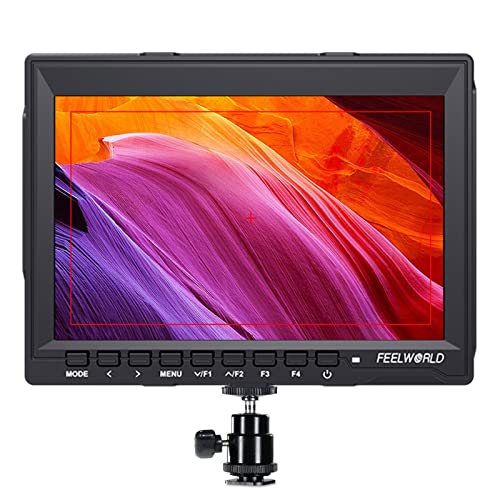
The FW759 provides a 7-inch 1280×800 IPS display with a wide color gamut and 400 cd/m2 brightness. It supports 4K HDMI input and AV input, making it compatible with most DSLRs and camcorders. Best for: on-the-go filming with stabilizers or gimbals where a larger, color-accurate view helps with focus and composition. Limitation: lower brightness may challenge outdoor visibility in direct sun without a sunshade.
FEELWORLD FW759 7 Inch 400nit Field Monitor

This variant offers a 7-inch 1280×800 IPS display with 400 nits brightness and 4K HDMI input. It includes focus tools such as peaking and histogram to help maintain sharpness and proper exposure. Best for: indoor shoots or controlled environments where daylight visibility is manageable. Limitation: slightly lower brightness than high-nit models may reduce outdoor performance.
FEELWORLD FW759PRO 7-Inch Touchscreen Monitor

This is the touchscreen version with 7-inch IPS display, 1280×800 resolution, and 178-degree viewing. It adds professional tools like waveform, histogram, and scopes, plus 4K HDMI input and AV input. Best for: filmmakers who benefit from tap-to-control editing and precise monitoring in studio or mobile rigs. Limitation: slightly thicker design may affect ultra-compact rigs.
Portkeys HD7H 7-Inch Field Monitor

The HD7H features a bright 7-inch 1280×720 panel with 1000 nits, sun hood, 4K HDMI input, and a variety of professional tools including luma histogram and focus peaking. Best for: outdoor shoots where glare is an issue and quick LUT-based looks are useful. Limitation: 720p baseline resolution on the panel may feel less sharp than higher-res options in close-up critical focus work.
NEEWER F100 7-Inch Field Monitor
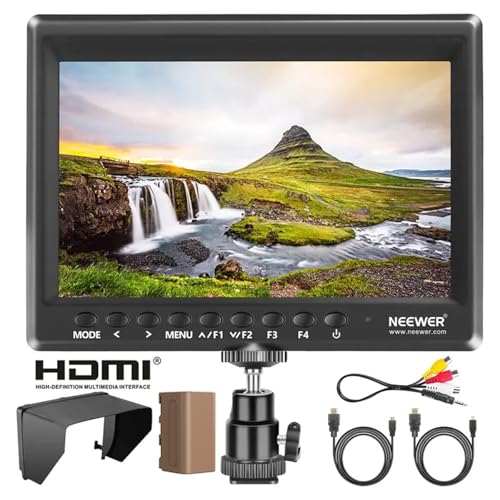
The F100 offers 7 inches with 450 nit brightness and 1280×800 IPS display, plus 4K HDMI input and a bundle of tools like peaking, waveform, and false color. Best for: indoor or studio shoots that require reliable exposure tools in a compact form. Limitation: not the brightest option for direct sun conditions compared with higher-nit models.
Buying Guide: What To Look For In An External DSLR Monitor
How bright should your external monitor be? For outdoor shoots, prioritize models offering 900–2000 nits to combat glare. Consider whether you need a touchscreen, built-in LUTs, and scopes (histogram, waveform, vectorscope) to ensure precise exposure. Weight, size, and mounting options influence rig comfort on gimbals or handheld rigs. If you shoot in bright environments, a sun hood or matte screen is important. For studio or indoor work, color accuracy (Rec.709, 8-bit) and reliable exposure tools matter most. Lastly, check HDMI input formats to ensure 4K compatibility with your camera.
Which features maximize value for DSLR users?
- 4K HDMI input and loop-out enable flexible connections without recabling microphones or other gear.
- Focus tools (peaking, zoom, magnification) help lock focus during dynamic takes.
- Waveform, histogram, and false color assist with exposure control in variable lighting.
- Brightness and glare reduction (sun hood, matte screen) for outdoor use.
- Portability: slim profiles and light weights ease mounting on rigs and stabilizers.
FAQ
- What is a field monitor for DSLR cameras? A field monitor is an external screen that connects via HDMI to provide a larger, brighter, and more feature-rich view for accurate framing, focus, and exposure.
- Do I need a sun hood with a field monitor? A sun hood helps reduce glare and improves outdoor visibility, especially in bright sunlight.
- Is 4K HDMI input necessary? 4K input ensures compatibility with newer DSLRs and allows future-proofing when upgrading cameras.
- Which monitor is best for outdoor shooting? Monitors with brightness around 1000 nits or more, plus a sun hood, offer the best outdoor performance.
- Do these monitors support LUTs? Many models offer 3D LUT support or LUT preview for logging workflows; verify specific model capabilities.
- Can I replace my camera’s screen with an external monitor? An external monitor is designed to complement the built-in screen, not replace it; use it for critical viewing and focus checks.