Best External Microphones for DSLR: Clear Audio on the Go
Whether you’re vlogging, documenting travel, or producing professional-looking video, a dedicated external microphone improves sound quality far beyond built-in camera mics. This guide highlights five top options that work well with DSLRs and mirrorless cameras, plus smartphones and laptops in many cases. Each pick suits different creators: from on-the-shoulder interview setups to compact run-and-gun filming. The table below compares key details to help you choose quickly.
| Product | Best For | Why It Stands Out |
|---|---|---|
| Movo VXR10 | Travel shooters and beginners | Durable metal body, universal compatibility, built-in shock absorption |
| COMICA CVM-V30 LITE (Black) | Vloggers and quick plug-and-play users | No battery drive, easy switch between camera and phone modes |
| Movo X1-Mini | Versatile multi-device creators | 3.5mm and USB-C options, strong build, high-fidelity audio |
| RØDE VideoMicro II | Ultra-compact setups | Very small, highly directional, lightweight |
| Acuvar Mini Shotgun | Budget-conscious shooters | Universal 3.5mm compatibility, portable and affordable |
Movo VXR10 Universal Shotgun Mic

Best for: creators who need a compact, sturdy microphone that works with DSLRs, smartphones, and laptops. The Movo VXR10 uses a solid aluminum body to survive travel and a built-in mount to absorb handling noise. It’s a strong first external mic for beginners who shoot with Canon, Nikon, or Sony bodies and want reliable performance out of the box.
Why chosen: The VXR10 emphasizes universal compatibility, a travel-ready build, and a sound signature that suits social media content such as Instagram Reels and YouTube videos. Its compact form makes it ideal for on-the-go work without extra gear.
Caution: Some newer phones may require adapters for full compatibility. Always verify your device’s mic input type before purchasing cables separately.
COMICA CVM-V30 LITE (Black)

Best for: vloggers and interviewers who want straightforward plug-and-play operation without extra battery power. The CVM-V30 LITE is designed for use with cameras, phones, and other devices that supply plug-in power via a 3.5mm mic jack.
Why chosen: It offers universal compatibility with a simple “Camera” or “Phone” switch, minimizing setup time. The shock mount helps reduce handling noise, making it suitable for quick content creation and mobile shoots.
Caution: It relies on device power; long sessions may exhaust camera or phone power, which can limit extended shoots without a separate power source. No battery drive design means fewer moving parts, but also no additional power reserve.
Movo X1-Mini Video Shotgun Mic

Best for: creators who need high versatility, including DSLR use and mobile recording. The X1-Mini covers analog 3.5mm and USB-C connections, making it compatible with cameras, phones, and computers.
Why chosen: Its solid aluminum construction and integrated shock mount reduce handling noise, while offering up to 24-bit audio in digital mode for higher fidelity recordings. It’s a practical all-rounder for travel vlogging and multi-device work.
Caution: Battery-free design relies on device power; ensure your recorder supplies adequate power for long takes. The mic’s performance is best when used close to the sound source.
RØDE VideoMicro II Ultra-Compact

Best for: users seeking a minimal, unobtrusive microphone that still delivers clear on-camera audio. The VideoMicro II is ultra-compact and highly directional, helping isolate the subject in noisy environments.
Why chosen: Its light weight (39g) and short 80mm length fit easily into any camera bag, making it ideal for travel shoots and quick setups without adding bulk. Directionality helps reduce ambient noise, improving overall clarity.
Caution: Being highly directional means it can underperform if the subject is off-center or if you’re shooting in very wide angles. Use proper mic placement to maintain consistent pickup.»
Acuvar Mini Shotgun Microphone
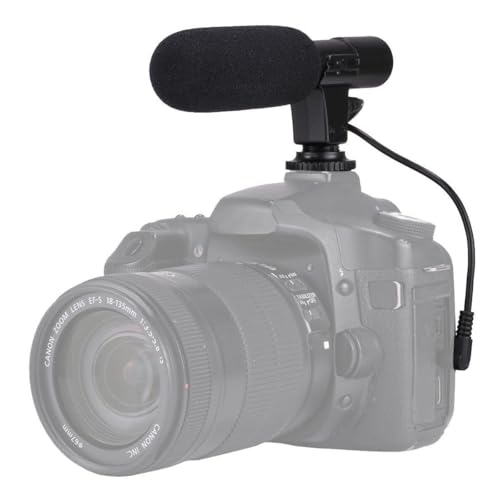
Best for: budget-conscious creators who want a compact mic that works with DSLRs, camcorders, and smartphones. The Acuvar model uses a standard 3.5mm plug for broad compatibility.
Why chosen: It’s a straightforward upgrade over built-in mics, enabling closer proximity to the sound source for clearer dialogue or narration. The small size makes it easy to carry for on-the-go shoots.
Caution: Being a budget option, it may not have the same advanced noise rejection or build quality as premium mics. Check your camera’s mic input compatibility before buying.
Buying Guide: How To Choose The Right External Mic For DSLR
- Connection Type: Do you need 3.5mm TS/TRS for cameras or USB-C for devices like phones and laptops? Some mics switch between camera and phone modes, while others rely on device power.
- Power Requirements: Battery-free designs rely on the host device. If you shoot long sessions, consider models with plug-in power or battery options.
- Pickup Pattern: Cardioid or shotgun mics reject side noise. Directional mics work best when the subject is in front and the environment is not overly loud.
- Build And Portability: Aluminum or metal bodies are tougher for travel. Ultra-compact mics are ideal for on-the-go shooting with minimal setup.
- Compatibility: Ensure the mic supports your camera brand and model, and whether adapters are needed for smartphones or newer DSLRs.
- Intended Use: Vlogs and YouTube videos benefit from clear dialog and minimal post-processing, while interviews may require longer cable runs and stable mounts.
Frequently Asked Questions
- Do external mics work with all DSLRs? Most external mics work with cameras that have a standard 3.5mm mic input, but some require adapters for newer models or smartphones.
- Is a USB-C mic better for smartphones? USB-C mics can simplify plugging into Android devices, reducing the need for adapters, but compatibility varies by device.
- Should I choose a shotgun or a compact lavalier? Shotgun mics are good for on-camera audio with light setup; lavalier mics are ideal for hands-free interviews and mobility.
- Can these mics operate without extra batteries? Many models are battery-free, relying on camera or phone power; check if you need external power for extended shoots.
- Is wind protection necessary? For outdoor or windy environments, a windscreen or deadcat is recommended to reduce wind noise.
- Do I need a shock mount? Yes, a shock mount minimizes handling noise and vibrations, improving overall audio quality in dynamic shooting conditions.