Best Digitizing Photos and Slides: Quick, Standalone Scanners for Your Memories
Answering the question “which photo and slide scanner is right for me?” this guide highlights five dependable, standalone devices that convert old negatives, slides, prints, and more into crisp digital files. Ideal buyers include scrapbookers, older family historians, and anyone who wants a simple, PC-free workflow. Each product here is chosen for ease of use, clear LCD viewing, and reliable results. Below is a quick at-a-glance table of the chosen models to compare key strengths and suited-for scenarios.
| Product | Best For | Format Support | Stand-Alone Operation |
|---|---|---|---|
| KODAK Slide N SCAN | Beginner to intermediate digitizers | 135, 126, 110 film; slides | Yes |
| DigitPro All-in-One 5″ LCD | Families digitizing mixed media | 35mm, 110, slides, photos, business cards | Yes |
| DigitPro 35mm/126/110 with 5″ LCD | Multi-format archiving | 35mm/110/126 negatives; slides; photos | Yes |
| KODAK Slide N Scan Max | Time-saving slide-by-slide workflow | Color/black & white negatives; slides | Yes |
| Kedok 5″ LCD Film & Slide Scanner | Gifting and family use | 35mm, 110, film/negatives; name cards; photos | Yes |
KODAK Slide N SCAN Film & Slide Scanner

The KODAK Slide N SCAN is a dedicated film-and-slide digitizer with a 5” LCD to preview, edit, and view outputs directly. It supports 135, 110, and 126 film formats and 50mm slides, making it suitable for households with a mixed trove of old negatives and slides. Its quick-feed tray technology supports continuous loading, which speeds up scanning sessions. Best for collectors who want a single-device solution that handles multiple film formats with a built-in display.
Who it’s best for: beginners and enthusiasts who prefer an all-in-one unit you can operate without a computer. Why selected: strong format versatility and a large viewing screen make viewing and sharing memories straightforward. Caution: the SD card (not included) is required to save files, so expect an extra purchase for expanded storage.
Photo Scanner And Film Digitizer With 5” Large Screen
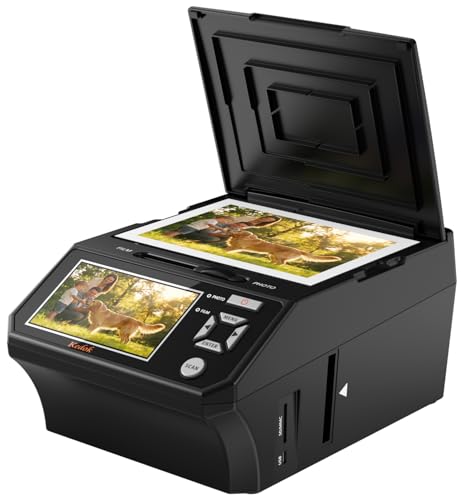
The DigitPro all-in-one scanner supports 35mm, 110 negatives, and printed photos, plus business cards, with a bright 5” LCD for instant previews. It operates standalone, with no software install required. It includes an 8GB SD card and internal memory, making it ideal for quick archiving projects. Best for families digitizing varied media in a single device. Limitation: internal memory may limit high-volume archiving unless you use the included SD card.
DigitPro Film And Slide Scanner – 22MP

This DigitPro model converts 35mm, 126, 110 negatives and slides to 22MP digital files with a 5” LCD display. It offers easy, one-touch scanning and stores outputs on an internal memory plus a 64GB SD card (not included). Best for users who want a simple, fast workflow without software. Choose this if you value straightforward operation and a larger screen for immediate review; avoid if you need very high-capacity storage without using an external card.
KODAK Slide N Scan Max Digital Film Scanner

The Slide N Scan Max features a 7-inch tiltable LCD with gallery-style preview and a fast feed tray for continuous scanning. It’s designed to digitize film negatives and slides efficiently, leveraging a robust display for immediate review. Best for those who want a larger viewing area and faster slide handling. Limitation: the device’s size may be less convenient for tight spaces or travel use compared with smaller models.
Kedok 5″ LCD Film & Slide Scanner

The Kedok scanner combines a 5” LCD with 128MB internal memory and an 8GB SD card, enabling standalone digitization of 35mm, 110 film, slides, and even name cards. It’s positioned as a friendly gift option and family-friendly tool for archiving vintage media. Choose this for an approachable, budget-conscious solution; caution: SD card capacity and on-device storage could be a constraint for larger archives.
Buying Guide: Key Considerations For Selecting A Photo And Slide Scanner
- Standalone operation vs. PC tethering: Do you want a device that works entirely on its own, or are you comfortable connecting to a computer for more features?
- Media formats supported: Check whether your collection includes 35mm, 110, 126, slides, prints, or business cards and pick a model that covers those formats.
- Display size and usability: A larger LCD helps with immediate previews and editing. Tiltable screens offer flexible viewing angles for shared viewing sessions.
- Storage options: Internal memory plus external SD cards expands capacity. Consider how many scans you plan to store and back up.
- Ease of use: One-touch scanning, simple menus, and automatic color/brightness adjustments reduce the learning curve for non-tech users.
- Speed: Scanning head speed and continuous-feed trays matter for archiving large collections quickly.
- Image quality: Look for higher megapixel sensors and reliable color rendering to preserve details in old photos.
- Portability and footprint: If you need a compact setup, weigh the device’s size and weight against convenience factors.
Practical Tips For Getting The Best Results
- Prepare slides and negatives by cleaning dust before scanning to minimize blemishes in digital files.
- Organize originals by format and date to simplify batch scanning and indexing later.
- Utilize gallery or preview modes to select the best frames before saving to avoid re-scanning.
FAQ
- Do these scanners require a computer to work? Some models work standalone with built-in memory and SD cards; others can connect to a computer for extra features.
- Can I save scans to an external SD card? Yes, most of these devices support external memory cards up to 32–64GB depending on model.
- Are 7-inch or larger LCDs worth it? Larger screens improve preview clarity and ease editing, especially for viewing details in negatives and slides.
- Is one-touch scanning sufficient for quality results? For many users, yes; however, some models offer color and brightness adjustments to optimize results per batch.
- What formats are supported? Expect a mix of 135, 110, 126 negatives, slides, prints (3R–5R), and occasionally business cards depending on the model.
- Should I buy multiple devices? If you have diverse media types (prints, slides, varied film formats), a single-device solution may not cover all needs; consider a model with broad format support.