Best Digital Rangefinder Cameras for Photographers
Digital rangefinder aesthetics meet modern sensor technology in these top picks. From Fuji’s X100 series to Leica’s M-line, these cameras blend classic handling with contemporary image quality. The following selections cover compact rangefinder-style models and a portable medium-format option, offering high-resolution sensors, advanced processing, and distinctive color science. Use this guide to compare core specs, ergonomics, and image-stabilization features to choose a model that fits your shooting style and preferred workflow.
| Product | Brand | Notable Feature |
|---|---|---|
| Fujifilm X100VI Digital Camera | Fujifilm | 40.2MP X-Trans CMOS 5 HR; IBIS up to 6 stops; 4-stop internal ND |
| Leica M11 Digital Rangefinder | Leica | Full-frame BSI CMOS; Triple Resolution Tech; IR+UV cut filter |
| Leica M11 Monochrom Rangefinder | Leica | 60MP monochrome output; ISO 125–200000; Triple Resolution Tech |
| Fujifilm X100F Digital Camera | Fujifilm | 24.3MP X-Trans CMOS III; no low-pass filter; 91 AF points |
| Fujifilm GFX100RF Medium Format | Fujifilm | Rangefinder-style; Aspect Ratio dial; 20 Film Simulation modes |
Fujifilm X100VI Digital Camera

The X100VI continues Fujifilm’s X100 lineage with a high-resolution sensor and a classic, compact body that evokes a rangefinder feel. It features a 40.2MP X-Trans CMOS 5 HR sensor, providing rich detail and tonal latitude. In-body image stabilization delivers up to 6 stops of compensation, while a 4-stop internal ND filter offers control for bright scenes without altering shutter speeds. The combination supports street, travel, and documentary work where a discreet, high-quality camera is preferred.
- 40.2MP X-Trans CMOS 5 HR sensor
- In-body image stabilization up to 6 stops
- 4-stop internal ND filter
Leica M11 Digital Rangefinder

The Leica M11 employs a full-frame BSI CMOS sensor with Triple Resolution Technology, allowing 60 MP, 36 MP, or 18 MP outputs while using the entire sensor area. A dedicated IR and UV cut filter helps correct oblique light incidence for improved color consistency. Ergonomics center on a layout around the high-resolution touchscreen, combining classic rangefinder handling with modern controls for precise manual operation in varied lighting.
- Full-frame BSI CMOS sensor with Triple Resolution Technology (60/36/18 MP)
- IR + UV cut filter for light correction
- Ergonomic controls near a high-resolution touchscreen
Leica M11 Monochrom Rangefinder
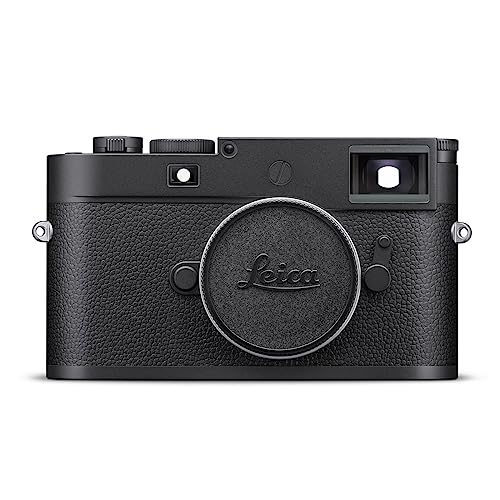
The M11 Monochrom takes the M11’s high-res back-illuminated sensor and removes the color filter array to deliver exclusive monochrome images with enhanced clarity and depth. This removes color data to emphasize luminance, expanding the effective sensitivity range to ISO 125–200000. Triple Resolution Technology enables 60 MP, 36 MP, or 18 MP outputs, while the Maestro III processor supports fast processing and continuous shooting up to 4.5 fps, optimized for monochrome capture and tonal separation.
- 60 MP monochrome output options via Triple Resolution Technology
- ISO 125–200000 sensitivity range
- Maestro III processor enables fast processing and up to 4.5 fps
Fujifilm X100F Digital Camera

The X100F brings the classic fixed-lens rangefinder-inspired form into the modern era with a 24.3MP X-Trans CMOS III APS-C sensor and the X Processor Pro. The sensor uses no low-pass filter, helping preserve detail, while the AF system expands from 49 to 91 focus points, supported by a versatile 8-way focus lever for precise composition. An ISO dial is integrated with the shutter speed dial, enhancing manual control in varied lighting and shooting environments.
- 24.3MP X-Trans CMOS III APS-C sensor (no low-pass filter)
- X Processor Pro engine
- 8-way focus lever; up to 91 AF points (up to 325 points)
- Built-in ISO dial integrated with shutter speed dial
Fujifilm GFX100RF Medium Format

The GFX100RF adopts a rangefinder-style design in a compact form factor for a portable medium-format experience. It introduces a new Aspect Ratio dial for quick access to multiple compositional formats and includes 20 Film Simulation modes to craft distinct looks directly in-camera. This model emphasizes a blend of classic handling with the benefits of a larger sensor, delivering distinctive texture and tonal rendition across a wider format.
- Rangefinder-style, compact design
- New Aspect Ratio dial for several formats
- 20 Film Simulation modes
Buying Guide
Key considerations when choosing a digital rangefinder camera center on sensor size, image quality, handling, and ecosystem. Readers should weigh how a model’s sensor type and resolution align with their shooting style, whether they prioritize monochrome capture or color flexibility, and how the camera’s ergonomics fit their grip and workflow. Also important are stabilization, processing speed, and the lens ecosystem available for each system. Below are core criteria to compare across the five models above.
Core considerations
- Sensor size and resolution: Full-frame and medium-format sensors provide rich detail and dynamic range, while high-resolution options offer significant cropping latitude.
- Rangefinder feel and ergonomics: Body design, control layout, and tactile feedback influence everyday shooting, especially in street and documentary work.
- Stabilization and low-light performance: In-body stabilization helps with handheld shots; ISO performance and noise characteristics determine usability in dim conditions.
- Processing and speed: A fast processor and responsive autofocus enable quick operation in dynamic scenes; consider frame rates for continuous shooting.
- Film simulation and color science: In-camera color profiles and film simulations can reduce post-processing time and establish a distinct look.
- System size and lens availability: Lens options, build quality, and future roadmap affect long-term satisfaction and versatility.
- Maintenance and resale value: Brand reputation, service options, and durability can influence long-term ownership costs and resale potential.
Model-by-model rough comparisons
| Model | Sensor Type / Size | Max Resolution Mentioned | Stabilization | Notable Strength |
|---|---|---|---|---|
| Fujifilm X100VI | APS-C X-Trans CMOS 5 HR | 40.2 MP | IBIS up to 6 stops | High-resolution sensor in a compact, rangefinder-inspired body |
| Leica M11 | Full-frame BSI CMOS | 60/36/18 MP (Triple Resolution) | Not listed | Elegant rangefinder experience with advanced optics integration |
| Leica M11 Monochrom | Full-frame monochrome sensor | 60 MP monochrome (Triple Resolution) | Not listed | Monochrome image quality with high luminance capture |
| Fujifilm X100F | APS-C X-Trans CMOS III | 24.3 MP | Not listed | Classic X100 feel with optimized autofocus and control layout |
| Fujifilm GFX100RF | Medium format | Not specified in features | Not listed | Medium-format image quality with rangefinder styling |