Best Digital Camera Copy Stands for Digitizing Photos and Macro Work
Copy stands designed for digitizing photos and macro work offer stable platforms, adjustable arms, and built‑in features that keep originals flat. For American readers, choosing the right stand depends on scale, camera type, and how you plan to shoot. This guide highlights five popular models that balance portability, build quality, and value for both hobbyists and enthusiasts.
A quick summary table follows, listing each option, its base size, weight capacity, and notable accessories to help you compare at a glance.
| Product | Brand | Base / Capacity | Notable Accessory |
|---|---|---|---|
| Mini300 Copy Stand | Copy Stand | 12″ x 9.5″ base; up to 2 lbs | Cosmo Phone Holder; Floating Magnetic Board (FMB) |
| Cosmo Mini 100 Copy Stand | Copy Stand | 10.5″ x 8.5″ base; light-duty | Floating Magnet Board; dedicated smartphone alignment |
| Kaiser 205411 Copy Stand RS 2-XA | Kaiser | Base with grid; 1/4″ mounting thread | 180° rotatable column |
| ALZO Copy Stand For Macro Overhead | ALZO digital | 29″ tilt-adjustable post; quick release | Tilted post for expanded imaging field |
| Albinar High Load 28″ Copy Macro Stand | Albinar | 15.75″ x 19″ base; 8″–28″ adjustable | Quick release mount |
Mini300 Copy Stand: Compact USA-Made

The NOW Cosmo Mini 300 Copy Stand is a compact, USA‑made unit designed for dabbling with both photos and documents. It is not a full‑scale professional setup, but its portability and quick assembly (under a minute) make it ideal for amateurs and students. It supports cameras up to 2 pounds and can accommodate most smartphones with widths between 2.25 and 3.5 inches. A phone holder is included, enabling smartphone use as an imaging device when a traditional camera isn’t necessary.
Key construction features include a melamine baseboard measuring 12″ by 9.5″ and 3/4″ thick, finished in gray. The base has two installation holes for the post: a center hole for cameras and a side hole that centers the smartphone’s camera on the board. The kit also includes a 10″ x 7.5″ Floating Magnetic Board (FMB) with ½” grid lines for initial setup, focusing, sizing, and alignment. Two magnetic strips help hold originals flat during capture, supporting tidy, repeatable results.
Cosmo Mini 100 Copy Stand: Portable And Lightweight

The Cosmo Mini 100 Copy Stand is a compact option well suited for digitizing checks, documents, small jewelry, coins, and other small collectibles using a smartphone. It’s designed as a practical tool for students and hobbyists who want to digitize items quickly and affordably. Assembly is straightforward and typically takes less than a minute, enabling rapid setup between projects. The baseboard dimensions are 10.5″ by 8.5″ with a 3/4″ thickness, providing a stable work surface for small items.
Two post holes provide flexible mounting options: a center hole supports compact cameras without a dedicated phone holder, while a side hole helps position a smartphone’s camera at the board’s center. The included 9″ x 7″ Floating Magnet Board (FMB) uses a magnetized system to hold originals steady. A pair of magnetic strips helps keep pages or photos flat, facilitating clean, focused captures even for delicate documents or photos with glossy surfaces.
Kaiser 205411 Copy Stand RS 2-XA: Rugged Everyday Macro
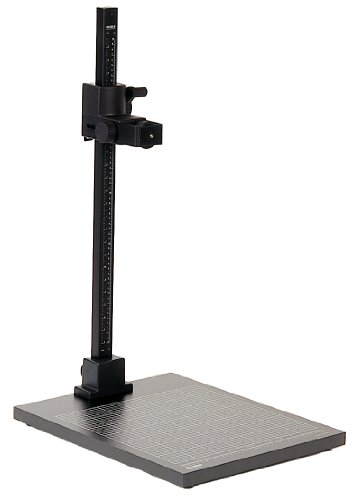
The Kaiser 205411 Copy Stand RS 2‑XA offers a robust, field‑friendly option for macro work and overhead photography. The base features a non‑reflective matte gray surface with printed fine grids and inch/centimeter scales, aiding precise positioning. The column is a matte black anodized aluminum that also carries inch/centimeter scales, ensuring accurate alignment. A height‑adjustable camera arm provides flexible shooting angles, and the column rotates up to 180 degrees for versatile composition. The stand includes a 1/4″ mounting thread, enabling a range of cameras and accessories to be attached securely.
With a compact footprint for its capabilities, this Kaiser unit emphasizes stability and repeatable results. The combination of the grid‑marked base, rotatable column, and adjustable arm makes it a practical choice for hobbyists upgrading from entry‑level stands to a more dependable option for macro and close‑up work. Its simple, no‑nonsense design focuses on consistent alignment and dependable performance. It’s well suited for small objects, coins, stamps, and other items that benefit from precise framing.
ALZO Copy Stand For Macro Tabletop Studio

The ALZO Copy Stand is geared toward overhead photography of small objects, jewelry, and other micro subjects. It’s designed with macro work in mind and includes a quick release compatible with 1/4 x 20 threads, making it easy to attach and detach a camera. A defining feature is the 29‑inch tilt‑angled, height‑adjustable aluminum post, which expands the imaging field while preventing the post from obstructing the scene. This setup supports high‑quality macro shots and overhead shots where the camera needs to be positioned well above the subject.
Build quality emphasizes stability and longevity, and the tilt mechanism adds versatility when capturing top‑down shots of small items. It’s suitable for a range of tasks—from jewelry photography to small artifacts and scientific specimens. The stand is designed to be practical for studios or home setups where space is balanced with the need for precise, repeatable compositions. For users who need a capable overhead system without a bulky professional rig, ALZO provides an accessible option.
Albinar High Load 28″ Copy Macro Stand

The Albinar High Load 28″ Copy Macro Stand combines macro flexibility with a solid base and a capable mounting system. It features an adjustable camera mount that travels from 8″ to 28″, enabling precise framing for macro shots and close‑ups. The 15.75″ x 19″ base provides ample support for heavier cameras or longer lenses, reducing the risk of movement during critical captures. A full‑body quick release mount simplifies setup and reconfiguration between shots, saving time in busy workflows.
Designed for macro work with digital cameras, this stand supports versatile positioning. Its robust construction makes it suitable for a range of subjects, from coins and stamps to jewelry and small mechanical parts. For users who require a larger, steadier platform with straightforward operation and reliable repeatability, this Albinar model delivers a balanced combination of capacity, reach, and ease of use.
Buying Guide
When selecting a digital camera copy stand, consider how you will use it most often. Overhead and macro needs differ from document digitization, so think about your typical subject size, weight, and shooting angles. The following factors help compare models and choose the right fit:
- Mounting standard and compatibility: Most stands use a 1/4″-20 mounting thread, common on many DSLRs and mirrorless cameras. If you plan to use a smartphone, check whether the stand includes a dedicated smartphone holder or a capable mounting solution.
- Weight capacity: For cameras with small lenses, a lightweight stand may suffice; heavier cameras or lenses demand a sturdier base and thicker posts. Always verify the maximum weight rating to avoid tip‑overs or drift during shooting.
- Base size and stability: A larger base generally offers better stability, especially for macro work where tiny movements can affect focus. Look for bases with anti‑slip finishes or magnets to help keep originals flat.
- Adjustability: A good copy stand should provide adjustable height, tilt, and horizontal reach. Look for stands with post tilt, arm length, and rotation capabilities to capture the exact angle you need.
- Imaging aids and accessories: Floating magnet boards, magnetic strips, and quick‑release plates simplify positioning and nesting of originals. Some models include phone holders, which can be convenient for smartphone photography or quick checks.
- Build quality and materials: Aluminum construction tends to be lighter and durable, though some stands use high‑quality steel or composite bases. Consider whether you prefer a model made in the USA for certain quality assurances.
- Intended use and workflow: If you digitize a lot of small items (coins, stamps, jewelry), a compact stand with a stable FMB and precise grids can speed up setup. For larger objects or overhead product photography, a longer reach and higher tilt range are beneficial.
- Portability and setup time: For fieldwork or rotating between projects, lightweight, easy‑to‑assemble units offer practical advantages. If you primarily shoot in a dedicated studio, heavier, more feature‑rich stands may justify the added footprint.
In summary, choose a stand that aligns with your typical subjects, preferred imaging angle, and the level of control you require. Compact models are great for quick digitization and travel, while larger macro stands provide greater stability and flexibility for detailed work. Weigh the included accessories, such as FMB boards and smartphone holders, against your needs to determine the best overall value for your setup.