Best Converting Negatives to Photos: Easy Film Scanners for Digitizing Old Memories
Modern readers seeking to convert old negatives and slides into high-quality digital photos can choose from a wide range of film scanners. This guide highlights five reliable options that balance ease of use, image quality, and affordability. Each product supports common film formats and delivers ready-to-share JPEGs. Use the buying guide below to compare features like LCD displays, one-touch scanning, memory options, and portability to pick the right device for your needs.
| Product | Formats Supported | Display | Storage | |
|---|---|---|---|---|
| KODAK Slide N SCAN | 135, 110, 126 slides | 5” LCD | SD Card (not included) | Continuous loading, 22MP JPEGs |
| DigitPro Film & Photo Scanner (5″ LCD) | 35mm slides, 135/110 negatives, photos, business cards | 5” LCD | Built-in memory + 8GB SD | One-touch scanning, stand-alone |
| DigitConvert Mobile Film Scanner | 35mm slides, 135 film negatives | No built-in display | Not specified | Portable, foldable, app support |
| ClearClick QuickConvert 2.0 | 4×6 photos, 35mm, 110, 126 film | 5” LCD | SD Card | No computer required, quick scans |
| Kodak SCANZA Digital Film & Slide Scanner | 35mm, 126, 110, Super 8 & 8mm | 3.5” LCD | Built-in memory + adapters | Wide insert set, user-friendly |
Below, five selected models are explored with key features to help you decide which device fits your archive project, whether you’re preserving family memories or organizing a personal history archive.
KODAK Slide N SCAN Film & Slide Scanner

The KODAK Slide N SCAN provides a straightforward path to digitizing color and black-and-white negatives across 135, 110, 126 formats and 50mm slides. It outputs 22MP JPEGs that can be saved directly to an SD card (not included). A 5” LCD display enables on-device review, editing, and quick sharing. The unit emphasizes fast results with a continuous-load tray and compatible adapters for multiple film sizes, making it suitable for hobbyists building a personal digital gallery.
DigitPro Film & Photo Scanner (5″ LCD)

This all-in-one scanner handles 35mm slides, 135 & 110 negatives, photos from 3R-5R sizes, and business cards. The 5-inch LCD offers instant preview and basic on-screen editing, including brightness and color adjustments. No computer is required for operation; one-touch scanning saves files quickly. A built-in memory and an 8GB SD card provide immediate storage, making it convenient for archiving on the go or in a dedicated scanning session.
DigitConvert Mobile Film Scanner

Designed for portability, the DigitConvert Mobile Film Scanner converts 35mm slides and negatives into JPEGs without needing a bulky setup. Its foldable, compact design makes it ideal for travel or quick sessions at home. The scanner is supported by free apps for smartphones, allowing easy transfer and organization of scanned images. This model emphasizes convenience and mobility for casual converters or students who travel with memory projects.
DigitPro Film and Slide Scanner – 22MP

The DigitPro model focuses on 35mm, 126, 110 negatives, slides, and Super 8 film. It features a 5” LCD display for real-time previews and easy edits, plus a built-in 128MB memory with optional SD card storage. The one-touch scanning workflow is designed for quick digitization, with simple controls for color, brightness, and date/time. It is well-suited for turning aging film into high-quality digital files for archiving or sharing.
ClearClick QuickConvert 2.0
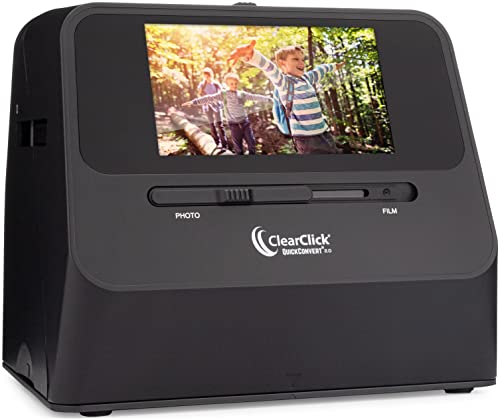
The ClearClick QuickConvert 2.0 is designed for straightforward, one-at-a-time scanning without a computer or drivers. It delivers approximately 14 MP (22 MP interpolated) JPEGs to an SD card. The device includes a built-in rechargeable battery and a 5″ LCD for immediate viewing. It’s ideal for users who want a fast, portable solution for occasional scans, with simple operation and no software dependencies.
Digit Convert 5 Inch LCD Scanner (Color & B/W Negatives)

This Digital Film & Slide Scanner offers 22MP JPEG outputs for 135/110 negatives, 50mm slides, and Super 8 slides. It includes a 5” LCD for gallery-style viewing and editing. Files can be saved to the built-in memory or an SD card up to 64GB. The interface supports straightforward capture and editing workflows, making it suitable for users who want a seamless, built-in display and direct-to-storage operation.
KLIM K2 Mobile Photo Digitizer

The KLIM K2 is designed to digitize 35mm film quickly and works with smartphones via a dedicated app. It supports color and black-and-white negatives and slides, with a foldable, compact design for on-the-go use. The package often includes batteries and accessories for mobile operation, offering a solution for users who want to digitize without a desktop device or a traditional setup.
Kodak SCANZA Digital Film & Slide Scanner
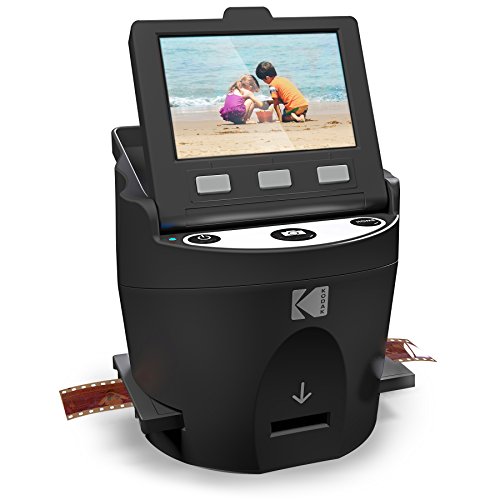
The Kodak SCANZA is a versatile scanner covering 35mm, 126, 110 negatives, and Super 8/8mm film. It outputs JPEGs via a 14/22MP sensor and includes a 3.5” LCD with adjustable brightness. A robust set of adapters and film inserts supports quick, flexible operation. This model caters to users who value a familiar Kodak interface, reliable performance, and a compact form factor for desktop use.
Buying Guide: Key Purchase Considerations
- Film formats: Confirm compatibility with the specific negatives or slides you own (e.g., 35mm, 126, 110, Super 8, 8mm). Some models handle a broad range, while others focus on a narrower set.
- Resolution and output: Look for at least 22MP JPEG output for good detail in prints and digital archives. Some devices offer interpolation; verify whether you need true native resolution or interpolated results.
- Display and editing: A built-in LCD helps preview scans and perform light edits without a computer. Larger displays simplify color and brightness adjustments on the fly.
- Storage options: SD cards are common; some units include built-in memory. Consider your scanning volume and whether you need external storage compatibility (FAT32/EXFAT).
- Ease of use: One-touch scanning, quick-load features, and automated adjusters reduce setup time. Portable options suit travelers, while desktop units may offer more control.
- Power and portability: Battery-powered models offer freedom from outlets, but may have limited imaging throughput. AC-powered devices typically support longer sessions.
- Software integration: Some scanners rely on bundled apps for mobile transfer or basic edits. Consider compatibility with your phone, tablet, or computer ecosystem.
- Maintenance: Regular cleaning of glass surfaces and adapters prevents dust artifacts. Look for models that include cleaning tools and easy-access trays.
- Future-proofing: If you have diverse film formats, choose a scanner with adapters and expandability to accommodate future needs.
When digitizing memories, match the device’s strengths to your workflow. A large LCD and stand-alone operation suit home archivists, while portable scanners excel for travel or on-site digitization. Consider whether you prefer direct SD storage, built-in memory, or computer-based workflows for post-processing.