Best Digital Convert: Convert Slides and Negatives to Digital Efficiently
Answering the common buyer question, these slide and film scanners are designed to turn old negatives, slides, and photos into accessible digital files. The best options fit different needs: quick one-touch operation for beginners, larger screens for easy viewing, or portable, standalone use for archiving on the go. This guide highlights five top models, who they’re best for, and practical trade-offs to help you choose confidently.
| Product | Best For | Key Benefit |
|---|---|---|
| KODAK Slide N SCAN | Families preserving old slides | 5” LCD and easy-load trays |
| Film and Slide Scanner – DigitPro | All-in-one convenience | Built-in memory and SD card option |
| 35mm Film & Slide Scanner (2.4″ LCD) | Compact, no-PC use | Standalone with TV-out |
| DIGITNOW! 135 Film Negative Scanner | Budget-friendly archivers | One-touch operation with SD card support |
| HP Touch Screen Film & Slide Scanner | High-clarity scans | 13 MP sensor and quick-feed tray |
KODAK Slide N SCAN Film & Slide Scanner
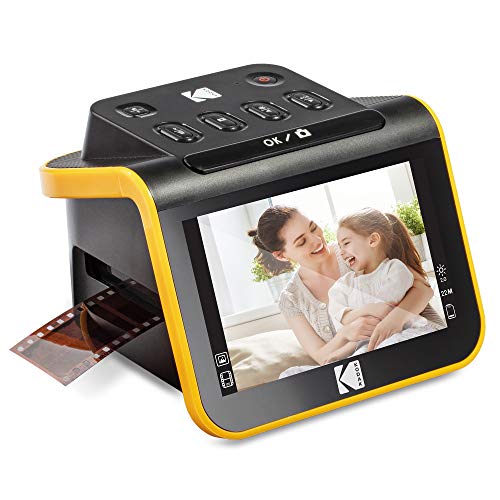
The KODAK Slide N SCAN is a dedicated film scanner designed to convert 135, 126, and 110 slides and negatives into digital files. It features a 5” LCD display, enabling direct preview and editing without a computer. It saves to an SD card (not included) and includes adapters for multiple film formats, a 50mm slide holder, and cleaning tools. This model is best for users who want an all-in-one viewing and digitizing solution with a built-in screen for immediate results and sharing. A potential limitation is the reliance on an SD card for storage; you will need to provide your own card to save files. For those archiving family photos, the large display helps with quick selection and transfer decisions.
Best for: Home archivists who prefer a standalone workflow with a clear preview screen. Choose this if you value a larger viewing area for fast decisions on older slides.
Film and Slide Scanner – DigitPro

The DigitPro all-in-one scanner handles color and black-and-white 35mm/135, 110, 126 negatives, and 50mm slides, plus Super 8 film. It offers a 5” LCD for real-time preview, and stored images can go to built-in memory or an external SD card up to 64GB. This makes it a strong pick for families with mixed media and those who want immediate on-device viewing. A limitation to note is the absence of built-in extensive editing tools; most adjustments occur during capture or via simple on-device controls. It’s particularly suited for users who want a straightforward, all-in-one device without a PC hookup.
Best for: Users who want a versatile, PC-free digitization solution that can handle a broad range of formats in one unit. Choose this if you value simplicity and built-in memory alongside a large display.
35mm Film & Slide Scanner with 2.4″ LCD Screen

This compact, standalone 35mm film scanner converts 135 negatives and slides into digital JPEGs. It includes a 2.4” LCD for instant preview and a fast slide feeder that supports framed slides up to 2mm thick. It’s ideal for those who want a small, easy-to-store device that still handles various formats and serves as a simple viewing platform. A potential drawback is the smaller screen size compared to larger models, which may slow the preview process for very large collections. This scanner is best for casual, space-conscious users who want quick conversions without a computer.
Best for: Individuals digitizing smaller collections or who need a compact, portable option. Choose this if you value portability and quick, PC-free operation.
DIGITNOW! 135 Film Negative Scanner

The DIGITNOW! 135 Film Negative Scanner focuses on 35mm film and slide digitization with no computer required. It supports SD cards (up to 32GB) for saving JPEGs at up to 1800 DPI, and includes a slide mounts feeder for efficient processing. It’s a solid budget-friendly option for straightforward digitization tasks. A caveat is the maximum resolution and small display may not satisfy advanced users who require higher fidelity or extensive on-device editing. This model is best for budget-conscious users who want a simple, standalone solution for quick digitization.
Best for: Budget-minded collectors who want a simple, stand-alone device for quick digitization. Choose this if you need reliable one-step scanning without a computer.
Photo Scanner And Film Digitizer With 5” Screen
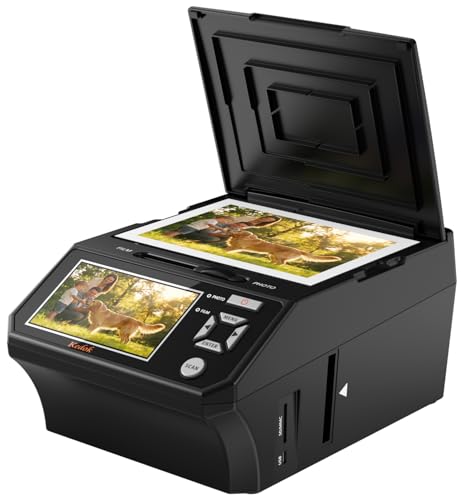
This DigitPro model offers an all-in-one solution for converting 35mm slides, 135 and 110 negatives, printed photos, and even business cards into 22MP digital images. It includes an 8GB SD card, and works without a computer. The 5” display aids in real-time preview, and the device is designed for straightforward operation with minimal setup. A limitation is the included internal memory may be modest; expanding with an SD card is often beneficial. This scanner is best for households with mixed media and a preference for a PC-free workflow with a larger screen for viewing and selection.
Best for: Families seeking a versatile, all-in-one scanner that handles diverse media formats in a single device. Choose this if you want a larger screen and no computer dependency.
HP Touch Screen Film & Slide Scanner

The HP FilmScan 7” Touch Screen Scanner emphasizes a larger 7” LCD, a 13 MP sensor, and a quick-feed tray for fast scanning of slides and 35mm film. It is designed to be user-friendly for novices while still offering robust image clarity. It supports USB and HDMI output, enabling direct viewing on a TV or monitor. A potential limitation is the need to manage high-resolution files, which can require ample storage and processing. This model suits users who value high image fidelity and easy touch-based operation.
Best for: Users who want sharper, more vivid digital results and a larger touch display. Choose this if you anticipate frequent sharing on a TV or monitor via HDMI.
Buying Guide
- Screen size matters. Larger screens improve preview accuracy and reduce guesswork when selecting frames to keep. If you archive heavily, aim for at least a 5” display; larger is better for viewing small details.
- Standalone vs. PC-connected. Standalone devices are convenient and quick for simple tasks. If you plan heavy editing or organized archiving, models with PC connectivity and built-in memory plus SD options offer more flexibility.
- Supported formats. Confirm that the scanner supports your formats (35mm, 126, 110, Super 8, etc.). Some units focus on slides and negatives, while others also handle printed photos and film types.
- Storage options. SD cards are common. If a model has built-in memory, verify capacity and whether you can expand storage with external cards.
- Ease of use. Look for one-touch scanning, simple navigation, and intuitive color/brightness adjustments. Beginners benefit from fewer setup steps and clearer on-device controls.
- Output resolution. For archival quality, aim for at least 22MP or suitable high resolution. Note that higher DPI yields larger file sizes.
- Future-proofing. If you anticipate upgrading your collection, choose a scanner with broad format support and reliable image processing options to minimize the need for alternate workflows.
FAQ
- What should I consider first when buying a slide scanner? Determine whether you want a PC-free device or a model that connects to a computer for more editing options. Also consider display size, supported formats, and storage capacity.
- Is a built-in screen important? A built-in screen helps preview scans instantly without a computer, which speeds up decision-making and sharing with family.
- Can these scanners handle 8mm and Super 8 film? Some models support Super 8 and 8mm film, but not all. Check the supported formats on each model’s listing before purchasing.
- What is the ideal resolution for archiving? High-resolution options like 22MP or similar are favorable for preserving detail, especially for slides and negatives with fine grain.
- Do I need an SD card? Many scanners require an SD card to store scans. If the device has built-in memory, verify its capacity and whether expansion is possible.
- Which scanner is best for families with varied media? An all-in-one device that handles slides, negatives, prints, and films provides the most flexibility for mixed collections.