Best Convert Slide to Photo: Top Film Scanners for Preserving Vintage Memories
The rise of affordable film digitizers makes turning old slides and negatives into bright, shareable JPEGs easier than ever. This guide highlights five reliable film and slide scanners that convert 35mm, 126, 110, and Super 8/8mm formats into high-quality digital photos. Each model includes a color LCD display, convenient loading features, and direct-to-SD or USB export. The selections below emphasize ease of use, compatibility, and value for American households looking to preserve family memories in modern format.
| Product | Brand | Key Feature |
|---|---|---|
| KODAK Slide N SCAN | KODAK | 5” LCD, multiple film formats |
| HP FilmScan | HP | 5” touch LCD, direct SD/PC exports |
| Magnasonic FS71 | Magnasonic | 24MP output, built-in memory, HDMI option |
| Kodak SCANZA | KODAK | 3.5” LCD, versatile adapters |
| ClearClick QuickConvert 2.0 | ClearClick | No computer required, 22MP interpolated |
These options cover a range of needs—from simple, plug-and-play scanning to advanced features like built-in storage and HDMI output. Whether you’re digitizing a few cherished slides or a large archive, the right scanner can streamline preservation and sharing with family and friends.
KODAK Slide N SCAN: Fast, Easy Film And Slide Digitizing

The Kodak Slide N SCAN is designed for quick digitization of color and black-and-white film. It supports 135, 110, and 126 film formats and slide mounts, converting to high-resolution JPEG files saved to an SD card. A 5” LCD display provides a gallery-style preview, making it easy to review, edit, and share immediately. The scanner features a convenient feed tray for continuous loading and includes adapters for common film formats, a 50mm slide holder, a cleaning brush, and standard USB/HDMI cables for easy connectivity.
Key capabilities include direct playback on the built-in screen, straightforward one-button scanning, and reliable preservation of old memories. It’s a practical choice for households with a mixed collection of traditional slides and negatives, especially when a quick, self-contained workflow is preferred. The device is compatible with widely used 35mm-style formats, and the 22MP JPEG output is suitable for most consumer needs, including photo projects and digital archives.
HP FilmScan Touch Screen Film & Slide Scanner
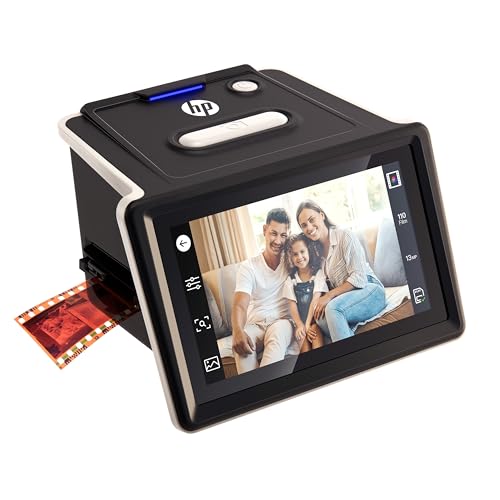
The HP FilmScan offers a 5” touch LCD with an emphasis on user-friendly operation. It supports viewing, converting, and saving color and black-and-white slides and negatives, with directly saved files to an SD card or computer. The gallery display assists in quick previews and edits, and a slideshow mode can turn a collection into a digital photo frame experience for home or office use. Quick-feed loading helps keep the workflow moving when digitizing larger collections. It supports 135 (35mm), 110, and 126 formats, including strips for negative film and 50mm-mounted slides, delivering a robust, all-in-one solution for home archivists.
For buyers prioritizing a tactile, straightforward interface, HP’s device stands out with its touch controls and direct export paths. It’s suitable for families seeking an approachable device that balances performance with a familiar Windows-style workflow when connecting to a computer or SD card storage. The built-in display reduces the need for a separate monitor during the digitization process, aiding in quick validation of scans before saving.
Magnasonic All-in-One 24MP Film Scanner
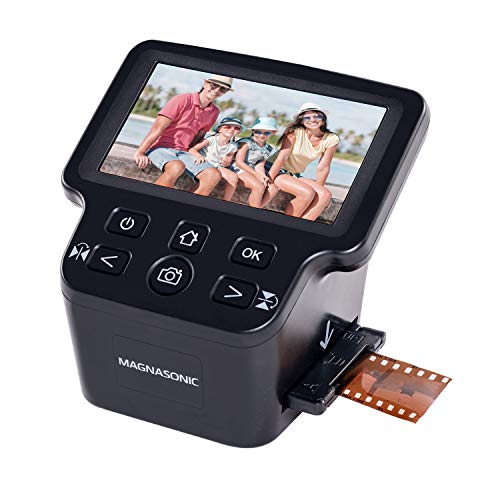
Magnasonic’s FS71 is a compact all-in-one solution with a built-in 5″ display and HDMI output for viewing on a larger screen. It scans 35mm, 126, 110, and Super 8 film and converts both negatives and slides into 24MP JPEG files. The scanner also includes built-in memory and supports SD cards up to 128GB for expanded storage. The user-friendly interface focuses on straightforward scanning workflows, enabling quick previews on the display before saving. The device is a practical pick for families seeking a versatile scanner that can handle multiple film formats in one unit.
Key strengths include its broad format support, output quality, and the option to view scans on a TV or monitor via HDMI. The built-in memory can be useful for quick, on-the-go digitization sessions, while the SD card expansion allows for larger archives to be stored without constant computer transfers. This model is well-suited to hobbyists and small preservation projects that value simplicity and reliability.
Kodak SCANZA Digital Film & Slide Scanner
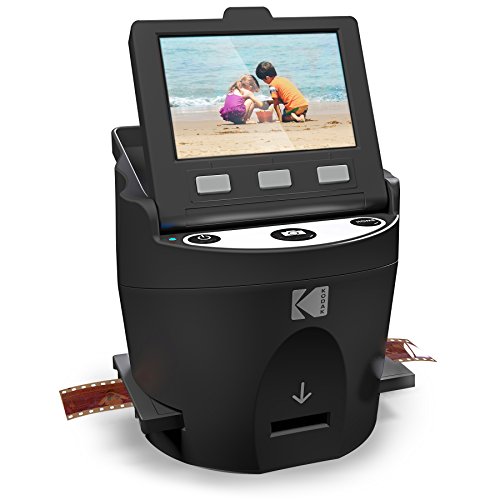
The Kodak SCANZA provides a compact, versatile solution for converting 35mm, 126, 110, Super 8, and 8mm film into JPEGs. A along with its 3.5″ LCD offers easy viewing and adjustable brightness, while included adapters and film inserts support multiple formats. The unit emphasizes quick, one-step scanning with big, reliable buttons for simple operation. The SCANZA is designed for users who want a reliable all-in-one device for a mixed media archive, with a straightforward path from film to digital image without requiring a separate computer.
Important considerations include the balance between a smaller LCD and the convenience of adapters for various film formats. While the 3.5″ display is compact, it provides clear previews, and the device’s one-touch scanning supports efficient archival workflows. This model appeals to consumers who appreciate Kodak’s branding and a proven track record in film-to-digital conversion.
ClearClick QuickConvert 2.0
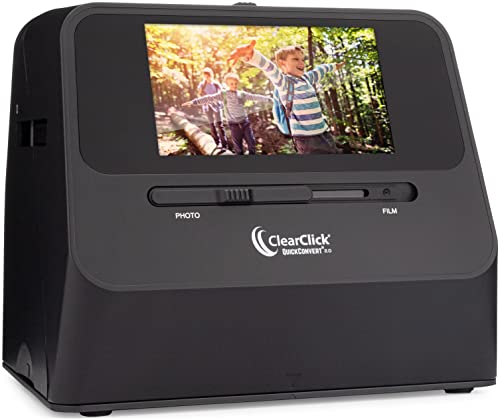
The ClearClick QuickConvert 2.0 is designed for quick, standalone scanning without a computer. It supports 4×6 photos and 35mm, 110, and 126 film, saving images as JPEGs to an SD card with a built-in 22MP interpolation option. The device includes a rechargeable battery for cordless scanning and a 5″ LCD for on-device previews. It’s a compact option for travelers or casual users who want a portable solution that doesn’t rely on external power or a computer during the digitization process.
Pros include its no-computer workflow and portability, while a potential trade-off is the lack of automation for batch scanning. For users with tight timelines and smaller digitization goals, this model offers a straightforward, self-contained approach to turning film into digital photographs, with enough megapixels for casual sharing and printing.
Buying Guide: Key Considerations For Choosing A Film And Slide Scanner
- Format compatibility: Verify support for the film types you own (35mm, 126, 110, Super 8, 8mm) and whether them are slides or negatives. Some scanners emphasize slides, others cover both.
- Resolution and output quality: Look for scanners offering at least 14–22MP JPEG output. Higher resolution improves print quality and detail retention, especially for old color negatives.
- Display and previews: A built-in LCD helps with on-device previews and edits before saving. Larger displays simplify screening digits of batches.
- Storage options: SD cards are common; some units include internal memory. Confirm card capacity and whether you can export to PC or cloud storage.
- Ease of use: Consider one-touch scanning, auto-feed trays, and quick-load film inserts. A straightforward workflow reduces processing time for large archives.
- Connectivity: USB and HDMI outputs expand compatibility with TVs, monitors, and computers. Some models support direct-to-SD or USB transfer for offline workflows.
- Portability vs. size: Smaller devices are more portable but may have smaller displays and limited adapters. Larger units often offer robust loading trays and more robust controls.
- Power options: Check whether the scanner is powered by USB, batteries, or wall outlets. Cordless models are convenient for quick sessions, while powered units may be more reliable for longer scans.
- Maintenance: Look for cleaning tools and easy access to film paths. Regular maintenance helps maintain image quality and device longevity.
- Brand ecosystem and support: Reputable brands often provide clearer manuals, firmware updates, and customer support when needed.
In evaluating these options, consider your archive size, preferred workflow, and desired balance between portability and feature depth. If you primarily digitize a small number of slides occasionally, a compact model with a simple interface may suffice. For larger collections or frequent use, a more versatile scanner with broader format support and a reliable LCD preview becomes valuable for efficiency and accuracy.