Best Budget DSLR-Style Webcams for Clear, Professional Livestreams
Answering the demand for high-quality video without expensive gear, these budget-friendly DSLR-like webcams deliver sharp 4K or Full HD images, advanced autofocus, and practical features for streamers, remote workers, and content creators. The top picks are best for creators seeking DSLR-like depth, better low-light performance, or simple plug-and-play setups. Each option is evaluated for who benefits most, from streamers needing cinematic quality to professionals prioritizing privacy and reliability. Below is a quick buying table to compare the standout models.
| Product | Best For | |
|---|---|---|
| Elgato Facecam 4K | 4K60, DSLR-like, Sony STARVIS 2 sensor | Creators wanting cinematic quality |
| YOLOLIV YoloCam S3 | 4K/30p uncompressed, 1080p/60p, AI imaging | Streamers seeking auto framing and low-light clarity |
| Lenovo Essential FHD Webcam Gen 2 | 1080p, dual mics, privacy shutter | Remote workers needing reliability and privacy |
| HP 320 FHD Webcam | 1080p, wide FOV, plug-and-play | Casual calls and meetings |
| UURIG TP05 Extendable Mini Tripod | Compact mounting for flexibility | On-the-go setups and desk use |
Note: Prices and availability vary. The table highlights who benefits most from each option, helping you choose a device that aligns with your workflow and space constraints.
Elgato Facecam 4K — DSLR-Like, Professional Quality

The Elgato Facecam 4K delivers ultra-high clarity with 4K resolution at 60 frames per second. It uses a premium Sony STARVIS 2 CMOS sensor and Elgato Prime Lens for sharp detail and vivid color. The Camera Hub software adds powerful controls for brightness, contrast, and cinematic effects. This model is best for creators who want DSLR-like image quality and direct control over visuals, making it ideal for streaming, video conferencing, and content production. A potential limitation is the reliance on USB-C connectivity and software to unlock full features.
Who it’s best for: Content creators and streamers who prioritize image quality and advanced color control.
Why selected: Offers true 4K60 and extensive customization with professional-grade optics.
Caution: Requires compatible software to access the full feature set; may be overkill for simple calls.
YOLOLIV YoloCam S3 — 4K Streaming With AI Clarity

The YoloCam S3 supports uncompressed 4K at 30fps and 1080p at 60fps, with an oversized 1/1.28″ sensor for stronger low-light performance. It features Fast PDAF autofocus for instant, reliable focusing and AI-enhanced imaging that optimizes exposure and white balance. An 82° FOV helps keep you framed consistently. This camera is best for streamers who want robust subject tracking and improved image detail in varied lighting. A limitation is that higher-resolution modes demand more bandwidth and processing power.
Who it’s best for: Streamers needing sharp, cinematic 4K with smart auto-focus.
Why selected: Combines impressive sensor size with AI-driven image optimization.
Caution: Higher resolutions may require a stronger PC and bandwidth for smooth playback.
Lenovo Essential FHD Webcam Gen 2 — Balanced and Private
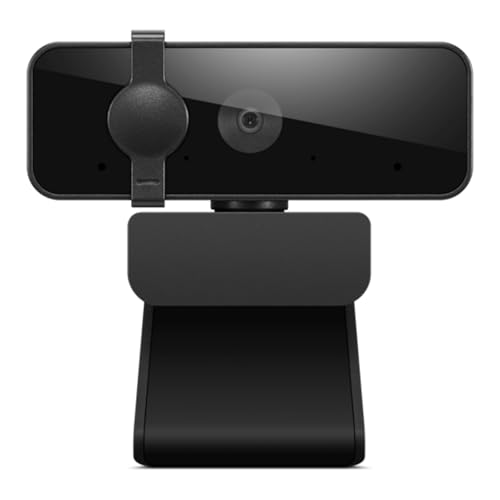
Lenovo’s Essential FHD Webcam Gen 2 provides a reliable 1080p experience with dual built-in microphones and a privacy shutter. The 85-degree field of view suits desk-to-meeting setups, and plug-and-play USB-A makes it widely compatible with most systems. It’s best for professionals who want clear video with straightforward audio and a quick privacy option. Limitation: USB-A connectivity may be less future-proof than USB-C in some environments.
Who it’s best for: Remote workers and everyday meeting participants seeking dependable video and simple privacy.
Why selected: Solid 1080p performance with integrated mics and privacy feature.
Caution: USB-A interface may limit future compatibility with newer devices.
HP 320 FHD Webcam — Easy, Wide-Viewing 1080p

HP’s 320 FHD Webcam offers 1080p video with a 66-degree wide field of view. It emphasizes plug-and-play ease with compatibility across Zoom, Teams, and other platforms. A built-in privacy cover helps protect you when not in use. This option is best for casual professionals and students who want reliable, straightforward video calls without extra features. Caution: FOV is moderate, so tight framing may require closer positioning.
Who it’s best for: Students and professionals needing a simple, dependable webcam for daily calls.
Why selected: Balanced image quality with practical privacy and platform compatibility.
Caution: Wider or more cinematic options may be preferred for live streaming or content creation.
UURIG TP05 Extendable Mini Tripod — Flexible Mounting

The UURIG TP05 is a compact, extendable tripod designed for desk or portable use. It features a 1/4″ screw mount and a hidden retractable design allowing 5.1 to 7.5 inches in length. It’s best for anyone needing a stable, lightweight support for a webcam or compact camera and for those who travel or vlog on the go. Caution: It supports smaller devices best; heavier DSLRs may require a sturdier stand.
Who it’s best for: Users prioritizing portability and flexible height for webcam setups.
Why selected: Dual-use design with extendable length and stable base for desk work.
Caution: Not ideal for heavier cameras without verifying weight limits.
Ailight Overhead Camera Mount — Overhead Shot Ready

The Aalight overhead mount offers vertical and horizontal flexibility with a telescoping boom and C-clamp for desk mounting. This setup is suitable for overhead webcam angles, macro shots, or lighting integration. It supports a variety of devices and is geared toward creators who need elevated, space-saving configurations for streaming, product shots, or tutorials. Caution: Setup complexity may be higher than standard desk-mounted options.
Who it’s best for: Creators needing overhead angles or integrated lighting positions.
Why selected: Flexible height range and secure desk mounting for cinematic angles.
Caution: May require additional accessories for full stabilization in dynamic environments.
Buying Guide
Key considerations when choosing a budget DSLR-style webcam for webcam use
- Resolution and frame rate: Prefer 4K60 or 1080p at 60fps for smoother motion and higher detail, especially in lighting-rich scenes.
- Sensor and optics: Larger sensors and quality lenses yield better low-light performance and color accuracy. Look for brands with known sensor technology.
- Autofocus and exposure: Fast PDAF and AI-driven exposure help maintain sharp subjects across varying lighting.
- Connectivity and compatibility: USB-C is common for newer devices; USB-A remains compatible with older gear. Check software support (e.g., Camera Hub) if you plan to leverage advanced features.
- Privacy features: Built-in shutters or physical covers are important for trust and security.
- Mounting flexibility: A sturdy tripod or desk mount improves stability and framing, especially for overhead or multi-angle setups.
Practical tips for choosing among the options: choose Elgato Facecam 4K for the highest image quality and color control; pick YOLOLIV YoloCam S3 if you want AI-enhanced imaging and robust autofocus; select Lenovo Essential FHD for a balanced, privacy-conscious business webcam; HP 320 FHD is excellent for everyday video calls; and consider UURIG TP05 or Aalight for flexible mounting in space-constrained or creative setups.
FAQ
Q1: Do I need 4K to look good on webcam?
A1: Not always. 1080p with good lighting can look just as clear, but 4K can provide sharper detail and more flexibility in post-production.
Q2: Is USB-C essential for a webcam?
A2: USB-C offers faster data transfer and power, but USB-A webcams are still widely compatible with many devices.
Q3: Should I buy a pro webcam or a pro-level camera?
A3: For most users, a high-quality webcam with good autofocus, low-light performance, and privacy features is sufficient. A DSLR or mirrorless camera may be needed for specialized productions.
Q4: Are built-in mics necessary?
A4: Built-in mics are convenient, but for better audio quality, combine with a dedicated microphone or headset, especially in noisy environments.
Q5: Do I need a tripod or mount?
A5: A stable mount improves framing and reduces shakiness. For overhead shots or flexible angles, consider a desk mount or small tripod.
Q6: Do these webcams require special software?
A6: Some models offer software like Camera Hub for advanced controls, but most are plug-and-play and work with standard video apps.