Best Budget Cameras for Astrophotography: Affordable Options for Beginners
Choosing an affordable camera for astrophotography means balancing image quality, simplicity, and compatibility with your existing telescope. The five options below offer entry-level to mid-range capabilities with compact form factors, easy setup, and USB or WiFi connectivity. They’re designed to capture the Moon, planets, and wide-field skies without requiring heavy gear or advanced knowledge. Use the quick-reference table to compare essentials, then dive into detailed notes on each model to decide which fits your observing goals and budget.
| Product | Brand | Key Use | Notable Feature |
|---|---|---|---|
| SV105 Telescope Camera | SVBONY | Beginner astrophotography, lunar/planetary | Plug-and-play 1.25″ IMX307 sensor |
| SV305C Astrophotography Camera | SVBONY | Planetary and Moon imaging, EAA | IMX662 sensor, 1.25″ eyepiece |
| FIBONAX 1080P Telescope Camera | FIBONAX | Beginner planetary photography | IR-cut filter, 1080P/30fps |
| KASHEVI WiFi Eyepiece Camera | KASHEVI | Remote observing, smartphone control | 1080P, 1.5″ display, 64GB memory |
| Telonixium WiFi Eyepiece Camera | Telonixium | Wireless viewing, 28-50mm scopes | 1.5″ screen, WiFi, 1080P |
SV105: Beginner Astrophotography Camera
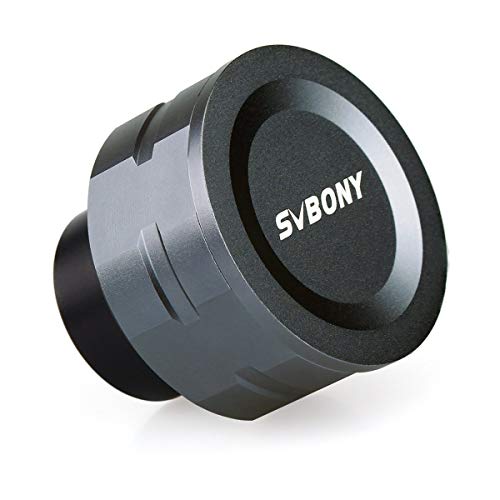
The SV105 is positioned as a basic entry point for astronomical imaging. It uses a 1.25″ IMX307 CMOS color sensor and is designed as an electronic telescope eyepiece, suitable for beginners who want to start astrophotography with minimal setup. It supports real-time viewing on a laptop or PC, with plug-and-play operation and no driver installation required. Users can record quick video streams by simply pointing the telescope at the Moon or bright planets. Compatibility includes Windows, with SharpCap Capture recommended; Linux can use AstroDMx Capture, and Android use USB Camera apps.
- 1.25″ IMX307 color sensor
- Plug-and-play; no driver needed
- Real-time viewing to PC; ideal for lunar/planetary targets
- Windows compatibility with SharpCap; Linux and Android options available
SV305C: Entry-Level Planetary Camera

The SV305C is an early-entry color camera designed for planetary and lunar imaging, with a focus on EAA (electronic observing). It uses the IMX662 sensor on a 1.25″ platform and benefits from a back-illuminated design, which helps improve sensitivity. The 2.9μm pixels support up to 38ke full-well charge, providing better resistance to overexposure. The sensor’s low readout noise and improved NIR response enhance red spectral band performance, making it a practical option for beginners who want clearer planetary details without complex processing workflows.
- IMX662 sensor; 2.1MP color camera
- 1.25″ electronic eyepiece format
- Low readout noise and improved red sensitivity
- Good for planetary and lunar imaging; suitable for EAA
FIBONAX 1080P Camera for Beginners

The FIBONAX 1080P telescope camera is designed to replace eyepieces with a 1.25″ module, allowing quick setup for beginner astrophotography. It records in 1080P at 30fps and includes a removable infrared (IR) cut filter to reduce light pollution and protect the sensor from dust. The aluminum body is lightweight (about 110g) and dissipates heat effectively, helping to minimize thermal noise during longer sessions. This camera is described as plug-and-play, making it a straightforward option for beginners who want simple, reliable imaging of planets and brighter deep-sky targets.
- 1.25″ compatible; no tools required
- 1080P HD recording at 30fps
- Removable IR-cut filter; lower light pollution and dust protection
- Lightweight aluminum body; reduced thermal noise
KASHEVI WiFi Eyepiece Camera

The KASHEVI WiFi eyepiece camera combines 1080P imaging with a 1.5″ TFT display, enabling immediate viewing on-device and on a connected smartphone. Its 64GB memory support provides ample storage for photos and videos. The device emphasizes seamless WiFi connectivity for remote control and quick sharing, making it convenient for backyard observers who want to capture and distribute celestial moments without a computer tether. It records 2MP photos and 1080P videos, and emphasizes straightforward setup and mobile app control for both beginners and casual users.
- 1080P video and 2MP photos
- 1.5″ display; built-in memory (64GB)
- WiFi connectivity; smartphone control
- Easy remote observing and sharing
Telonixium WiFi Eyepiece Camera

The Telonixium WiFi telescope camera is designed for compatibility with a broad range of scopes in the 28mm to 50mm class. It features a 1.5″ screen for onboard viewing and 1080P imaging, with built-in WiFi that enables control via a smartphone within a typical 49-foot range. The device supports 1080P videos and 2MP photos, and includes dark-light compensation to improve low-light clarity. This eye-piece camera is aimed at observers who want an integrated, wireless observing and recording workflow without external monitors or laptops.
- 1.5″ screen; remote observing via WiFi
- Fits 28mm–50mm scopes; flexible mounting
- 1080P video; 2MP photo resolution
- Dark-light compensation for low-light clarity
Buying Guide
Key purchase considerations
When selecting a budget astrophotography camera, consider the telescope’s focal range, the camera’s sensor size, and how you plan to use the device. For lunar and planetary work, higher frame rates and lower noise sensors help capture sharper details, especially with shorter exposure times. If you plan to shoot wide-field or deep-sky targets, sensor sensitivity and dynamic range become more important, along with cooling options in more advanced models. Look for an easy setup path (plug-and-play versus driver-dependent), and assess software compatibility with common tools like SharpCap or AstroDMx Capture.
Wired vs. wireless workflow
Wired USB cameras offer stable, low-latency imaging suitable for real-time viewing and processing. Wireless (WiFi) eyepieces provide convenient, cable-free operation and easy sharing, but may introduce latency and potential interference. If you intend to use a tablet or phone as your control interface, ensure the device supports the camera’s app and that the range fits your observing location. For beginners, a model with both on-device display and companion app can simplify learning and sharing celestial moments.
Sensor and optics considerations
1.25″ versus 1.5″ interfaces determine compatibility with your telescope’s standard eyepieces. Sensor types (CMOS, back-illuminated) influence sensitivity and noise performance. A removable IR-cut filter helps reduce light pollution for terrestrial and celestial targets. Some cameras emphasize low-noise performance and improved color fidelity, which benefits beginners who want cleaner images without extensive post-processing. For color cameras, expect good results out of the box; for monochrome options, plan for later color reconstruction via stacking and processing software.
Software and workflow compatibility
Check that the camera works with commonly used capture software on your computer, such as SharpCap for Windows or AstroDMx for Linux. Some cameras offer onboard displays and mobile apps, enabling control and viewing without a PC. Assess the ease of transferring footage to a computer for stacking and processing, as well as whether the device supports external storage or requires cloud-based workflows. A straightforward setup, clear documentation, and active user communities will shorten the learning curve for new observers.
Future-proofing on a budget
Even on a tight budget, you can plan for growth. Choose cameras with upgrade paths (support for external recording, compatibility with common capture software, and options to pair with a simple mount or tripod). For extended observing sessions, consider models with robust build quality (aluminum housings, stable feeds) and reliable power or storage options. While features on cheaper cameras may be basic, they can still deliver rewarding results and a clear path to more capable equipment later on.