Best Cheap Cameras for Astrophotography: Entry-Level Options for Beginners
For aspiring stargazers, affordable cameras can open the door to stunning lunar, planetary, and deep-sky captures without breaking the bank. The following picks emphasize cost-conscious options that still deliver real astrophotography value. Each item is suitable for beginners or hobbyists who want to start imaging with practical gear, easy setup, and reliable performance. The list below focuses on cameral units and adapters designed to pair with common telescopes, eyepieces, and basic mounts, so you can begin collecting space-imaging data today.
Summary table of chosen products:
| Product | Brand | Key Benefit | Amazon Link |
|---|---|---|---|
| SV105 Telescope Camera | SVBONY | Beginner-friendly imaging with easy USB plug-and-play and real-time view | Link |
| SV305C Astrophotography Camera | SVBONY | Good entry-level color camera for planetary and lunar shots | Link |
| SV205 Astrophotography Camera | SVBONY | 7.05MP for higher-res imaging and real-time video | Link |
| Celestron NexImage 20 Solar System Camera | Celestron | High-resolution solar system imaging with USB-C and ROI options | Link |
| Telonixium 4K Wireless Telescope Camera | Telonixium | 4K video and 8MP imaging with universal eyepiece compatibility | Link |
SV105 Telescope Camera
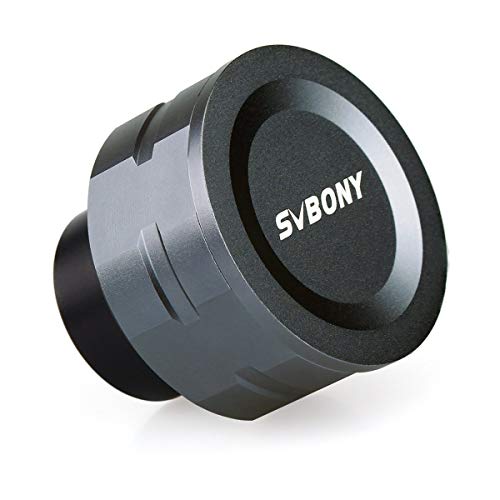
The SV105 is positioned as a starting point for astronomical imaging. It functions as an electronic eyepiece, enabling Lunar and planetary photography with straightforward setup. Its plug-and-play design aims at real-time observation on a laptop or PC, with no driver installation required for Windows systems. The camera pairs with software like SharpCap on Windows or AstroDMx Capture on Linux, and USB camera support on Android devices enhances on-the-go use. This makes it a practical, budget-friendly entry into astro-imaging for beginners who primarily want quick, shareable planet and Moon views.
SV305C Astrophotography Camera

The SV305C is a color entry-level telescope camera designed for planetary and lunar imaging, with a focus on low readout noise and improved sensitivity. It uses the IMX662 sensor with a 1/2.8” back-illuminated form factor and small 2.9 μm pixels to help minimize overexposure. This model emphasizes ease of use for EAA (electronically assisted astronomy) and general planetary imaging, making it a sensible choice for beginners who want to capture crisp planetary detail and repeated sessions without complex calibration workflows.
SV205 Astrophotography Camera
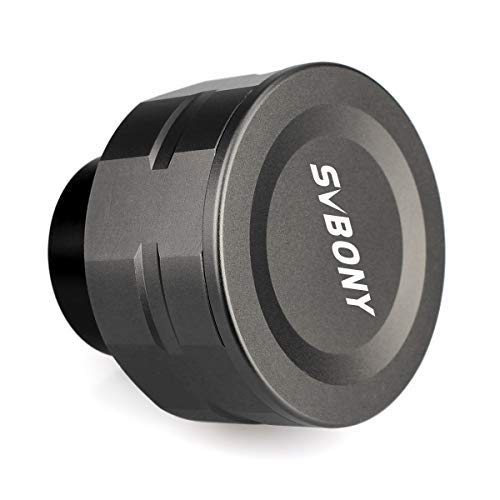
The SV205 offers a higher-resolution 7.05MP image sensor and USB 3.0 connectivity for smoother data transfer. It emphasizes plug-and-play operation and real-time dynamic observation through a standard computer setup. The camera supports multiple video formats, including MJPG at 2K and 1080p, with color fidelity suitable for sharing lunar and planetary views with friends and online communities. This makes it a strong mid-range option for expanding image quality without escalating complexity.
Celestron NexImage 20 Solar System Camera

The NexImage 20 is a time-tested option for lunar and planetary imaging, designed for solar system targets with a focus on high-resolution stills and video capture. Its 20MP sensor capability supports detailed lunar craters, Jovian cloud bands, and Saturnian rings. The device is built for straightforward plug-and-play use with a computer and telescope, delivering reliable performance for beginners who want consistent, shareable planetary results.
Telonixium 4K Wireless Telescope Camera

The Telonixium 4K camera combines wireless operation with a rotatable 2.8-inch IPS display and 8MP imaging for clear, high-resolution views of the Moon, planets, and beyond. Its 4K video and 1080p captures enable more detailed observations, while the universal locking groove fits eyepieces from 23mm to 60mm, broadening compatibility with many telescopes, binoculars, and microscopes. This model targets users seeking versatile imaging in a compact, integrated package.
Buying Guide: Key Considerations For Choosing A Cheap Astrophotography Camera
- Target type and imaging goals: Decide whether your primary interest is lunar/planetary imaging, or if you want wider-field, deep-sky shots. Cameras with higher sensitivity and lower readout noise perform better in low light and with longer exposures.
- Sensor size and pixel pitch: Larger sensors and smaller pixels can reduce image noise but may require more careful thermal and exposure management. For beginners, a balance between resolution and ease of use is ideal.
- Connectivity and software compatibility: Check USB/USB-C support and whether the camera works with common software such as SharpCap, AstroDMx, or the telescope’s native software. Windows compatibility is most common, with Linux and Android options available on select models.
- Mount and eyepiece compatibility: Ensure the camera’s 1.25″ or 2″ interface fits your existing eyepieces and telescope tubes. A universal locking groove expands compatibility with various eyepieces.
- Video vs. stills: If you want real-time sharing, prioritize cameras that support high-frame-rate video (MJPG) and offer smooth live-view. For planetary detail, high-resolution stills can complement video captures.
- Portability and setup: Beginners benefit from light, easy-to-mount devices. Wireless options reduce cable clutter, but wired connections can offer more consistent performance in some setups.
- Software workflow: Consider whether you’ll need additional software for stacking and processing (e.g., AutoStakkert!, RegiStax, or MS ICE). Some cameras come with bundled or recommended software to simplify workflows.
- Future-proofing: If you anticipate upgrading scopes or wanting more advanced imaging later, choose cameras with scalable features, such as better sensitivity, wider dynamic range, and compatibility with a broader range of eyepieces.
In summary, the selected options cover a spectrum of cheap, entry-level choices and upgrade-friendly variants. For beginners, SV105 and SV305C provide straightforward entry points into planetary and lunar imaging, while SV205 offers improved resolution for more detailed captures. The Celestron NexImage 20 remains a solid, purpose-built solar-system camera, and the Telonixium 4K model adds high-resolution video with broad eyepiece compatibility. Each product emphasizes accessible operation, practical image quality, and compatibility with common astronomy software—key factors for effective learning and ongoing experimentation in astrophotography.