Astrophotography rewards careful gear choices and proper technique. For American enthusiasts seeking entry‑level to mid‑range CCD imaging options, this guide highlights five Amazon-listed products that pair well with small to medium telescopes. It focuses on beginner friendliness, reliability, and compatibility with common software, ensuring you can capture cleaner lunar, planetary, and deep‑sky shots. The selections emphasize two main categories: dedicated CCD cameras and essential optical filters that enhance contrast and control light pollution. Use the summary table below to compare core attributes at a glance, then explore each product’s details to determine the best fit for your observing setup.
| Product | Brand | Type / Use | Key Benefit |
|---|---|---|---|
| SV105 Color Astrophotography Camera | SVBONY | 1.25″ color camera | Beginner-friendly imaging |
| SV305C IMX662 Color Astrophotography Camera | SVBONY | 2.1MP color camera | Improved sensitivity |
| UV-IR Cut Filter For Astrophotography | SVBONY | 2″ UV-IR cut | Enhances contrast |
| SVBONY UHC Filter for Narrowband Imaging | SVBONY | 1.25″ UHC filter | Reduces light pollution |
| Astromania LRGB 2-Inch Filter Set | Astromania | Monochrome CCD filtering set | High-contrast color imaging |
SV105 Color Astrophotography Camera
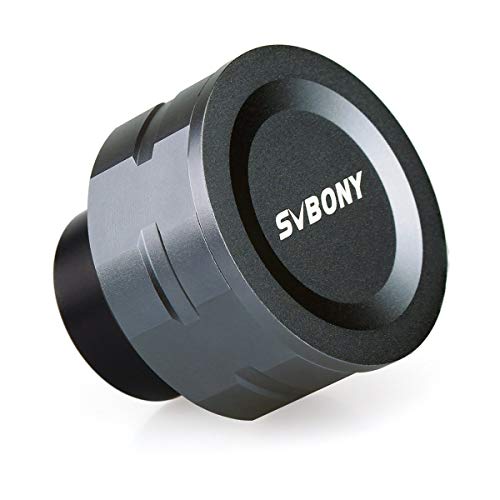
The SV105 is presented as a starter option for astronomical imaging, offering a straightforward path into color CCD/CMOS astrophotography. It serves as an entry point for observers who want to capture lunar and planetary targets or broader scenes. The module is described as suitable for beginners who enjoy documenting the night sky with quick video captures. It supports real‑time viewing on a connected computer, making live stacking and data gathering approachable. The setup is described as plug‑and‑play with no required driver, enabling rapid on‑telescope use. In practice, users can connect to Windows, Linux, or Android platforms with widely used capture software such as Sharpcap or AstroDMx Capture. The device emphasizes a simple workflow: point, capture, and review in real time, with options for quick tutoring of basic focusing and framing. Compatible software and live feed help new astrophotographers learn how exposure, gain, and stacking affect final images.
- 1.25″ color camera designed for entry‑level imaging
- Begins with planetary and lunar targets and simple deep‑sky arcs
- Plug‑and‑play operation; no driver required on supported platforms
- Real‑time live view for quick framing and focusing
- Supports Windows, Linux, and Android ecosystems with common capture apps
SV305C IMX662 Color Astrophotography Camera

The SV305C is described as a color entry‑level telescope camera built for broader practice in astronomical imaging. It uses the IMX662 sensor, a 1/2.8‑inch back‑illuminated design with 2.9 μm pixel size, geared toward balancing sensitivity and noise. The sensor supports a practical field of view for both lunar photography and brighter deep‑sky objects, while its high full well capability (38 ke) helps manage bright targets without clipping. The camera’s low readout noise and enhanced red sensitivity support clearer color images with reduced glare. Practical compatibility notes highlight easy, driver‑less operation on Windows, Linux, and Android with capture apps like Sharpcap or AstroDMx Capture, enabling straightforward real‑time capture and processing. This configuration appeals to hobbyists who want a step up from basic cameras while maintaining ease of use.
- Color entry‑level imaging with IMX662 sensor
- 1/2.8″ back‑illuminated design for better light capture
- 2.9 μm pixel size; low readout noise; improved IR sensitivity
- 40–38 ke full well range helps handle bright scenes
- Plug‑and‑play with Windows, Linux, and Android using common capture software
UV-IR Cut Filter For Astrophotography

This UV‑IR cut filter is designed to optimize digital imaging by blocking ultraviolet and infrared wavelengths that can degrade image clarity. It uses modern coating technology and a high‑quality glass substrate to deliver sharp, high‑contrast images with minimal reflections. The filter’s multi‑layer coatings reduce stray light and chromatic aberration, contributing to more natural color reproduction and smoother tonal transitions. It is described as a durable, permanently mounted lens protector suitable for DSLR cameras, CCD cameras, and even modified webcams or telescopes. The 2″ size makes it compatible with many 2″ focusers and accessories, preserving image integrity across a range of scopes and setups.
- 2″ UV‑IR cut for DSLR, CCDs, and telescopes
- Latest coatings for high contrast and low reflections
- Plane‑parallel, striate‑free glass for sharp images
- Permanent lens protection and extended sensor performance
- Reduces ultraviolet and infrared interference on modern sensors
SVBONY UHC Filter for High‑Contrast Imaging
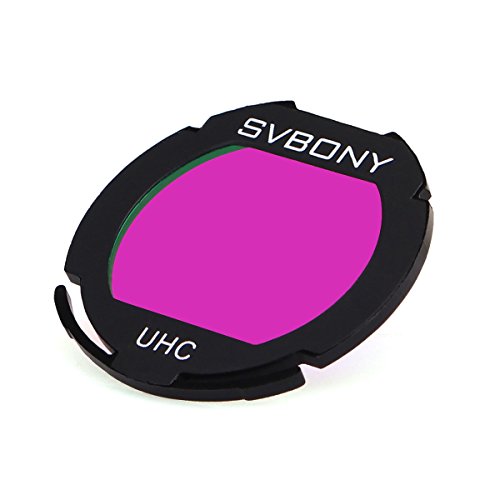
The SVBONY UHC filter is marketed for enhancing contrast in deep‑sky and nebulae observations by suppressing light pollution while preserving important emission lines. The filter’s 1.25″ size accommodates common ocular and camera paths, and its double‑sided multi‑layer coating minimizes reflections. The back of the filter features an anti‑reflection coating to further improve contrast. The filter’s ultra‑thin cell design helps minimize vignetting and maintains a wide usable field. It is specifically aimed at improving the visibility of nebulae and other faint targets against a light‑polluted sky, which can be beneficial for both visual observing and astrophotography workflows.
- 1.25″ filter suitable for celestial observations and imaging
- Double‑sided multi‑layer coatings reduce reflections
- Ultra‑thin cell minimizes vignetting
- 0.1% off‑band transmission helps suppress artificial light lines
Astromania LRGB 2-Inch Filter Set

The Astromania Deluxe LRGB set provides four 2″ filters designed for monochrome CCD imaging to assemble color images. The included luminance filter offers high transmission to capture fine detail, while the Red, Green, and Blue filters deliver color channels for a complete image. These filters use dichroic glass substrates with an IR‑blocking coating to reduce unwanted infrared light that can blur color balance. All four filters are parfocal, reducing the need for refocusing between exposure sets. The set aims to simplify the workflow for monochrome cameras by enabling precise color composition and maintaining high contrast across all channels, which is valuable for deep‑sky subjects and galaxies.
- Four 2″ filters: L, R, G, B
- Dichroic glass with IR‑blocking coating
- Parfocal design minimizes refocusing between moves
- Enhances color accuracy and image contrast for monochrome CCDs
Buying Guide
Camera Type And Sensor Considerations
Choose between color and monochrome camera designs based on your imaging goals. Color cameras simplify workflows and deliver ready‑to‑view color results, while monochrome options paired with a filter set can yield higher detail and dynamic range in deep‑sky photos. Sensor size and type affect sensitivity, noise, and field of view. Entry‑level sensors like those used in SV105 and SV305C offer easy operation, lower costs, and broad software compatibility, making them suitable for beginners and enthusiasts building out a broader imaging setup.
Filters: When To Use What
Filters control the spectral bandwidth reaching the sensor and help combat light pollution. UV‑IR cut filters improve overall sharpness and color fidelity by removing out‑of‑band energy. UHC or narrowband filters boost contrast for emission nebulae under light pollution. An LRGB filter set enables color reconstruction from a monochrome camera, delivering higher resolution in each color channel. If you primarily image planets and the Moon, a sensitive color camera with good frame rate may suffice; for deep‑sky work in suburban skies, a thoughtful filter plan makes a bigger difference.
Mounting, Size, And Compatibility
Filter size (1.25″ vs 2″) and thread compatibility dictate which components you can pair with your existing focuser, adapters, and cameras. 2″ filters are common for many astrophotography setups, especially with monochrome cameras and larger optics, while 1.25″ options fit tighter setups. Check focal reducers or field flatteners compatibility, and confirm that your software supports your camera model (for example, Sharpcap on Windows or AstroDMx on Linux). The five products above emphasize compatibility with popular platforms, reducing setup friction for new observers.
Software and Workflow Integration
Software options can influence how smoothly you capture, stack, and process images. The products highlighted here mention widely used tools such as Sharpcap and AstroDMx Capture, along with general USB camera support. A smooth workflow—live view, capture, pre‑processing, registration, and stacking—helps you maximize the data you collect. When evaluating purchases, consider whether you need live stacking, scripting capabilities, or specific plug‑ins for calibration frames and color assembly.
Practical Setup Tips
For best results, pair filter sets with a stable mount, good balance, and a clean optical train. Start by capturing short, high‑quality calibration frames (dark, bias, and flats) to correct sensor artifacts. Use a consistent night‑sky location with minimal drift, and optimize exposure settings to avoid blooming on bright targets. Record separate sequences for luminance and color channels (in the case of LRGB work), and plan your sessions around target visibility and atmospheric conditions. The selected products are designed to support these workflows with accessible interfaces and reliable performance.