For professional photographers, selecting a camera system that balances image quality, speed, reliability, and ease of use is essential. This guide highlights five standout options across DSLRs and advanced mirrorless-style cameras, focusing on high-resolution sensors, robust autofocus, and practical features for fieldwork, studio shoots, and travel. Below you’ll find brief product summaries, a quick comparison, and a practical buying guide to help you choose).
Product Snapshot
- Canon EOS Rebel T7 DSLR Camera with 18-55mm Lens — Canon
- 8K Digital Camera with 88MP Sensor — XNSIAKXA
- Canon EOS Rebel T7 DSLR Camera with 2 Lens Kit — Canon
- Canon EOS Rebel T7 DSLR Camera Bundle with Accessories — Canon
- 5K Digital Camera with Dual Lenses — Aboobu
Note: The selections emphasize high image resolution, dependable autofocus, built‑in Wi‑Fi for fast sharing, and versatile lens options. They span beginner-friendly bundles ideal for upgrading to professional workflows, while also including higher-end options for ambitious creators seeking ultra-high resolution and advanced stabilization capabilities.
Canon EOS Rebel T7 DSLR Camera With 18-55mm Lens

The Canon EOS Rebel T7 combines a 24.1-megapixel APS-C CMOS sensor with a DIGIC 4+ processor to deliver sharp stills and Full HD video. A 9-point autofocus system and AI Servo AF provide reliable subject tracking, supporting portraits, events, and landscapes. Built-in Wi‑Fi enables quick sharing to mobile devices and cloud workflows, while the light body helps photographers travel light without sacrificing image quality.
8K Digital Camera With 88MP Sensor
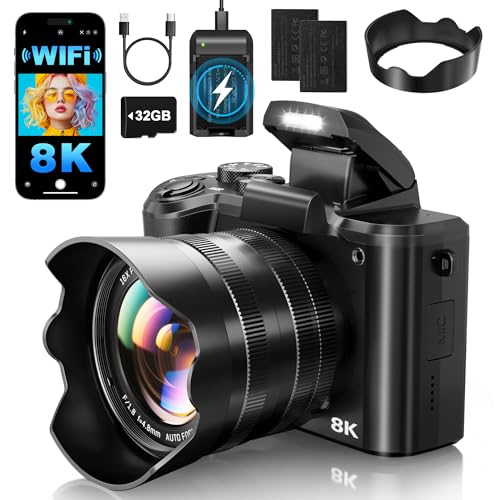
This model pushes high-end capabilities with an 88-megapixel sensor and 8K video, designed for photographers who demand ultra-high resolution and detail. Dual lenses and a 3.2-inch IPS touch screen simplify framing and focus, while built‑in WiFi makes transferring stills and clips straightforward for online portfolios and client previews. The device includes a built‑in stabilization system to smooth motion in both photos and videos, helping creators produce professional content directly from the field.
Canon EOS Rebel T7 DSLR Camera With 2 Lens Kit

This two-lens kit expands creative reach with a versatile 18-55mm standard zoom and a 75-300mm telephoto reach. Improved Dual Pixel CMOS AF and eye detection AF help with faster, more accurate focus in portraits and events. The 24.1 MP sensor, ISO range, and built-in Wi‑Fi create a capable hybrid for both stills and Full HD video that suits aspiring professionals stepping up from basic kits.
Canon EOS Rebel T7 Bundle With Extras

This bundle bundles a Canon EOS Rebel T7 with a selection of accessories including an extra battery, memory cards, a protective bag, and essential add-ons. The camera features a 24.1MP APS-C sensor, a DIGIC 4+ processor, and a 3-inch LCD for easy menu navigation. A practical option for photographers who want a complete starter system that covers shooting, storage, and transport needs in one purchase.
Canon EOS Rebel T7 Bundle With 18-55mm & 75-300mm Lenses

This two-lens bundle mixes a standard zoom with a telephoto option, enabling flexible on-location shoots. As with other Rebels, you’ll get a 24.1MP APS-C sensor and built-in Wi‑Fi, plus a compact, beginner-friendly package that supports creative approaches from street photography to nature. It’s ideal for photographers building a workflow around light, portable gear and broad subject coverage.
Canon EOS 4000D / Rebel T100 Bundle (Renewed)

This renewed bundle pairs an entry-level DSLR with a complete accessories kit, including memory cards, filters, a tripod, and a carry bag. The 18-megapixel sensor, DIGIC 4+ processor, and full HD recording provide solid fundamentals for beginners and hobbyists while offering a path toward higher-end Canon eos systems as skills grow. The renewal option can be attractive for budget-conscious buyers seeking value without sacrificing essential capabilities.
Buying Guide: Key Considerations For Pro-Level Photography
- Sensor resolution and size: Higher megapixels deliver more detail, important for large prints and cropping. APS-C sensors balance resolution with light gathering and autofocus performance, while full-frame sensors excel in low light and depth of field control.
- Autofocus system: Consider the number of focus points, subject tracking, eye detection, and AF in live view. For portraits, events, and wildlife, reliable AF is critical.
- Lens ecosystem and expansion: Evaluate lens availability and compatibility. A versatile kit should include a standard zoom, a telephoto option, and support for fast primes if you plan studio work or low-light shoots.
- Video capabilities: For hybrid shooters, assess resolution options (4K or higher), frame rates, and stabilization features. Look for clean HDMI output and reliable autofocus in video mode.
- Connectivity: Built-in Wi‑Fi or Bluetooth enables quick transfers, previews for clients, and remote control from a smartphone, which speeds up reporting and approvals.
- Ergonomics and weight: A comfortable grip, balanced weight, and intuitive controls help during long shoots. Consider weather sealing if you photograph outdoors in varied conditions.
- Battery life and accessories: Longer battery life reduces interruptions. Check availability of extra batteries, memory cards, protective cases, and charging options for fieldwork.
- Budget and service options: Bundles with accessories can provide value, but assess total cost of ownership, warranty terms, and after-sales support when choosing renewed or refurbished models.
- Future-proofing: If you anticipate expanding into more demanding work, prioritize cameras that offer robust autofocus systems, higher bitrates for video, and a broad lens roadmap.
- Use-case mapping: Match features to needs—studio portraits may prioritize sharpness and color fidelity, while travel photography values compactness and quick sharing.