Depth-sensing cameras empower machines to understand three-dimensional space, estimate distances, and map environments. This guide spotlights five Amazon options that emphasize depth-sensing capabilities, including stereo vision and time-of-flight (TOF) sensors. They’re suited for robotics, VR/AR, surveillance, and AI research. Each product section includes a direct Amazon link, a visual, and a concise feature summary. A buying guide follows to help compare depth technologies, software compatibility, and practical integration considerations.
| Product | Primary Use | Platform/Interface | |
|---|---|---|---|
| XYGStudy IMX219-83 Stereo Camera | Stereo Depth (Dual IMX219) | AI Vision, Depth Mapping | Jetson Nano, Xavier NX; Raspberry Pi CM3/CM3+; Pi5 cable required |
| Waveshare Binocular Camera Module | Stereo Depth (Dual 8MP) | AI Vision, Depth Vision | Jetson Nano/Xavier NX/Orin NX/Orin Nano |
| Sipeed MaixSense A010 RGBD TOF Camera | TOF 3D Depth | Depth Mapping, Real-time Preview | MAIX/ROS compatible; USB2.0/UART |
| VicRole Oculus Quest Positioning Camera Sensor | VR Tracking Camera | VR Headset Tracking | Quest 2/Quest Pro compatible |
| LaView 8MP 4K Security Camera | Peripheral Imaging (non-depth) | 4K Surveillance, Motion Detection | IP65 outdoor/indoor; cloud/app access |
XYGStudy Stereo Depth Camera Module

XYGStudy IMX219-83 is a binocular stereo camera module housing dual IMX219 sensors, delivering 8 megapixels per camera and enabling depth estimation through stereo vision. This compact module is designed for AI vision tasks such as depth mapping, 3D reconstruction, and real-time obstacle detection. The synchronized dual cameras provide depth cues essential for spatial awareness in robotics and advanced AI research.
The module is compatible with NVIDIA Jetson Nano B01, Jetson Xavier NX, and Raspberry Pi compute modules via compatible IO boards. For Raspberry Pi 5, you will need a longer Pi5-Camera-Cable (200mm/300mm/500mm). It also supports Compute Module IO Board Plus and related POE options, enabling flexible deployment in embedded systems.
MaixSense A010 RGBD TOF Camera
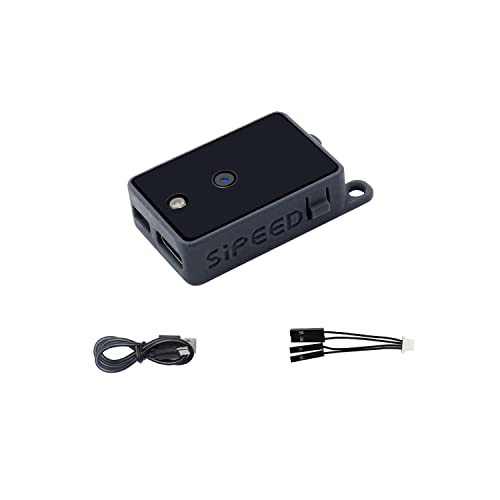
Sipeed MaixSense A010 is a 3D RGBD TOF depth camera module built around a BL702 core with a Juyou100x100 TOF sensor. A built-in LCD preview screen (240 × 135) lets users view the depth map in real time after color mapping. The device emphasizes high-precision depth sensing for real-time scene understanding, traffic monitoring, and quantitative analyses. An onboard 32-bit RISC-V processor provides local processing power for edge applications.
MaixSense A010 is designed to connect with MAIX BIT or similar K210-based boards via serial interfaces and USB2.0, supporting ROS1/ROS2 workflows for secondary development. Its compact footprint and depth-capable sensor make it suitable for robotics research, smart devices, and DIY depth-sensing projects.
Waveshare Binocular Camera Module

Waveshare Binocular Camera Module uses the IMX219 sensor pair to deliver dual 8MP cameras and stereo depth vision for AI applications. This module is designed to support development on prominent edge platforms and is marketed for compatibility with Jetson Nano, Xavier NX, and larger Jetson lines like Orin NX and Orin Nano. The dual-camera arrangement makes it a practical option for depth estimation, 3D scene analysis, and research projects requiring synchronized stereo capture.
Engineered for reliable integration with Raspberry Pi ecosystems and Jetson boards, this module enables straightforward experimentation with depth-aware computer vision, object localization, and 3D mapping tasks in both education and professional settings.
VicRole Oculus Quest Positioning Camera Sensor

VicRole’s Oculus Quest Positioning Camera Sensor is a replacement camera sensor designed for Oculus Quest 2 and Quest Pro headsets. It aims to restore original tracking accuracy and minimize drifting in VR tracking systems. The package typically includes the position camera sensor along with essential tools such as anti-static tweezers and a small pry toolkit, supporting a straightforward installation for improved VR spatial tracking.
Compatibility notes indicate Quest 2 and Quest Pro support, with product identifiers 330-00782-02 or 844-00791-01. This component is part of a broader VR tracking ecosystem and is relevant where precise headset or controller positioning is necessary for immersive experiences.
LaView 8MP 4K Security Camera

LaView’s 8MP 4K security camera provides weatherproof performance with IP65 protection, delivering crisp daytime imagery and strong night vision via Starlight Sensor technology. It supports 100 ft color night vision with motion or person detection, plus two-way audio and a spotlight. Cloud options and mobile/web access simplify remote monitoring for both outdoor and indoor installations.
While this camera does not feature an explicit depth sensor, it complements depth-focused systems by delivering high-resolution surveillance, reliable nighttime coverage, and AI-assisted alerts. It’s a solid addition to a multi-camera setup that combines depth sensing with broad situational awareness.
Buying Guide
Key factors when choosing depth-sensing cameras include the depth technology (stereo vs TOF vs RGBD), intended use, and platform compatibility. Stereo depth uses paired cameras to compute depth via parallax, ideal for 3D mapping and obstacle detection. TOF systems measure distance directly by timing light pulses, offering rapid depth acquisition in smaller packages. RGBD modules add color alongside depth data, useful for scene understanding in diverse environments.
Match the camera to your hardware ecosystem. If you work with Raspberry Pi or NVIDIA Jetson, verify CSI/USB interfaces, required cables, and available drivers or SDKs (ROS, OpenCV, or vendor libraries). Check whether extra cables or adapters are needed (for example, Pi5 camera cables for some Raspberry Pi 5 setups). Confirm compatibility with your compute module, development board, or VR/AR platform before purchase.
Consider sensor resolution, depth precision, and field of view. Higher resolution depth cameras offer more detail but may demand more processing power and bandwidth. A wide field of view helps cover larger spaces but can reduce depth accuracy at distance. Latency matters for real-time robotics and VR; prioritize sensors with responsive previews and efficient processing for your use case.
Software support and ecosystem matter. Look for ROS1/ROS2 compatibility, available sample projects, and active vendor documentation. Community forums and open-source libraries can accelerate prototyping for depth-based robotics, object tracking, or 3D reconstruction tasks. Also review warranty terms and manufacturer reliability to ensure long-term viability in field deployments.
Summary comparisons help narrow choices. For stereo depth, both XYGStudy and Waveshare offer dual IMX219 sensors with broad Jetson support and Raspberry Pi compatibility considerations. For direct depth sensing, the MaixSense A010 TOF module provides a compact TOF-based RGBD option with real-time previews. VR-focused needs can leverage the VicRole positioning sensor for headset tracking, while LaView adds robust 4K surveillance with AI-enabled alerts to complement depth-rich systems.