Portrait photography rewards lenses that blend sharp foreground detail with flattering background blur. The five products below focus on classic prime focal lengths and accessible options for both Canon and Nikon systems, including fast 1.8 apertures and a soft focus accessory for creative portraits. Whether you shoot full frame or APS-C, these lenses and accessories help you craft images with natural perspective, clean skin tones, and cinematic bokeh. Use the quick table to compare mounts, focal lengths, and standout strengths at a glance.
| Product | Brand | Mount / Use | Notable Feature |
|---|---|---|---|
| Canon EF 50mm f/1.8 STM Lens | Canon | Canon EF | Bright f/1.8, compact portrait lens |
| Meike 85mm F1.8 Nikon Portrait Lens | MEKE | Nikon F | Autofocus, sharp prime with smooth bokeh |
| 85mm F1.8 Nikon Portrait Lens (Manual) | BENOISON | Nikon F | Fully manual, tactile focusing |
| Meike 85mm F1.8 Canon Portrait Lens | Meike | Canon EF | Autofocus, sharp portrait prime |
| Walking Way Soft Focus Filter 82MM | Walking Way | 82mm | Dreamy glow, skin smoothing |
Canon EF 50mm f/1.8 Portrait Lens

The Canon EF 50mm f/1.8 STM is a compact, lightweight prime ideal for portrait work on both full-frame and APS-C bodies. Its 50mm focal length offers natural perspective that flatters facial features without exaggerated compression. The bright maximum aperture of f/1.8 creates a shallow depth of field, producing creamy backgrounds that emphasize the subject. The lens provides a versatile angle of view: about 40° horizontally, 27° vertically, and 46° diagonally. A close focusing distance of 1.15 feet (0.35 m) lets you work in tight spaces with ease.
Designed for everyday use, this lens excels in low-light scenarios and street portrait applications where speed matters. Its affordable price point makes it a popular entry into prime portrait glass for beginners and enthusiasts seeking dependable optics and reliable performance.
Meike 85mm F1.8 Nikon Portrait Lens

This 85mm prime on Nikon F-mount delivers flattering portrait perspective with comfortable working distance and pronounced subject isolation. The fast f/1.8 aperture enables strong subject separation and a creamy background blur (bokeh). The lens uses a 9-element-in-6-group optical design, which helps maintain sharpness and contrast across the frame while keeping the form factor compact and portable. Its autofocus performance supports reliable candid portraits, while the overall build stays lightweight for day-long shoots.
Ideal for head-and-shoulders portraits, this lens pairs well with Nikon DSLRs from high-end bodies to entry-level models. The combination of a classic focal length and a practical price makes it a widely recommended option for enthusiasts building a portrait kit around Nikon F.
85mm F1.8 Nikon Portrait Lens (Manual)
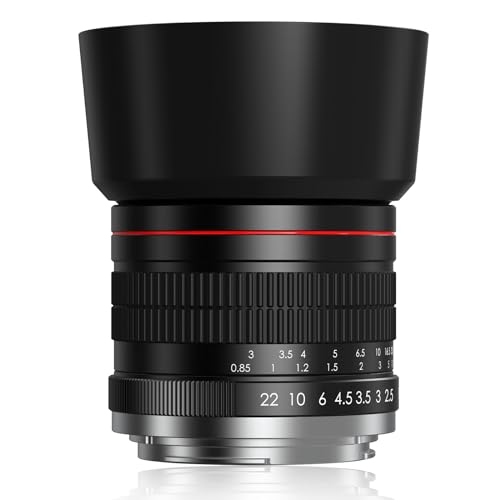
This fully manual 85mm lens is designed for Nikon users who prefer precise focus control. There is no autofocus; you rotate the focus ring to achieve sharpness. Some cameras may display “Lens not attached” due to the lack of electronic contacts, which is normal when using fully manual optics. In manual mode, exposure is controlled by adjusting shutter speed and ISO, providing a tactile workflow that many portrait artists enjoy. The 85mm focal length is flattering for portraits on Nikon bodies, especially when paired with a bright f/1.8 aperture.
Pros include predictable rendering and an unobtrusive form factor. Cons involve a learning curve for new users and the need to meter exposure manually. This lens is well-suited to studio or controlled lighting environments where precise focus and exposure control are prioritized.
Meike 85mm F1.8 Canon Portrait Lens

Built for Canon EF mount full-frame cameras, this 85mm prime targets portrait work with a bright f/1.8 aperture and a nine-blade diaphragm for smooth background blur. The 85mm focal length offers a natural, flattering perspective for half-body to head-and-shoulders portraits while maintaining a comfortable working distance. The optical design uses 9 elements in 6 groups to balance sharpness, contrast, and color rendition across the frame. Autofocus performance provides practical speed for candid moments, and the compact build aids portability for on-location shoots.
Using this lens on Canon DSLR bodies helps create defined subject separation, helping skin tones render cleanly against soft, defocused backgrounds. The combination of image quality and a manageable price point makes it a solid general-purpose portrait option in Canon ecosystems.
Walking Way Soft Focus Filter 82Mm
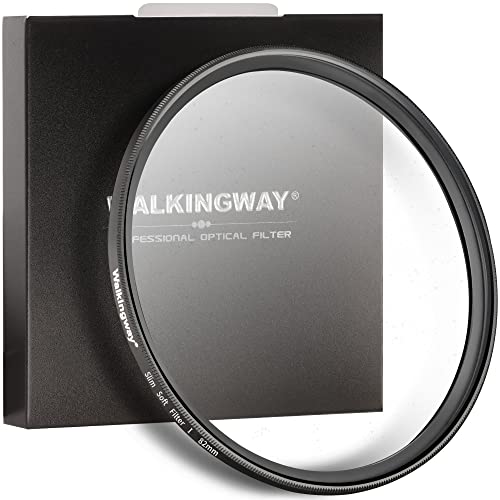
This white mist diffusion filter adds a dreamy glow to portraits by softening highlights and reducing contrast. The texture creates a cinematic fog-like effect that can enhance mood and atmosphere in photography and video. The filter also helps refine skin textures, smoothing minor imperfections and producing a more flattering overall look. With 82mm compatibility, it works with a wide range of lenses and is quick to deploy when you want a softer, more romantic portrait style.
Buying Guide
Key considerations for choosing a portrait lens
- Focal length: 50mm provides a natural perspective for full-frame; 85mm is a classic portrait length offering stronger compression and subject isolation, especially on full-frame bodies. On APS-C cameras, these focal lengths correspond to shorter equivalent viewpoints.
- Aperture: Fast primes (f/1.8 and brighter) produce shallow depth of field and smooth bokeh, helping your subject pop from the background. Consider how often you shoot in dim light and whether you value creamy background blur over ultimate sharpness in every frame.
- Autofocus vs manual focus: Autofocus lenses suit moving subjects and street portraits, while manual-focused lenses provide precise control for studio lighting or learning focus techniques. Be mindful of compatibility and available camera modes when choosing.
- Image quality and build: Look for sharpness across the frame, good contrast, and a sturdy yet lightweight design for on-location shoots. Diaphragm blades affect the quality of the out-of-focus areas (bokeh).
- Mount compatibility: Canon EF/EF-S and Nikon F are the most common. Confirm your camera’s mount and whether an adapter is needed for third-party lenses. Full-frame lenses can often be used on APS-C bodies with a crop factor.
System-specific guidance
- Canon: The 50mm f/1.8 is a staple entry-level portrait option, while 85mm variants provide more compression and smoother backgrounds. For Canon, EF mounts are widely supported and affordable options exist from third-party brands.
- Nikon: The 85mm f/1.8 is a long-standing portrait favorite on Nikon F. Autofocus performance is important for candid portraits, and many third-party 85mm options balance price with solid optical quality.
Use cases and practical tips
- In studio: Pair a fast prime with controlled lighting to maximize subject separation and skin tone accuracy. A soft-focus accessory can be added for a vintage or cinematic look without post-processing.
- On location: Lightweight primes reduce fatigue and are easier to maneuver in tight spaces. A small diffusion filter can help manage harsh sun and produce a flattering glow on the subject.
- Technique: Practice manual focusing with a shallow depth of field to improve accuracy. Use focus peaking or magnified focus on your camera to verify critical sharpness at your chosen distance.