For photographers, protecting gear from humidity, dust, and temperature swings is essential. A purpose-built dry cabinet combines humidity control, secure locking, and a clean layout to guard cameras, lenses, and accessories. The following selections focus on reliability, digital features, and practical capacity across a range of budgets. Each option below supports precise RH control, strong build quality, and thoughtful storage configurations to help keep delicate optics and electronics in peak condition.
| Product | Brand | Size (L) | Humidity Range | Notable Feature |
|---|---|---|---|---|
| T.A.P 48L | T.A.P | 48 | 25-70% RH | Transparent door with 2-key lock |
| T.A.P 68L | T.A.P | 68 | 25-70% RH | LED digital display |
| FORSPARK 80L | FORSPARK | 80 | 25-60% RH | Dual-zone, LED lighting |
| INTBUYING 50L | INTBUYING | 50 | 25-60% RH | Four-layer shelves, TE Cooling |
| AUTENS 100L | AUTENS | 100 | 25-60% RH | Combination lock option |
T.A.P 48L Dry Cabinet

The 48-liter T.A.P dry cabinet delivers compact, reliable humidity control suitable for one or two camera bodies and several lenses. Its electronically controlled dehumidification system supports a relative humidity range from 25% to 70% RH, helping to prevent moisture-related corrosion and fungal growth. The transparent door provides a clear view of contents, making it easy to monitor gear without opening the cabinet. A sleek aluminum alloy handle adds a premium touch while a secure locking door with two keys helps deter unauthorized access.
With a simple digital interface, the T.A.P 48L focuses on practicality. The space layout accommodates standard DSLR bodies and mid-sized zoom lenses, while keeping gear neatly separated from dust and humidity. The unit’s robust construction guards against environmental fluctuations, making it suitable for home studios and small workshops. It’s a solid starter option for photographers who want reliable storage without overwhelming space consumption.
Maintenance is straightforward: keep the door seal clean to maintain an airtight environment, and periodically check the lock hardware. While the compact build limits large, long telephoto setups, it excels at keeping essential gear safe and accessible. For shooters who prioritize visibility, protection, and a tidy shelf, the 48L model offers a compelling balance of features and price.
T.A.P 68L Dry Cabinet

The 68-liter T.A.P model expands storage for a growing kit, including multiple lenses and a couple of camera bodies. It maintains precise humidity control with an adjustable RH range of 25% to 70%, which helps prevent corrosion and lens fungus in variable climates. The cabinet features a transparent door that showcases contents while protecting them, and a sturdy locking system with two keys to deter unauthorized access. A digital display assists in quickly reading current conditions inside the cabinet.
Designed for flexibility, the 68L cabinet supports a neat arrangement of cameras, lenses, and accessories. The glass door keeps gear visible for quick selection during shoots and studio work, while the dust-free environment preserves coatings and electronics. The combination of lockable safety, humidity management, and clear visibility makes this model ideal for mid-sized collections or dedicated workspaces in homes or small studios.
For photographers who want a step up from compact storage, the 68L offers better scalability while preserving ease of use. Regular checks for sensor accuracy and door seal integrity will help sustain optimal conditions. If you anticipate expanding gear or adding larger lenses, this model provides a reliable foundation with room to grow without sacrificing protection.
FORSPARK 80L Dry Cabinet

The FORSPARK 80L cabinet is designed as a practical mid-to-large storage solution with an emphasis on humidity stability and ease of access. It uses an intelligent chip to maintain RH between 25% and 60%, automatically starting dehumidification whenever humidity rises by a small margin. This capability extends equipment life by reducing moisture exposure for cameras, lenses, and documents stored within. The 80L capacity supports multiple bodies, zoom lenses, and other accessories with a two-tier layout and removable shelf.
Two notable design elements are the LED lighting inside and a robust steel frame combined with a glass door seal, which together reduce glare and convection air leakage. The magnetic seal helps keep dust out, while the tempered glass offers a clear view of gear without opening the cabinet. For coastal or humid environments, this cabinet provides an effective balance of energy efficiency and environmental protection.
The FORSPARK model is well suited for hobbyists upgrading from smaller cabinets or for small studios needing more organization. It pairs straightforward operation with strong protective features. Regular checks of the shelf integrity and door alignment will help ensure consistent humidity performance and long-term reliability for your cherished gear.
INTBUYING 50L Dry Cabinet

The INTBUYING 50L cabinet provides four-layer storage within a compact footprint, making it suitable for a modest kit of bodies and lenses. It uses a TE Cooling approach described as a “cold wafer” design to protect contents from dampness without introducing heat, and it operates at a low power draw of about 8 watts. The humidity control is specified as ±1% RH within a 25% to 60% RH range, offering precise and reliable environment management for sensitive items.
Design-wise, INTBUYING emphasizes a balance between space efficiency and protection. The four-tier arrangement helps isolate pieces and prevent gear from overlapping, which reduces abrasion risk. The cabinet’s compact size makes it a good fit for desk or studio setups where space is at a premium, while still delivering robust humidity control and security through locking features. Regularly confirm seal integrity to maintain airtight performance over time.
Users should consider whether their collection will grow beyond four layers or if they will require additional shelves in the future. If growth is likely, plan for a slightly larger cabinet or modular options that can expand without sacrificing humidity stability. The INTBUYING model is an attractive option for growing shooters seeking reliable, affordable dry storage.
AUTENS 100L Dry Cabinet with Combination Lock
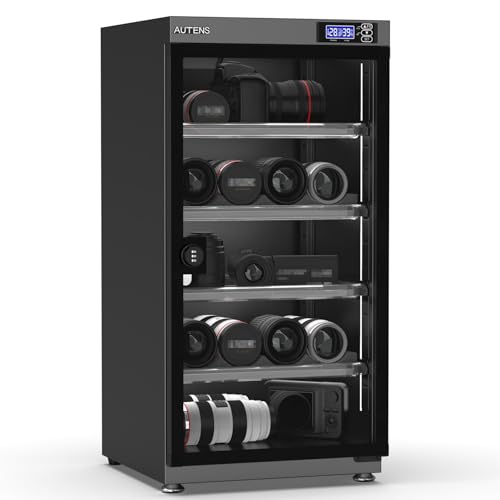
The AUTENS 100L model combines a generous storage capacity with targeted security features. It uses microprocessor-based humidity controls and TE Cooling for precise RH management in real time, typically within a 25% to 60% RH band. A notable upgrade over simpler locks is the combination lock option, which supports multi-user access without distributing keys. This makes it well-suited for shared studios or families with multiple photographers who need secure, controlled access.
Energy efficiency remains a priority in this design, with an 8W power draw that keeps operating costs low while minimizing heat output. The cabinet’s sturdy build, tempered glass, and magnetic sealing help block humidity and dust from entering, preserving camera bodies, lenses, and delicate electronics. For gear collections that require higher capacity and stricter security, the AUTENS 100L is a compelling choice that blends robust protection with accessible usability.
Buying Guide
Choosing the right camera gear storage cabinet involves balancing capacity, humidity control, security, and usability. Start by assessing your gear inventory: how many bodies, lenses, and accessories do you store now, and how might that change in the next year? If you anticipate expansion, consider models with adjustable shelves or larger capacities. A cabinet that supports expansion can save time and money later on.
Humidity control is the core feature. Look for a precise RH range (for example, 25% to 60% or 25% to 70%), and an automatic dehumidification function that responds to rising humidity. Microprocessor control and cooling technology often translate to more stable conditions and less condensation on lenses or camera sensors. Also note how quickly the cabinet reacts to changes in ambient humidity.
Security and access are crucial in shared or studio environments. Lockable doors—keyed or combination—prevent unauthorized access, but you should also assess the ease of entry for approved users. A combination lock can be advantageous in multi-user settings, while individual keys are simpler for single users. Consider whether you need a door that’s easy to monitor, and a seal that maintains airtight performance.
Build quality and materials influence long-term performance. Durable metal frames, tempered glass, and weather-resistant seals help shield gear from external moisture and dust. LED lighting inside the cabinet is helpful for visibility, especially in dim studios, but verify that lighting won’t generate excessive heat or agitate sensitive equipment with heat or UV exposure.
Energy usage is a practical consideration, especially if the cabinet will run continuously. Models designed for low power consumption (for example, around 8W) reduce running costs and heat output. Compare power draws across options to select a model that aligns with your energy expectations while still delivering reliable humidity control.
Finally, examine warranty and service options. A robust warranty signals confidence in build quality, and responsive customer support is valuable if you encounter seal or control issues. If you’re buying for a shared workspace or studio, ensure the model you choose has straightforward maintenance steps and accessible replacement parts.
In sum, the best camera gear storage cabinet for your needs will combine stable humidity control, sufficient capacity for your gear lineup, and reliable security features. The five selections summarized above cover a spectrum—from compact, budget-friendly options to larger, feature-rich cabinets with advanced locking—so you can identify a solution that fits your gear, workspace, and workflow while preserving the condition and longevity of lenses and bodies alike.