Best Outdoor Security Cameras: Top Picks for Home and Property Surveillance
Protecting your property starts with reliable outdoor security cameras that blend power, weather resilience, and smart features. Below are five top performers that align with common outdoor monitoring needs—from battery-powered flexibility to advanced AI detection and color night vision. Each section highlights what to expect, how it handles real-world conditions, and why it matters for American homes and small businesses.
Summary of selected products
| Product | Brand | Key Benefit | Storage Options | Connectivity |
|---|---|---|---|---|
| Blink Outdoor 4 (2-Camera System) | Blink | Long battery life and quick setup | Local storage with Sync Module Core not included | WiFi |
| 2025 Upgraded 2K Security Cameras | HITELLARCAM | 2K video, full-color night vision, free cloud storage | Cloud + SD card options | 2.4G/5G WiFi |
| LITYMOL 2K 2.4G WiFi Camera | LITYMOL | 360° view with color night vision | SD/Cloud storage | WiFi |
| INFIYA Security Cameras Outdoor | INFIYA | Solar-powered with AI human detection | SD storage option | WiFi |
| Ring Floodlight Cam Wired Plus | Ring | Motion-activated floodlights and two-way talk | Cloud storage | WiFi |
Blink Outdoor 4: Battery-Powered Versatility

Blink Outdoor 4 is positioned as an accessible wireless option with a focus on long battery life and straightforward setup. Its two-year battery claim appeals to homeowners seeking low-maintenance monitoring without frequent recharges. While local storage requires a Sync Module Core, the camera supports 1080p HD day and infrared night viewing with reliable two-way audio for quick, in-app communication. This model serves well for entry-level outdoor monitoring or for expanding a Blink ecosystem on a budget.
2025 Upgraded 2K Security Cameras: Color Night Vision

HITELLARCAM’s 2025 upgrade emphasizes 2K UHD resolution with full-color night vision and integrated AI features. It supports free cloud storage alongside local SD card options, giving flexible footage management. With 2.4G and 5G WiFi compatibility and IP66 weather resistance, this model targets households needing clearer daytime detail and reliable performance in challenging nighttime conditions. Alexa compatibility adds hands-free control for smart homes without complexity.
LITYMOL 2K 360° View With Color Night Vision

LITYMOL focuses on comprehensive coverage with 360° pan/tilt and color night vision, a strong feature for monitoring yards, driveways, and entrances from multiple angles. The device supports SD/Cloud storage and 2-way audio, along with AI-based detection to refine alerts. The solar-ready or battery-powered option helps locations where wiring is impractical, while IP65 weatherproofing resists the demands of outdoor environments.
INFIYA Outdoor-Solar & Battery 2K Security Camera
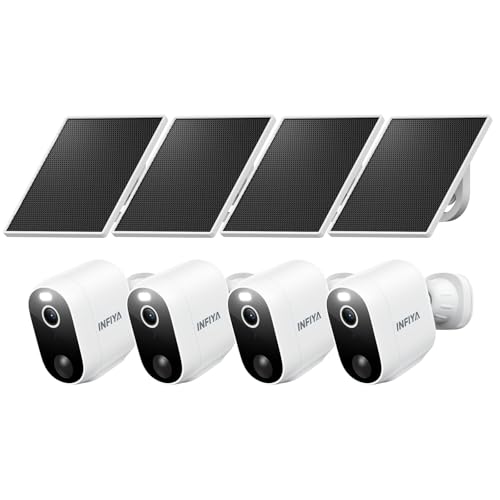
INFIYA combines solar charging with a sizeable battery to maximize standby time, and it includes AI human detection to reduce false alarms. Its 2K live feed and color night vision help maintain visibility after dark, while two-way talk enables real-time communication with visitors. The included siren and light features enhance deterrence, especially on quiet residential streets or at entry points requiring extra visibility.
Ring Floodlight Cam Wired Plus: Bright, Smart Monitoring
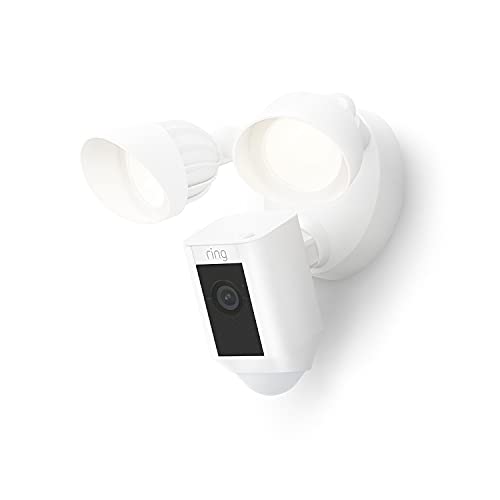
Ring Floodlight Cam Wired Plus combines a full 1080p HD security camera with powerful LED floodlights and a loud 105dB siren. Two-way talk and customizable motion zones make it suitable for entryways, driveways, and perimeter monitoring around homes or small businesses. The integrated Ring app delivers live viewing, notifications, and the ability to fine-tune lighting and motion settings for targeted deterrence and rapid response.
Buying Guide: Key Considerations for Outdoor Security Cameras
- Power and installation: Battery-powered cameras offer flexibility and easy installs, especially in hard-to-wire locations, but may require periodic battery changes. Solar-assisted options extend life in sunny climates. Wired cameras deliver constant power but demand electrician-friendly installation.
- Video resolution and night visibility: 1080p is common and adequate for most yards, while 2K or higher provides sharper detail for license plates and facial recognition. Look for color night vision or infrared options to maintain clarity after dark.
- Storage and cloud options: Local SD storage provides independence from subscriptions, but cloud storage adds convenience and backups. Some vendors offer free basic storage with paid upgrades for HD or advanced features.
- AI detection and smart alerts: AI capabilities help reduce false alarms by distinguishing people, vehicles, pets, or packages. Consider required subscriptions for advanced features and activity zones that focus alerts where you need them most.
- Weather resistance and temperature range: Outdoor cameras should meet IP ratings (e.g., IP65 or IP66) and temperature specifications suitable for regional climates. This ensures reliable operation across seasons and weather events.
- Field of view and placement: A wide-angle or 360° capable camera reduces blind spots. Position cameras to cover entryways, driveways, and perimeters, avoiding obstructions such as trees or architectural features that create blind spots.
- Wiring and network compatibility: Ensure your WiFi bandwidth supports multiple devices if you plan a multi-camera setup. Dual-band (2.4GHz/5GHz) compatibility helps maintain stable streams, particularly in congested neighborhoods.
- Smart home integration: If you use voice assistants (Alexa, Ring, Google), verify compatibility and routine integration to maximize convenience and automation.
When choosing the best outdoor security camera system, consider your environment, the critical areas you want to monitor, and how you prefer to access footage. Battery life, weatherproofing, and storage flexibility are pivotal for long-term reliability. AI features improve real-time awareness and reduce notification fatigue, while color night vision or high-resolution feeds enhance detail in low-light settings. By weighing these factors against your budget and installation constraints, you can select a system that offers robust protection and practical, day-to-day use.