The night sky offers a canvas of stars, galaxies, and atmospheric phenomena that rewards equipment capable of long exposures, precise tracking, and minimal noise. This guide highlights five carefully chosen products that cover tracking, filtering, beginner-friendly DSLRs, and high-resolution options. Whether you’re chasing the Milky Way, star trails, or deep-sky glimpses, these picks help optimize clarity, color fidelity, and stability for American readers venturing into astrophotography.
| Product | Brand | Use Case | Key Feature |
|---|---|---|---|
| Sky-Watcher Star Adventurer 2i Pro Pack | Sky-Watcher | Portable night-sky tracking | Wi-Fi control and motorized tracking for long-exposure star images |
| Breakthrough Night Sky Filter 46mm | Breakthrough Photography | Light-pollution reduction for deep-sky targets | Weather-sealed frame with MRC16 and nanotec coatings |
| Canon EOS Rebel T7 DSLR Kit | Canon | Beginner-friendly astrophotography | 24.1 MP APS-C sensor; Dual Pixel AF; built-in Wi‑Fi |
| Fulealfly 8K Digital Camera | Fulealfly | High-resolution night sky stills and videos | 8K video; 88MP photos; dual lens and stabilization |
| TEFTYMON 4K Digital Camera | TEFTYMON | Portable, budget-friendly night-sky capture | 4K video; 64MP photos; 3″ flip screen |
Sky-Watcher Star Adventurer 2i Pro Pack
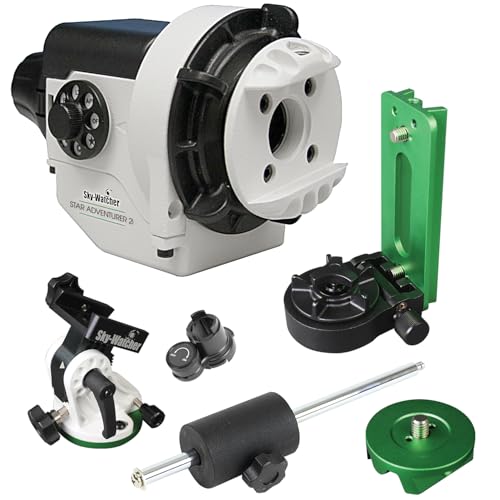
The Sky-Watcher Star Adventurer 2i Pro Pack is a portable nightscape tracking platform designed for long-exposure astrophotography. It supports motorized tracking to follow the sky’s rotation, enabling precise Milky Way shots, star trails, and time-lapse sequences. The upgraded 2i version includes Wi-Fi, allowing smartphone control via Sky-Watcher’s SAM Console app. Its modular design accommodates tripods and wide-field setups, making it ideal for compact travel rigs. Users can combine tracking with lightweight cameras and lenses to capture expansive night skies without heavy mounting. This product emphasizes convenience, control, and the essential stability needed for night photography.
Key features referenced include motorized tracking, wide-field usability, and wireless control. The 2i Pro Pack is particularly suitable for shooters who want to experiment with star trails and time-lapse sequences while maintaining portability. As with any tracker, it’s best paired with a sturdy tripod and an accurate polar alignment workflow to maximize exposure length without star trailing beyond acceptable thresholds. It’s a strong centerpiece for a night-sky setup that prioritizes ease of use and reliable performance in field conditions.
Breakthrough Night Sky Filter 46mm

The Breakthrough Night Sky Filter 46mm is designed to reduce artificial light pollution while preserving starlight and color neutrality. The 46mm size is suitable for many standard lenses, and the filter is weather-sealed within a rugged X4 traction frame for outdoor reliability. It features MRC16 and nanotec coatings that resist smudging and are easy to clean, helping maintain transmission in challenging, dusty environments. This filter helps enhance contrast and color accuracy in urban or suburban skies, enabling clearer renditions of nebulas and star fields. It complements long-exposure work by mitigating orange cast and fogging caused by artificial lighting.
In use, the filter’s purpose is to improve the signal-to-noise ratio for faint celestial objects, which is critical when shooting with shorter exposures or when stacking multiple frames. While no filter can replace proper sky conditions, this option provides a meaningful improvement for beginners and seasoned observers alike seeking more faithful sky representations. The combination of a durable frame and high-quality coatings makes it a practical accessory for night-sky sessions.
Canon EOS Rebel T7 DSLR Kit
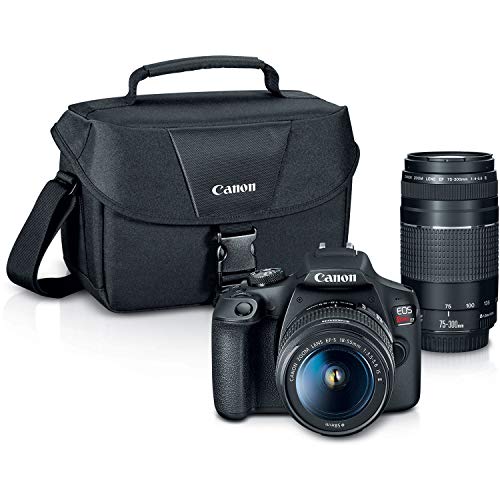
The Canon EOS Rebel T7 DSLR Kit is a beginner-friendly option that blends a 24.1-megapixel APS-C sensor with Dual Pixel CMOS AF for smoother live view focusing, including eye detection. The kit comes with two lenses (EF-S 18-55mm and EF 75-300mm), expanding the field of view from wide landscapes to distant star fields. Built-in Wi-Fi and NFC enable quick sharing and remote control, while the nine-point AF system supports accurate focusing on brighter night-sky targets when paired with a stable tripod. For budding astrophotographers, the T7 provides approachable exposure control and a robust ecosystem of accessories.
Important considerations include managing high ISO performance, long-exposure stability, and the potential need for dedicated astro lenses or a tripod upgrade. While the Rebel T7 is not a dedicated astrophotography rig, it serves as a solid gateway option for those starting with night sky imagery and stacking practices. The included kit lenses cover a wide range of scenarios, from Milky Way foregrounds to distant star formations when paired with appropriate exposure strategies.
Fulealfly 8K Digital Camera

The Fulealfly 8K Digital Camera is a versatile option offering 8K video and 88MP stills, combining high resolution with a dual-lens system and 6-axis stabilization. The camera emphasizes accessibility for enthusiasts and beginners seeking studio-like clarity in night scenes and long exposures. Wireless file transfer via Wi-Fi and a 3.2-inch touchscreen simplify workflow, while the dual-lens design supports flexible framing for landscapes and foreground interest. This model targets users who want cinematic-quality output from a compact form factor, making it a compelling choice for those who plan to document vivid night skies with high detail.
When evaluating this camera for night-sky work, consider exposure control, battery life for extended sessions, and the practicalities of handling very large files. While 8K capture delivers exceptional detail, it also demands careful handling of noise, wind-induced camera shake, and storage needs. The Fulealfly unit is well-suited to enthusiasts who value top-tier resolution and modern connectivity in a portable package.
TEFTYMON 4K Digital Camera

The TEFTYMON 4K Digital Camera is a compact option geared toward beginners and travelers seeking value. It delivers 4K video and 64MP stills, aided by a 3-inch IPS flip screen and built-in Wi-Fi for quick sharing. A 16x digital zoom and included battery count make it convenient for on-the-go shooting, including night-sky photography in accessible contexts such as parks or landscapes with minimal gear. The camera balances ease of use with functionality, providing a practical introduction to night-sky imaging for hobbyists on a budget.
For astrophotography specifically, the TEFTYMON is a solid starter choice when you want to experiment with composition and motion in the night environment, though longer exposures and tracking are better served by a dedicated tracker or mount. It’s an economical entry point to learn framing, exposure, and processing workflows before upgrading to more specialized gear.
Buying Guide: Key Considerations For Night Sky Photography
Choosing gear for night sky photography involves balancing tracking, image quality, portability, and workflow efficiency. Here are essential considerations to help you compare options and tailor a setup to your goals.
- Tracking and stability: A motorized tracker (like the Sky-Watcher Adventurer) lets you shoot longer exposures without star trails. Pair it with a sturdy tripod, precise polar alignment, and lightweight lenses to maximize exposure time while keeping stars pinpoint sharp.
- Filters and light pollution: Light-pollution filters can significantly improve contrast and color in urban or suburban skies. Choose models with weather sealing and coatings that minimize reflections and ease cleaning in outdoor environments.
- Camera body and sensor: A larger sensor (APS-C or full-frame) generally yields better noise performance at high ISO and longer exposures. Entry-level DSLRs (like Canon’s Rebel T7) offer familiar controls and affordable lenses, while higher-resolution models provide more detail but come with increased data management needs.
- Resolution vs. practicality: Ultra-high-resolution bodies (8K, 88MP) deliver expansive detail and cropping flexibility but demand robust storage, faster processing, and careful handling of noise. For beginners, mid-range sensors paired with good tracking and filters can yield excellent results with less complexity.
- Lens compatibility and field of view: Wide-angle lenses provide dramatic night-sky foregrounds, while telephoto options help isolate star clusters or distant galaxies. Ensure available lenses align with your tracker’s mounting capacity and balance.
- Workflow and processing: Stacking participates in reducing noise and revealing faint details. Consider software compatibility for stacking, alignment, and post-processing, along with the camera’s ability to shoot RAW files with clean shadows/highlights.
- Portability and weather resilience: Night sky imaging often occurs in remote or rural settings. Assess gear weight, weather sealing, and battery life to ensure reliable field sessions under varying conditions.
- Budget vs. future-proofing: A starter setup with a reliable tracker and a solid camera body can scale with your skills. Prioritize core capabilities first (tracking, sensor quality, reliable control) and plan incremental upgrades for optics and processing power over time.
- Learning curve and support ecosystem: Brands with extensive manuals, tutorials, and community forums can reduce the learning curve. This is especially helpful for first-time astrophotographers building plate-solving, stacking, and post-processing skills.
In practice, the best approach is to assemble a balanced kit: a tracked night-sky platform for long exposures, a camera with good low-light performance or a high-resolution option for detail, and a filter or two to counteract light pollution. The ideas presented here illustrate a spectrum from beginner-friendly to advanced capabilities, enabling you to choose a path that fits your experience, travel plans, and local skies.